Mon 21 July 2025:
The Syrian Minister of Information Hamza al-Mustafa says US sanctions limit Syria’s ability to engage with social media platforms, hampering efforts to fight disinformation. Around 300,000 fake accounts spread divisive content, with 10,000 new ones appearing daily.

According to the Syrian Minister of Information Hamza al-Mustafa:
1. Syria remains under US sanctions related to its relationship with social media platforms, and progress toward lifting them remains slow, despite the executive order signed by President Trump.
2. The continued existence of sanctions hinders direct communication with these platforms, especially regarding combating disinformation campaigns and rumors.
3. Initial statistics indicate that there are approximately 300,000 active accounts spreading misleading content, distributed across four major countries.
4. Misleading content is disseminated in various forms, some of which appear to be pro-state but are intended to spread divisive rhetoric.
5. We at the Ministry of Information are making double efforts to stop the creation of new accounts, which have reached significant levels in recent days (10,000 accounts per day), and we are counting on public awareness to create appropriate conditions.
6. Fake accounts have lost their value in the new Syria, and we urge everyone to exercise caution and responsibility.
__________________________________________________________________________

https://whatsapp.com/channel/0029VaAtNxX8fewmiFmN7N22
__________________________________________________________________________
Following attacks by supporters of ousted President Bashar Assad on Syria’s new security forces in late March, the country experienced its most severe outbreak of violence since Assad’s ousting in early December. Researchers at Verify-Sy also noted this period marked Syria’s worst wave of disinformation since early December.
“We observed a significant surge,” Zouhir al-Shimale, a researcher and communications manager for Verify-Sy, told DW. “Coordination among malicious online actors reached its highest level since Syria’s liberation.” Verify-Sy also noticed increasing use of generative artificial intelligence to manipulate footage and alter voices to produce “highly provocative and graphic content.”
In Syria, social media “serves as a crucial information source amid the absence of formal or reliable, independent media,” explains Noura Aljizawi, a Syrian activist and senior researcher at the University of Toronto’s Citizen Lab.
“The surge in disinformation and hate speech online is both fueling the violence and deepening divisions,” Razan Rashidi, director of UK-based advocacy organization, The Syria Campaign, said.
Foreign interference
Additionally, disinformation is also being used by external actors pursuing their own agendas, mostly against the new Syrian government.
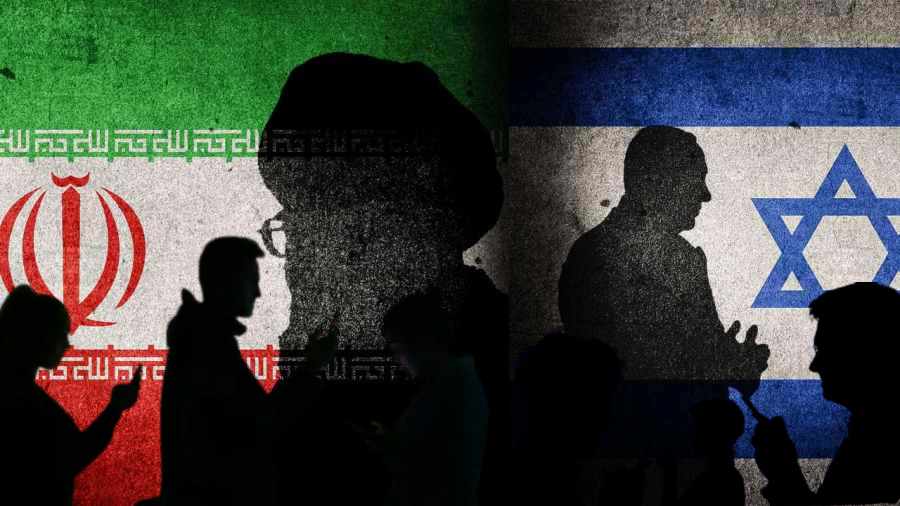
Both Aljizawi and Verify-Sy have noticed Iran and Iranian proxy networks in places like Iraq and Lebanon playing a role. The new Syrian government has pushed Iranian forces that supported the Assad regime out of the country.
Russia and Israel have also played a part in disinformation campaigns against the new government, the experts say. And right-wing commentators in the US have used social media to promote Islamophobic opinions, accusing the new Syrian government, headed by individuals with past links to Islamist extremism, of war crimes.
“This was evident when figures like Elon Musk and [US pundit] Tucker Carlson amplified outright disinformation about Syria, leveraging X’s network to promote these narratives,” al-Shimale adds.
That’s new and dangerous, he notes. “Amplification by high-profile figures and coordinated networks means it [disinformation] shapes public discourse, pressures policymakers, and influences international perceptions of Syria’s transition.”
Sectarian disinfomation from Iraq
According to DW, several users on social media who portrayed themselves as non-Syrian and posted information that was later debunked. Only one, whose profile said they were based in southern Iraq, responded.
The social media user was happy to share information if they could remain anonymous and told DW they were working under instructions from the media operations room run by what are known as Iraq’s Popular Mobilization Forces, or PMF. These are militias originally formed by Shiite Muslim communities in Iraq to fight the extremist group known as the “Islamic State” but now part of Iraq’s state security and government. Some groups within the PMF are well known for closer contacts with Iran and are considered part of the same Iran-supported axis as Hezbollah in Lebanon and the Houthis in Yemen.
“They give me the posts, and I publish,” the social media user told DW. “I trust my leadership very much, and they are the ones who verify the news,” the person explained, adding they’re paid between $20 and $30 for their online posts.
“Most of those who work in this field are unemployed, or disabled as a result of fighting, or women whose husbands died in the war,” the person continued. According to the user, what Iraqi social media operatives are paid differs depending on, for example, which languages they can post in, and their reach with some well-known influencers getting over $100 for a post.
The operatives are working for money, but the Iraq-based X user admitted there is also a political aspect to the job. A Shiite Muslim, they said they consider all Sunni Muslims, including those in Syria, to be their enemy and a foe of Shiite-majority Iran, “which is the savior of this region,” the user said.
SOURCE: INDEPENDENT PRESS AND NEWS AGENCIES
__________________________________________________________________________
FOLLOW INDEPENDENT PRESS:
WhatsApp CHANNEL
https://whatsapp.com/channel/0029VaAtNxX8fewmiFmN7N22

TWITTER (CLICK HERE)
https://twitter.com/IpIndependent

FACEBOOK (CLICK HERE)
https://web.facebook.com/ipindependent

YOUTUBE (CLICK HERE)
https://www.youtube.com/@ipindependent

Think your friends would be interested? Share this story!