Sat 14 February 2026:
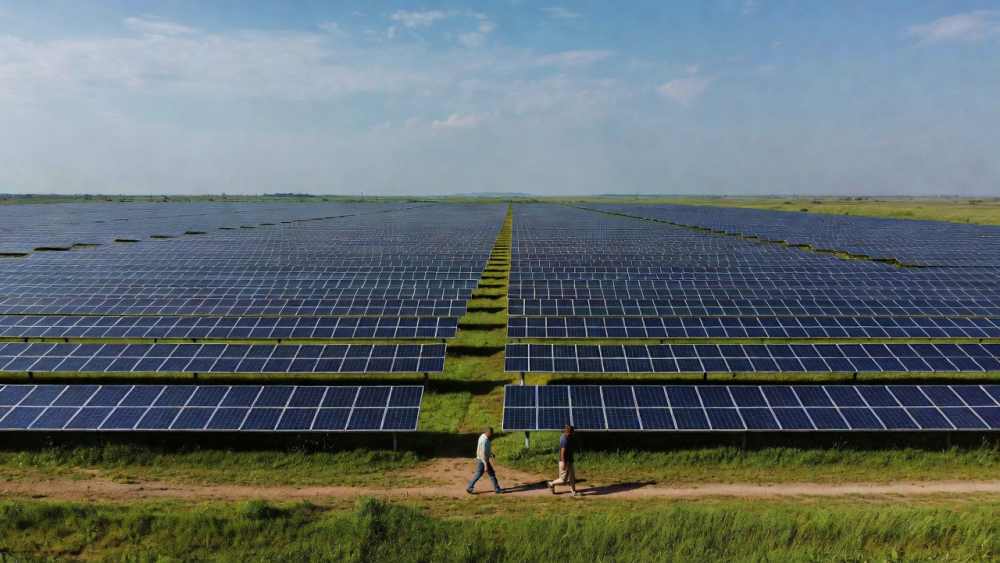
Africa’s solar expansion is no longer confined to a single dominant market but reflects a distributed energy transition driven by equipment imports, price declines, and unreliable grids. The shift alters where global renewable demand growth is concentrated as worldwide expansion slows.
The Africa Solar Industry Association said installed capacity grew 17% in 2025 while global solar capacity increased 23% to 618 GW, down from 44% growth in 2024.
Acting Kenya Renewable Energy Association CEO Cynthia Angweya-Muhati said: “Chinese companies are the main drivers in Africa’s green transition.” She added they are “aggressively investing in and building robust supply chains in Africa green energy ecosystem.”
__________________________________________________________________________

https://whatsapp.com/channel/0029VaAtNxX8fewmiFmN7N22
__________________________________________________________________________
Supply Chain Driven Expansion
Nearly 64 GWp of solar equipment has been shipped to the continent since 2017, yet only 23.4 GWp is operating. A gigawatt peak represents 1 billion watts under optimal output conditions.
Solar energy has moved beyond a handful of early adopters to become a broader continental priority.
Historically South Africa accounted for roughly half of all panel imports but now represents less than one third.
In 2025, 20 countries set annual import records and 25 imported at least 100 megawatts each.
Nigeria surpassed Egypt as the second largest importer as solar plus batteries replaced diesel generation in unreliable grids.
“Diesel Costs Change Economics”
The gradual removal of diesel subsidies in Nigeria over two years accelerated adoption. Battery storage costs fell to $112 per kilowatt-hour in 2025 from $144 in 2023.
Van Zuylen said: “This ever-decreasing price of storage has game-changing implications for Africa, which has a dire need for stable and base load power.”
Solar imports rose more than 30-fold year on year in Algeria and expanded in Zambia and Botswana. At least 23 countries including Tunisia, Kenya, Chad and Central African Republic now generate more than 5% of electricity from solar.
Industrial Policy vs Market Risk
In September Nigeria announced a 1 GW solar panel factory, the largest in West Africa, while similar facilities are planned in Ethiopia, Egypt and South Africa. The sector also generates employment in installation, maintenance, distribution and financing.
However policy uncertainty persists. Amos Wemanya said: “The problem is not the opportunity. It’s visibility.”
Companies cite shifting tax regimes, unclear long term energy plans and changing import duties as constraints compared with regions that publish 10 or 20 year roadmaps.
SOURCE: INDEPENDENT PRESS AND NEWS AGENCIES
__________________________________________________________________________
FOLLOW INDEPENDENT PRESS:
WhatsApp CHANNEL
https://whatsapp.com/channel/0029VaAtNxX8fewmiFmN7N22

TWITTER (CLICK HERE)
https://twitter.com/IpIndependent

FACEBOOK (CLICK HERE)
https://web.facebook.com/ipindependent

YOUTUBE (CLICK HERE)
https://www.youtube.com/@ipindependent

Think your friends would be interested? Share this story!