Fri 13 March 2026:
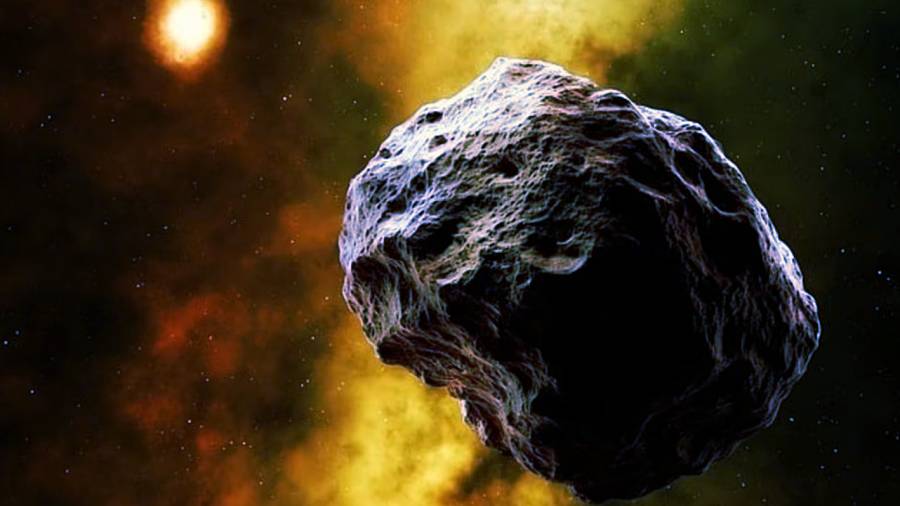
New observations indicate that asteroid 2024 YR4 will not collide with the moon, easing concerns by astronomers, according to the European Space Agency’s (ESA) Planetary Defence team.
The asteroid, 53-67 meters (174-220 feet), that was detected in December 2024, initially drew attention after early calculations suggested a 3.1% probability of hitting the Earth in 2032. Further observations quickly eliminated the possibility of an Earth collision but suggested a 4.3% chance that the asteroid could instead strike the moon.
Scientists warned earlier this month that although an impact would not threaten Earth, debris from a lunar collision could potentially affect satellites used for navigation and communication.
But refined measurements now show the asteroid will pass the moon at a distance of more than 20,000 kilometers (12,400 miles), removing the previously estimated impact risk.
__________________________________________________________________________

https://whatsapp.com/channel/0029VaAtNxX8fewmiFmN7N22
__________________________________________________________________________
“It would’ve been a very interesting science experiment but probably, given the small risk of debris, it wouldn’t be one we’d want to try out,” said Colin Snodgrass, a professor of planetary astronomy at the University of Edinburgh. “Some of us in the scientific community might be a little disappointed.”
Astronomers were not expected to confirm the asteroid’s trajectory until 2028, when it would become visible again from Earth. But an international team identified two short observation windows in February during which the James Webb Space Telescope could detect and track the faint object.
“[Asteroid] 2024 YR4 is exceedingly faint right now, reflecting about as much light as an almond at the distance of the moon,” said Dr Andy Rivkin, of Johns Hopkins University, and professor Julien de Wit, of Massachusetts Institute of Technology, who co-led the observations. “Webb is the only observatory that could hope to make these measurements, as it is the only one with the required sensitivity and stability combined with precise moving-target tracking needed to follow and study objects like this.”
Using the observations, scientists refined the asteroid’s orbit and confirmed it will miss the moon in 2032.
According to researchers, increasingly powerful telescopes such as Webb and the Vera Rubin Observatory will make it easier to detect and track near-Earth objects in the future, which may occasionally lead to brief impact concerns but will also allow scientists to rule them out more quickly.
“The moon is safe, 2024 YR4 poses no danger, but the work continues,” the European Space Agency noted in response to the findings. “The Planetary Defence team in ESA’s Space Safety programme continues to detect and track near-Earth objects to ensure that if a genuine danger ever emerges, we will not be caught unaware.”
-Source: AA
__________________________________________________________________________
FOLLOW INDEPENDENT PRESS:
WhatsApp CHANNEL
https://whatsapp.com/channel/0029VaAtNxX8fewmiFmN7N22

TWITTER (CLICK HERE)
https://twitter.com/IpIndependent

FACEBOOK (CLICK HERE)
https://web.facebook.com/ipindependent

YOUTUBE (CLICK HERE)
https://www.youtube.com/@ipindependent

Think your friends would be interested? Share this story!