Sat 18 October 2025:
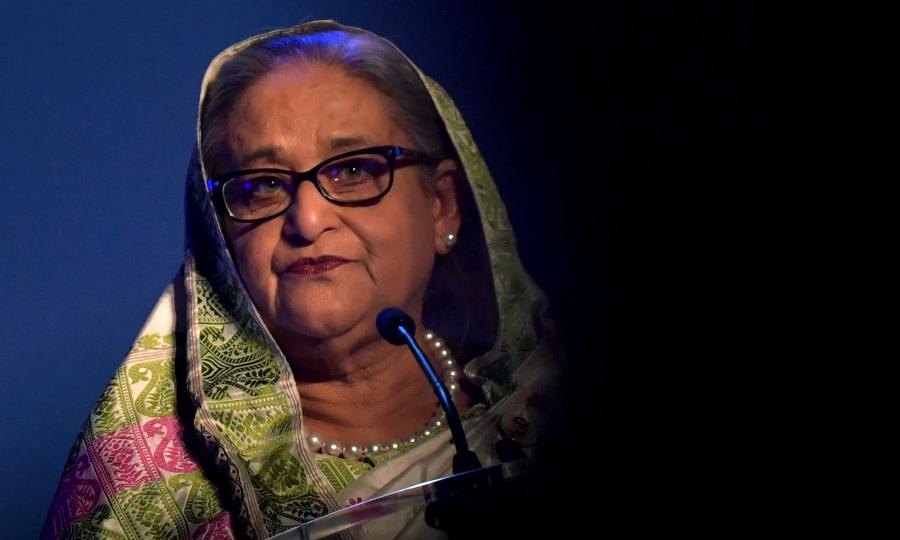
Bangladeshi prosecution lawyers have demanded the death penalty for fugitive former Prime Minister Sheikh Hasina amid ongoing trial over her role in 2024 protest killings.
The call was made by a prosecutor in an ongoing legal proceeding against Hasina who was indicted in 2025 on charges of crimes against humanity over killings which occurred during student-led protests against her rule in 2024.
Chief Prosecutor Tajul Islam told the Dhaka-based International Crimes Tribunal that the prosecution is seeking the death penalty for not only Hasina but also her close aide, former Home Minister Asaduzzaman Khan Kamal.
Islam left it to the tribunal to decide the fate of former police chief Chowdhury Abdullah Al-Mamun.
The three are accused of orchestrating violence against citizens during a student-led uprising in July and August 2024. The uprising eventually toppled Hasina’s government where the controversial ruler fled to neighbouring India.
A UN report estimated that around 1,400 people were killed, including hundreds of students and children.
Proceedings formally began in August, marking the first time a sitting or former Bangladeshi leader has faced such grave charges in modern history.
Hasina, now 77, has been living in India since her fall from power. She and Kamal are being tried in absentia, while former police chief Mamun remains in custody after reportedly admitting involvement and agreeing to testify for the prosecution.
Earlier this month, the tribunal filed 10 additional formal charges against Hasina and 30 others, including allegations of forced disappearances and mass killings during her administration.
__________________________________________________________________________

https://whatsapp.com/channel/0029VaAtNxX8fewmiFmN7N22
__________________________________________________________________________
Fight for justice
Hasina has rejected all accusations, calling the tribunal’s proceedings a politically motivated attempt to erase her legacy.
In a statement released through her son shortly after fleeing to India, she expressed grief over the violence but denied ordering any crackdown. She also condemned the destruction of her family home during the unrest.
Her state-appointed lawyer, Amir Hossain, said the charges were baseless and lacked credible evidence.
He argued that the allegations stem from political rivalry, not systematic atrocities.
However, rights groups and international observers have long criticised her administration for authoritarian practices, suppression of dissent, and the use of lethal force against demonstrators.
The UN and several human rights organisations have urged transparency and fairness in the tribunal’s proceedings.
Hasina, already convicted in July for contempt of court and sentenced in absentia to six months in prison, also faces ongoing corruption cases.
Relatives, including her daughter Saima Wazed, who has served as a senior UN official, and her niece Tulip Siddiq, a British lawmaker, also face corruption charges, which they deny.
Hasina and her family members are refusing to return to face the charges in their home country. Despite their claims of innocence, it is unlikely that Hasina will return to face the charges or to be held accountable for her regime’s wrongdoing.
Hasina’s early life
Born in 1947, Hasina is the daughter of Sheikh Mujibur Rahman, Bangladesh’s founding leader.
She survived the 1975 military coup that killed most of her family, later returning from exile in India to lead the Awami League in 1981.
She served as prime minister for four terms and was often described as one of South Asia’s most powerful women.
Her tenure was marked by economic progress but also widespread allegations of corruption and repression.
Hasina has categorically denied all accusations of crimes against humanity, including charges of abetment, incitement, complicity, facilitation, conspiracy, and failure to prevent mass murder.
Hasina’s downfall came after last year’s student-led uprising spiralled into nationwide protests against her rule.
The army eventually withdrew support for her government, forcing her to flee across the border.
Nobel laureate Muhammad Yunus, who now heads Bangladesh’s transitional government, has formally requested her extradition from India.
New Delhi has yet to respond, leaving Hasina’s future uncertain. For now, Bangladesh’s once-celebrated leader faces the possibility of execution if convicted.
This article is republished from 5Pillars. Read the original article.

__________________________________________________________________________
FOLLOW INDEPENDENT PRESS:
WhatsApp CHANNEL
https://whatsapp.com/channel/0029VaAtNxX8fewmiFmN7N22

TWITTER (CLICK HERE)
https://twitter.com/IpIndependent

FACEBOOK (CLICK HERE)
https://web.facebook.com/ipindependent

YOUTUBE (CLICK HERE)
https://www.youtube.com/@ipindependent

Think your friends would be interested? Share this story!