Mon 16 February 2026:
Downing Street is examining whether to meet the 3% target before the end of the current parliament, which could run until 2029 — several years earlier than initially envisioned.
From 2.5% to 3%: Accelerating the Timeline
Starmer pledged last year to raise core defence spending to 2.5% of GDP by April 2027, alongside a longer-term “ambition” to reach 3% in the next parliament. Officials now confirm that advisers are exploring whether that 3% benchmark could be achieved within the current parliamentary term.
No formal decision has been taken. Treasury officials are said to be cautious about the fiscal implications, particularly given pressure on public finances.
The issue was discussed at a high-level meeting earlier this month as part of deliberations over the delayed “defence investment plan,” which aims to align spending with existing commitments.
Mounting Financial Pressures
Reports last month suggested the Ministry of Defence may require an additional £28bn over the next four years to meet current obligations. In January, Chief of the Defence Staff Sir Richard Knighton told MPs that the armed forces could not deliver all planned capabilities within the existing budget framework.
The independent Office for Budget Responsibility estimated in March last year that raising defence spending to 3% of GDP would require an additional £17.3bn annually by 2029-30. However, Bee Boileau of the Institute for Fiscal Studies calculated that, accounting for previously planned increases, the real additional requirement could be closer to £13–14bn per year.
The UK currently spends around 2.3% of GDP on defence approximately £66bn annually.
Security Environment and Strategic Shift
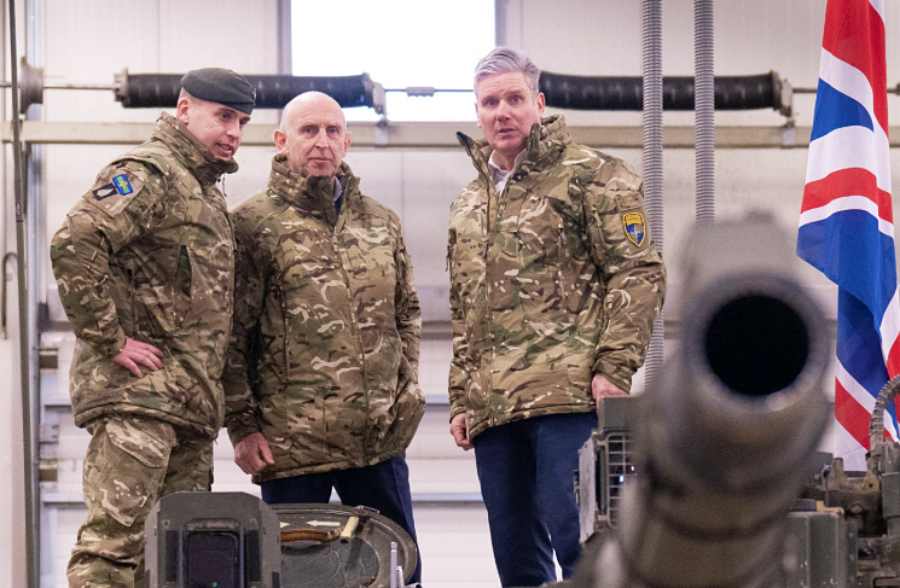
Speaking at the Munich Security Conference over the weekend, Starmer made a sustained case for higher defence outlays, citing Russia as a primary threat.
“We must build our hard power because that is the currency of our age,” he said. “We must spend more, deliver more, and coordinate more.”
He argued that stronger defence capabilities would reduce the UK’s dependence on the United States and strengthen cooperation with European allies in supporting Ukraine. The UK and other NATO allies have also committed to spending 3.5% of GDP on core defence by 2035.
One defence source described the speech as a clear signal that increased spending is likely, even if no formal announcement has yet been made.
__________________________________________________________________________

https://whatsapp.com/channel/0029VaAtNxX8fewmiFmN7N22
__________________________________________________________________________
Treasury Tensions and Funding Options
Whitehall sources suggest internal dynamics have shifted following the recent resignation of Morgan McSweeney, formerly one of Starmer’s closest advisers and a reported advocate of higher defence investment. Treasury officials, however, deny resisting a specific 3% plan, insisting discussions remain government-wide and ongoing.
Potential funding mechanisms remain politically sensitive. Options under discussion reportedly include reallocating funds from Overseas Development Assistance, scaling back net-zero initiatives, or revisiting infrastructure projects such as the high-speed rail line between London and Birmingham. Borrowing more is another possibility, though the Treasury is wary of breaching fiscal rules and unsettling financial markets.
A Ministry of Defence spokesperson declined to comment on speculation but emphasized that the government is already delivering the largest sustained increase in defence spending since the Cold War, including an additional £5bn in the current financial year.
U.S. and NATO Expectations
Advancing the 3% target would likely be welcomed by Washington, which has privately urged the UK to move faster on defence commitments. With NATO allies collectively agreeing to raise security and defence spending to 3.5% of GDP by 2035, London faces growing pressure to demonstrate a credible pathway.
Foreign Secretary Yvette Cooper acknowledged that further increases may be necessary, saying the UK would need to “strengthen our defence and our partnerships” in light of evolving threats.
As deliberations continue, the question is no longer whether defence spending will rise but how quickly, and at what political and economic cost.
Source: Independent Press and News Agencies
__________________________________________________________________________
FOLLOW INDEPENDENT PRESS:
WhatsApp CHANNEL
https://whatsapp.com/channel/0029VaAtNxX8fewmiFmN7N22

TWITTER (CLICK HERE)
https://twitter.com/IpIndependent

FACEBOOK (CLICK HERE)
https://web.facebook.com/ipindependent

YOUTUBE (CLICK HERE)
https://www.youtube.com/@ipindependent

Think your friends would be interested? Share this story!