Wed 14 January 2026:
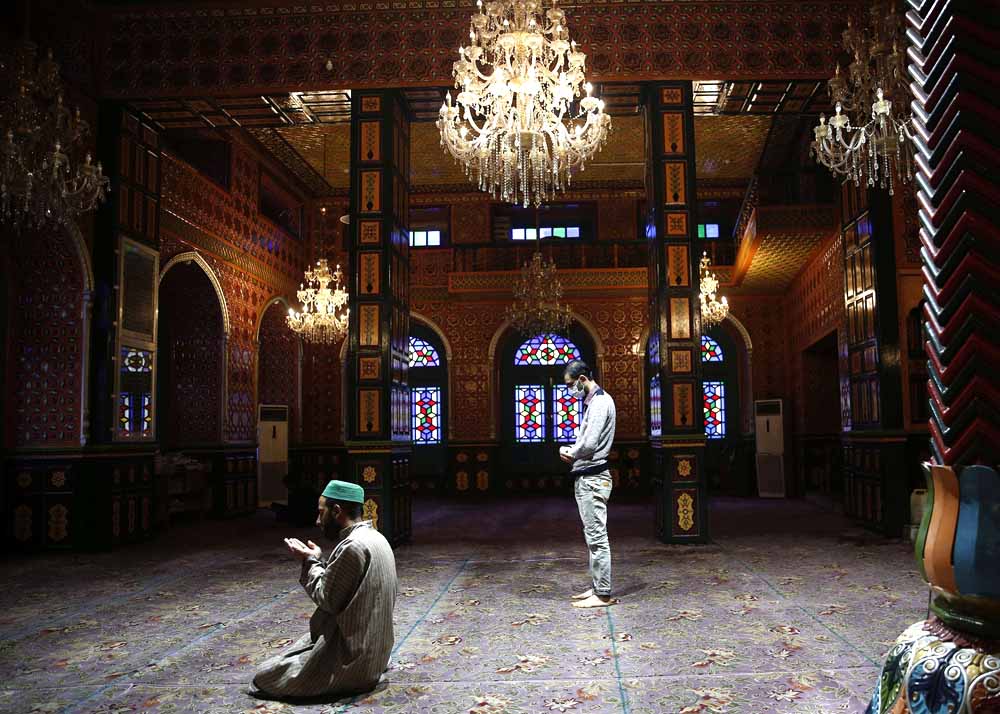
In a move that has left many uncomfortable, the Jammu and Kashmir Police have launched a Valley-wide exercise to collect detailed information on mosques and religious functionaries, seeking extensive personal, financial and ideological data. The order has triggered concern among clerics, political leaders and civil society groups.
Individuals connected with mosques received a four-page form that was circulated in different areas of Kashmir. One page sought information related to mosques, while the remaining three pages focused on individuals associated with their management and religious activities.
Speaking to Maktoob Mirwaiz Hassan Firdousi, Chairman of the Mutahida Aima Forum, and Muslim Mutahida Mahaaz, they expressed deep concern and raised serious questions about the exercise.
“This exercise is in complete violation of fundamental rights and the right to privacy and personal information even guaranteed under the Constitution. Mosques are sacred institutions meant for worship, guidance, and community service; their internal religious affairs should not be subjected to arbitrary surveillance and intrusive scrutiny,” Firdousi said.
__________________________________________________________________________

https://whatsapp.com/channel/0029VaAtNxX8fewmiFmN7N22
__________________________________________________________________________
“The nature and depth of information being sought goes far beyond any routine administrative requirement, raising serious questions of intent, reflecting an attempt to control and regulate religious institutions through coercive means and checks,” he wrote to Maktoob.
The mosque-related section also sought details about the sect, seating capacity, physical structure, construction costs, monthly expenditure, funding sources, land ownership and management committees, while the remaining pages asked for personal details of imams, muezzins, khateebs, mosque management committee members and individuals linked to charity wings such as Bait-ul-Maal.
Personal identification cards Aadhaar, PAN, voter ID, passport and driving licence numbers, along with bank account details, ATM and credit card information were also sought.
Maktoob spoke to committee members related to a mosque in Baramulla, who said that usually the process is easy, as the beat officer already has details. “For additional information, they usually call the mosque president and ask if they need anything else. I am surprised why they would need so many personal details from the mosque members,” he added.
However, in the form, individuals in association with mosques have also been asked to provide details of their mobile phone models, IMEI numbers, social media accounts, travel history, income and expenditure, property ownership and information on relatives living abroad. The forms also ask family details, including those of parents, siblings and children, as well as disclosure of any past involvement in militancy or criminal cases.
The form also asks mosques to specify their ideological affiliation.
Speaking to Maktoob, social activist Hakim Suhail explained that when a masjid is established, there are already laws in place governing how it is run, “just as there are for temples, churches, and gurdwaras.”
“There should be no need for any additional agency to seek such details. If authorities believe data collection is necessary, it should apply uniformly to all places of worship. Singling out mosques alone raises serious questions about fairness and intent,” The income and expenditure of mosques are published every year by their management to ensure public transparency, and the law mandates the same for every religion, Suhail added.
Similarly, various religious bodies criticised the exercise and said the inclusion of ideological classification, along with personal and financial information, has added to apprehensions among mosque authorities and clerics.
Muttahida Majlis-e-Ulema (MMU), a conglomerate of Islamic religious organisations in Jammu and Kashmir, headed by chief cleric Mirwaiz Umar Farooq, criticised the whole exercise.
In a statement, MMU described the profiling as “intrusive” and said it amounted to an unprecedented collection of sensitive personal data.
“It seeks information regarding mosques, their management committees, Imams, Khatibs and individuals associated with places of worship, and even extends to their family members,” the statement said.
The MMU said the multi-page forms demand private identification documents, financial records, phone details, digital and social media profiles, passport details, travel history and mobile phone IMEI numbers.
“Such an invasive exercise has caused widespread anxiety among religious institutions, Imams, Khateebs and the public in general,” the MMU said, adding that it violated fundamental rights, including the right to privacy guaranteed under the Constitution.
The MMU urged the elected government to intervene and demanded an immediate halt to the exercise.
“Mosques are sacred institutions meant for worship, guidance and community service. Their internal religious affairs cannot be subjected to arbitrary surveillance,” the statement said.
Meanwhile, National Conference Member of Parliament from Srinagar, Aga Syed Ruhullah Mehdi, said the reported surveillance of mosques and religious preachers violated constitutional guarantees.
“This cannot be treated as a routine administrative exercise. It infringes upon freedom of religion and privacy,” Ruhullah told reporters in Srinagar.
Senior Peoples Conference leader and former legislator Imran Reza Ansari, a Shia cleric, also expressed concern over what he described as the profiling of mosques and religious staff. He cautioned that increased scrutiny could discourage voluntary religious service, noting that many individuals perform religious duties purely out of devotion.
Mirwaiz Hassan Firdousi, meanwhile, said that the elected government must immediately intervene in this matter. “Such an exercise must be stopped forthwith, as it undermines trust, creates fear among religious functionaries and sends a disturbing message to the Muslim community of the state. Measures that single out mosques and religious personnel in this manner are unjustified, counter-productive and harmful to social harmony,” he added.
The Jammu and Kashmir Police have not issued any official statement on the reported exercise so far.
This article is republished from Maktoob. Read the original article.

__________________________________________________________________________
FOLLOW INDEPENDENT PRESS:
WhatsApp CHANNEL
https://whatsapp.com/channel/0029VaAtNxX8fewmiFmN7N22

TWITTER (CLICK HERE)
https://twitter.com/IpIndependent

FACEBOOK (CLICK HERE)
https://web.facebook.com/ipindependent

YOUTUBE (CLICK HERE)
https://www.youtube.com/@ipindependent

Think your friends would be interested? Share this story!