Mon 20 October 2025:
Biko, Mandela and the words South Africa is reaching for.
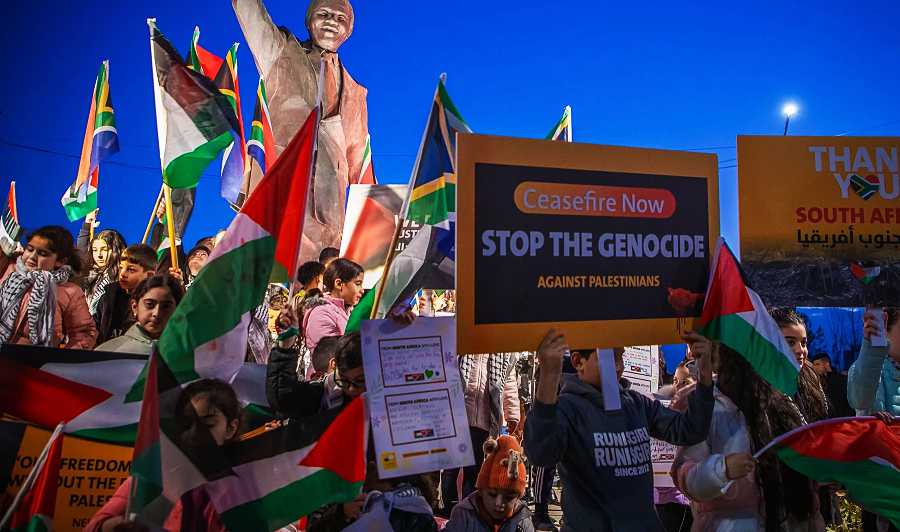
Minibus taxis lean on their hooters and squeeze in the gaps. Hatfield’s main road is a river of backpacks and hoodies as Pretoria University students jaywalk between the flashing green man. On the corners flanking Burnett Street, ten—maybe twelve—volunteers with placards hold clipboards and handbills, stopping passersby to explain a simple idea with big teeth: the power of a consumer boycott of Israeli-linked corporations. A tried and tested movement that proved pivotal to the downfall of the Apartheid regime in South Africa decades ago.
As the volunteers from Community with a Conscience – a boycott education movement engage with passers-by a delivery bike noses in and stops at the red light. The helmeted rider turns to read the Boycott Israel placards. He nods his head in agreement and offers a ‘F$&k Netenyahu’ before speeding off again. Unknown to the activists the man takes a turn, kills the ignition, unclips his helmet, and steps onto the pavement—thin, agile, early sixties and white. Gerhard Bezuidenhout is a lawyer by training, a former apartheid-era soldier from the border wars, now hustling deliveries through Pretoria’s streets. “What you’re doing is selfless,” he says, voice low under the traffic. The volunteers are eager to hear his take on the Gaza genocide. He explains hesitantly ‘I was part of the Apartheid…’ and the two placard clad volunteers smile as they assume he is speaking as an anti -apartheid struggle veteran. Their smiles are replaced with surprise as he says almost apologetically: “I was an enforcer of the system. I too did unspeakable things to innocent people. I used to rip babies away from their mothers like the ICE in the US now. I must repent.”
__________________________________________________________________________

https://whatsapp.com/channel/0029VaAtNxX8fewmiFmN7N22
__________________________________________________________________________
Gerhard’s eyes are wet as he speaks about procedures that turned people into file numbers and the orders he obeyed because they were rationalized by those in power. Gaza, he says, looks like the machine he once helped keep running. When the working day is over – shame doesn’t clock out.
On October 8, Mandla Zwelivelile Mandela—Nelson Mandela’s grandson and a passenger on the Global Sumud Flotilla—landed back at OR Tambo after six days in Israeli custody, deported via Jordan with other South Africans. On arrival, he and fellow activists described being zip-tied, handcuffed, and publicly paraded to dehumanize them in front of the IDF soldiers. Dr Fatima Hendricks and Zaheera Soomar said not only were their hijabs forcibly removed but they were also strip-searched in front of IDF soldiers. Israel denies abuse and calls the flotilla a PR stunt, but the irony is thick. In 2025 freedom songs celebrate another generation of Mandela opposing another apartheid state. History continues to echo through the news headlines.
That is why language matters. South Africa once called torture “a scuffle” and murder “no one to blame.” Nearly five decades after Steve Biko was killed in police custody, the state has reopened the inquest to replace those phrases with the correct ones. The hope is that words will have new meaning for families and communities still carrying the burden of the past.
The original 1977 inquest into Biko’s murder was deliberately ambiguous and nobody was held responsible for fatal brain injuries suffered in detention and during the long and unexplained transfer of a naked Biko to a hospital in Pretoria. Reopening the matter now is more than symbolic housekeeping but a test of whether our institutions can still name the thing plainly and accept the consequences.
There is no honest Biko story without Helen Zille. As a young Rand Daily Mail reporter in 1977, her front-page “No sign of hunger strike — Biko doctors” helped puncture the regime’s cover story and pointed to brain injury as the true cause of death. That work belongs in any account of South African press courage.
But political language takes on new meanings over time. In 2025, as the DA’s candidate for Johannesburg mayor, Zille was asked on air whether Gaza constitutes genocide. Her answer: “Genocide is a very big word.” That answer lands callously when the ICJ case brought by South Africa and a UN Commission of Inquiry have put the term squarely on the table. Big words are big because they carry legal and moral consequences; avoiding them when process and evidence are available exposes moral cowardice.
For years, families of apartheid victims have alleged that post-1994 administrations deliberately stymied TRC-referred prosecutions. In May 2025, President Cyril Ramaphosa appointed a judicial commission led by Justice Sisi Khampepe to determine who interfered, how, and when, and to recommend action—including referrals for prosecution. The commission has subpoena powers, can compel testimony under oath, and will report to the Presidency and works alongside court processes like the Biko inquest.
The path is practical and proven: reopen the inquest to establish facts and culpability, then refer those cases to the NPA to execute. That template, used in other apartheid-era cases, makes the Biko inquest more than a history lesson. It is a live test of whether South Africa will move from reconciliation slogans to accountability with names, dates, and decisions.
Bezuidenhout’s confession erases time. It reminds us that systems survive on euphemism whether inside governments and opposition benches or editorial rooms and dinner tables. Biko’s method was not sentiment but discipline: name reality without apology, another way of saying ‘I write what I like’. The inquest tests whether our law still can. Zille’s campaign tests whether our politics still will.
And the flotilla detentions—and now the return and testimonies of South African activists—test whether our words are followed by action when it matters. We can keep resizing the words until they fit our coalitions. Or we can resize our courage until it fits the truth. If justice is to be truly delivered, we need to change not only our legal frameworks but the very words we use to describe our history and the social wounds that remain unhealed.
The statements, views and opinions expressed in this column are solely those of the authors and do not necessarily represent those of Independent Press.

By Mariam Jooma Çarikci
Mariam Jooma Çarikci is an Independent researcher, focused on the politics of Africa, Zionism in Africa, and Türkiye’s evolving role in the Middle East and Africa.
__________________________________________________________________________
FOLLOW INDEPENDENT PRESS:
WhatsApp CHANNEL
https://whatsapp.com/channel/0029VaAtNxX8fewmiFmN7N22

TWITTER (CLICK HERE)
https://twitter.com/IpIndependent

FACEBOOK (CLICK HERE)
https://web.facebook.com/ipindependent

YOUTUBE (CLICK HERE)
https://www.youtube.com/@ipindependent

Think your friends would be interested? Share this story!
__________________________________________________________________________
FOLLOW INDEPENDENT PRESS:
WhatsApp CHANNEL
https://whatsapp.com/channel/0029VaAtNxX8fewmiFmN7N22
TWITTER (CLICK HERE)
https://twitter.com/IpIndependent
FACEBOOK (CLICK HERE)
https://web.facebook.com/ipindependent
YOUTUBE (CLICK HERE)
https://www.youtube.com/@ipindependent
Think your friends would be interested? Share this story!