Wed 13 August 2025:
The party proposes replacing Broad-Based Black Economic Empowerment with a needs-based policy, prompting both support for reform and accusations of undermining transformation.
The party argues that B-BBEE, along with the Employment Equity and Expropriation Acts, has failed to achieve widespread upliftment for the majority of South Africans. Instead, the DA claims these policies have fostered an environment of “elite enrichment” for a politically connected few, deterred investment, and hindered small business development.
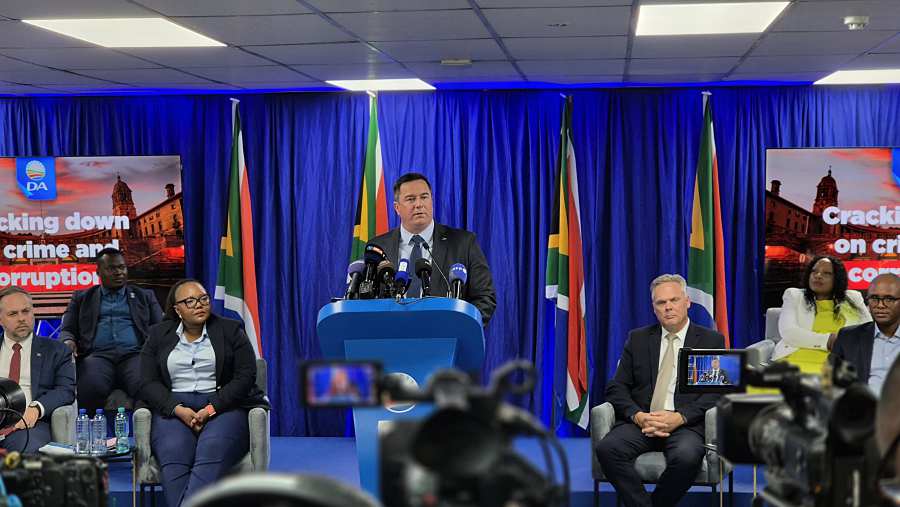
“The only empowerment South Africa needs is more jobs,” Steenhuisen stated, positioning the DA’s proposal as a move towards genuine opportunity for all. This new framework for economic redress is central to the party’s strategy within the Government of National Unity (GNU).
The proposal has drawn sharp analysis from political commentators, who acknowledge the existing policy’s shortcomings but question the DA’s motives and the feasibility of a race-neutral approach in a country still grappling with the legacy of apartheid.
A flawed policy in need of review
There is a general consensus, even among critics of the DA’s plan, that B-BBEE in its current form requires significant re-evaluation. The policy’s fundamental objective, as outlined by the Department of Trade, Industry and Competition, is to “advance economic transformation and enhance the economic participation of black people.” However, its implementation has been widely criticised.
Political analyst Hlumelo Xaba, speaking on Salaamedia, concurred that the policy has not fulfilled its original mandate. “I think we can all agree that BEE needs to be reviewed, because it has only benefited a few elite that are politically connected,” Xaba said.
He noted that from its inception, the beneficiaries have often been the same individuals, such as President Cyril Ramaphosa and Patrice Motsepe, while the policy has failed to “alleviate poverty or actually enrich those that are from the previously disadvantaged demographic.”
Xaba described a system where government contracts and tenders are consistently awarded to the same companies, questioning the policy’s effectiveness and credibility. “The problem of the policy is that… it has not really addressed… the majority of the problems that are supposed to actually ensure that everyone can participate equally and freely in the economy. Instead, it is just squeezed into benefiting a few political elite, which is where the problem is now,” he explained.
__________________________________________________________________________

https://whatsapp.com/channel/0029VaAtNxX8fewmiFmN7N22
__________________________________________________________________________
The DA’s controversial alternative
While acknowledging the flaws in the current system, Xaba views the DA’s proposal to scrap the policy entirely as a “scapegoat” for the party’s inherent opposition to transformation. He argues that the DA “does not really have a history of advocating for any progressive policy that will actually ensure that… addresses historical injustices.”
He points to the party’s advocacy for a “free market economy” and its neoliberal ideological underpinnings as the true drivers of its stance, labelling the party “anti-transformation.”
The DA’s plan is seen by some as a strategic move to attract business and middle-class voters ahead of local government elections, and potentially to appease international trade partners like the United States, who have raised concerns about race-based legislation. Xaba suggested the DA’s position is “aligned to… how they’re actually trying to please some of their Western allies.”
The DA, however, maintains that its reforms are essential for creating an environment that encourages growth and lifts people out of poverty. Steenhuisen has committed the party to fighting for these changes in Cabinet, Parliament, and all spheres of government, framing it as a necessary step towards real delivery for South Africans.
The debate now centres on whether meaningful economic redress can be achieved without policies that explicitly account for South Africa’s history of systemic racial discrimination.


__________________________________________________________________________
FOLLOW INDEPENDENT PRESS:
WhatsApp CHANNEL
https://whatsapp.com/channel/0029VaAtNxX8fewmiFmN7N22

TWITTER (CLICK HERE)
https://twitter.com/IpIndependent

FACEBOOK (CLICK HERE)
https://web.facebook.com/ipindependent

YOUTUBE (CLICK HERE)
https://www.youtube.com/@ipindependent

Think your friends would be interested? Share this story!