Mon 13 October 2025:
Europe begins phasing in a new Entry-Exit System to tighten border security and track movements of non-EU visitors. The system records biometric data such as fingerprints and facial images.
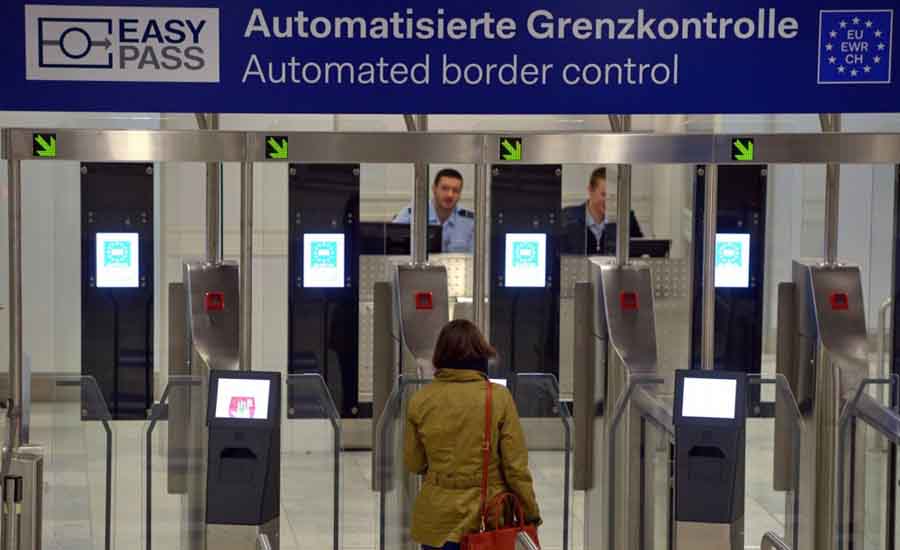
European states on Sunday began the gradual introduction of a new border entry system for non-EU nationals designed to capture more traveller data and help combat crime, the European Commission said in Brussels.
Several larger EU countries have opted for a phased roll-out to avoid overwhelming border authorities. In Germany, for instance, Dusseldorf Airport is the first to introduce the new Entry-Exit System (EES).
Nothing will change for EU citizens. Under the new system, non-EU nationals will register electronically at designated counters. Exceptions apply to those holding a residence card or who have a direct family relationship with an EU citizen.
__________________________________________________________________________

https://whatsapp.com/channel/0029VaAtNxX8fewmiFmN7N22
__________________________________________________________________________
According to the EU, in addition to the usual passport data, visitors will also have to provide biometric data – fingerprints and facial images – for storage in a database. The entry and exit dates will also be recorded.
To speed up the process at the border, some data can be submitted in advance via an app or at a self-service kiosk.
Over the next six months, the system is to be introduced gradually in all 29 countries of the Schengen passport-free travel area. These are 25 of the European Union’s 27 states, plus Iceland, Liechtenstein, Norway and Switzerland.
From April 10, 2026 the EES system is to operate at all crossing points into Europe. Passport stamps are then to become a thing of the past.
In Germany, after Düsseldorf the airports of Frankfurt and Munich will follow, the Interior Ministry said. All other airports as well as ports at the external sea borders are to be added gradually.
Rail travellers can also be affected, for example on Eurostar journeys from London to Paris, Brussels or Amsterdam.
The EU wants the new system above all to improve security and stop criminals at an early stage. Storing biometric data is intended to combat identity theft, the Brussels authority said. It is also to provide reliable information on people who overstay the length of their permit.
EU Internal Affairs Commissioner Magnus Brunner described the EES as the “digital backbone” of the new European migration and asylum framework.
“With its launch, we are modernising how we manage our external borders,” he said in a statement.
The EES is the first step in a new EU border system. In late 2026, a paid travel authorization is to become mandatory for non-EU nationals who do not otherwise require a visa, according to the EU.
This will affect citizens of more than 50 countries, including the United States, Canada, the United Kingdom, Brazil, the United Arab Emirates, Israel and South Korea.
They will then have to apply for a so-called ETIAS travel authorization, which can be refused by the authorities on security grounds. Similar systems already exist in Britain and the United States.
-DPA
__________________________________________________________________________
FOLLOW INDEPENDENT PRESS:
WhatsApp CHANNEL
https://whatsapp.com/channel/0029VaAtNxX8fewmiFmN7N22

TWITTER (CLICK HERE)
https://twitter.com/IpIndependent

FACEBOOK (CLICK HERE)
https://web.facebook.com/ipindependent

YOUTUBE (CLICK HERE)
https://www.youtube.com/@ipindependent

Think your friends would be interested? Share this story!