Wed 08 October 2025:
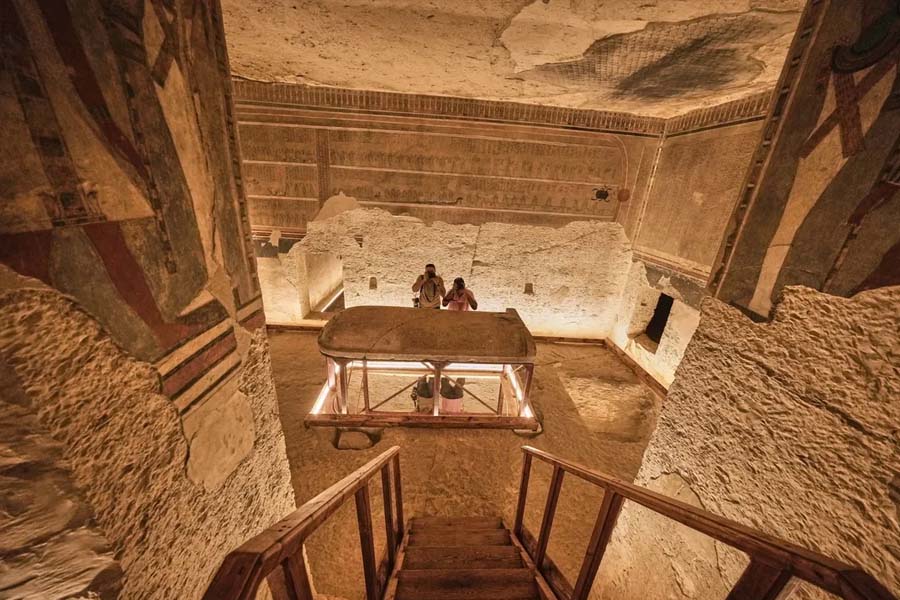
Deep within an Egyptian desert pyramid, visitors carefully navigate narrow wooden staircases spiraling into the ground, entering the long-sealed royal tomb of Pharaoh Amenhotep III, a renowned ancient Egyptian ruler.
After more than two decades, Egyptian officials have reopened the 3,400-year-old tomb to the public, revealing a historical treasure ahead of the eagerly awaited Grand Egyptian Museum opening in Cairo on November 1st.
Amenhotep III, who ascending the throne as a teenager, ruled during the 18th Dynasty’s peak, leaving behind a legacy of architectural grandeur that includes temples, palaces, and statues still admired today.
__________________________________________________________________________

https://whatsapp.com/channel/0029VaAtNxX8fewmiFmN7N22
__________________________________________________________________________
“The Tomb was discovered in 1799, and then it was rediscovered again in 1915. The tomb was discovered completely empty as it was robbed before. The lid of the sarcophagus was broken into more than 200 pieces,” said Mohamed Ismail Secretary-General of Egypt’s Supreme Council of Antiquities.
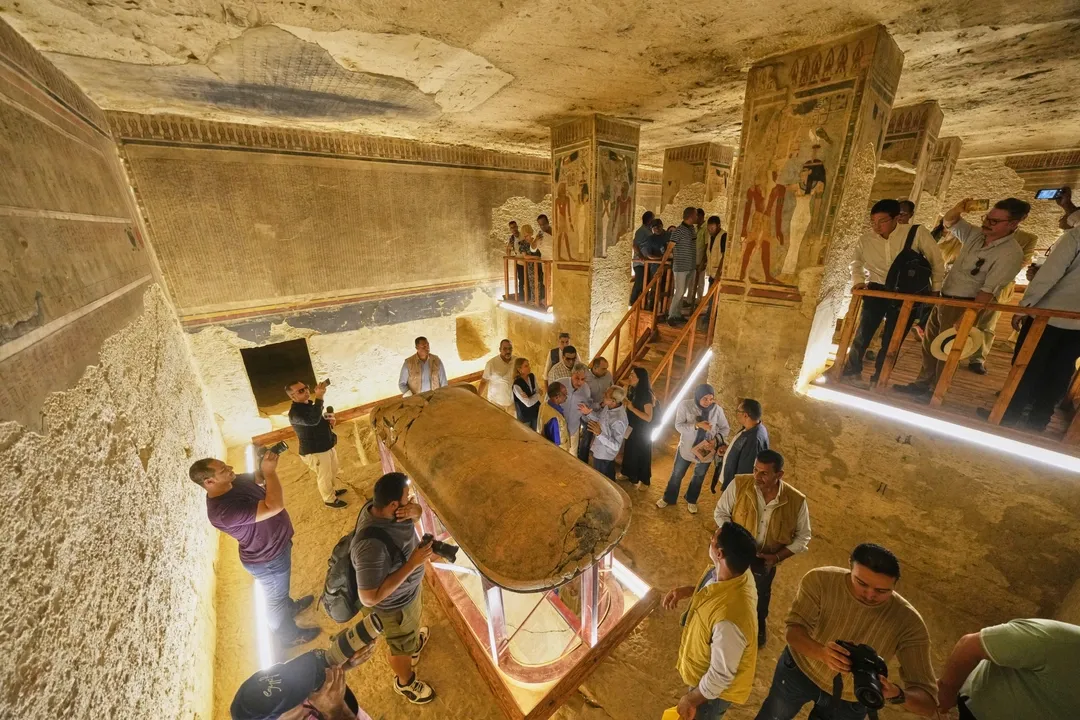
Restoration was conducted in three meticulous phases.
Yet, what remains still speaks volumes: tomb walls lined with vibrant, timeworn paintings and sacred hieroglyphs drawn from the Book of the Dead, believed to guide the pharaoh safely into the afterlife.
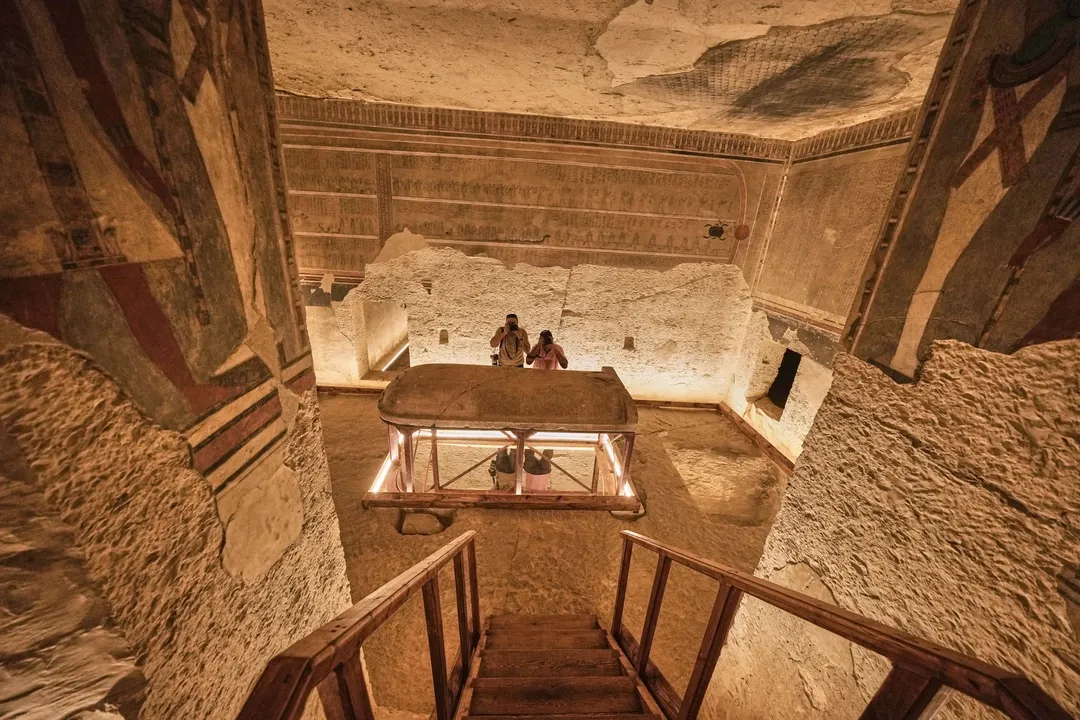
“The tomb is a fascinating marvel,” noted Mohamed Ismail, Secretary-General of the Supreme Council of Antiquities, during the reopening ceremony. “You can still see the frame of the stolen sarcophagus box, with its lid preserved in place where it once lay.”
The restoration, spanning over two decades, has been conducted in three meticulous phases — cleaning, conserving, and restoring intricate wall paintings of Amenhotep III and his royal consort, Queen Tiye. The project was carried out under the supervision of Egyptian and international teams working to stabilize the fragile underground chambers.
“260 representatives over the 20 years. Researchers specialized in conservation, special skills technicians so I feel this is a very special achievement,” remarked Nuria Sanz UNESCO Regional Director in Egypt at the opening.
Egypt Antiquities
Stretching along a 36-meter-long (118-foot) passageway that plunges 14 meters (45 feet) below ground, the tomb unfolds into a complex network of halls — one for the king himself and two for his queens, Tiye and Sitamun. The scenes depicted on the walls are striking: Amenhotep III depicted among the gods, surrounded by ritual inscriptions invoking eternal life.
The pharaoh’s mummy no longer rests within the chambers as it now lies within the National Museum of Egyptian Civilization.
“We [Egypt tourism] continue our growth at the rate of 20% and we expect this to continue to the end of the year said Sherif Fathi, Egypt’s Minister of Tourism and Antiquities.
SOURCE: INDEPENDENT PRESS AND NEWS AGENCIES
__________________________________________________________________________
FOLLOW INDEPENDENT PRESS:
WhatsApp CHANNEL
https://whatsapp.com/channel/0029VaAtNxX8fewmiFmN7N22

TWITTER (CLICK HERE)
https://twitter.com/IpIndependent

FACEBOOK (CLICK HERE)
https://web.facebook.com/ipindependent

YOUTUBE (CLICK HERE)
https://www.youtube.com/@ipindependent

Think your friends would be interested? Share this story!