Sun 26 October 2025:
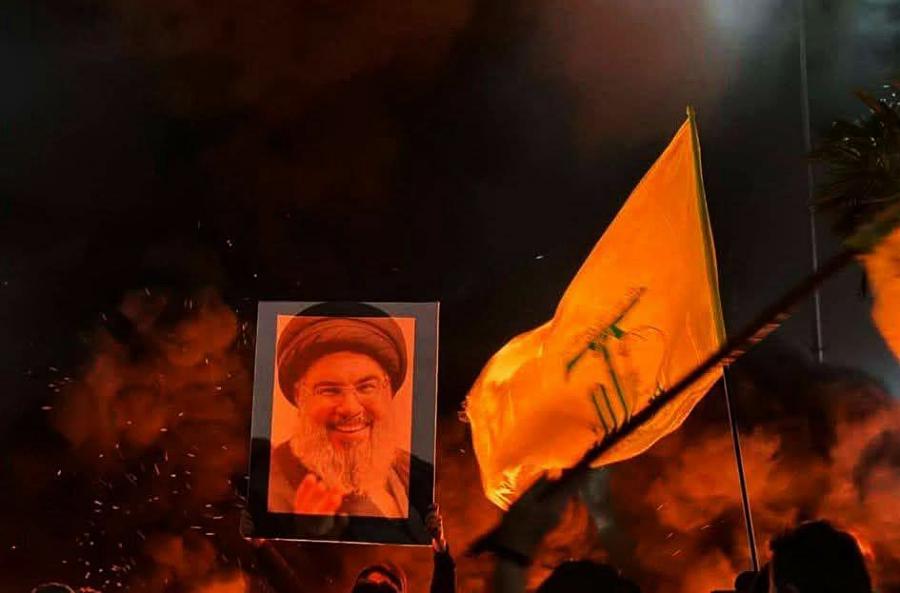
As Lebanon approaches parliamentary elections in May 2026, the country stands at a crossroads. Hizballah, the mighty image of Lebanese politics and Middle Eastern resistance, has been left battered and isolated politically after its latest confrontation with Israel. But even in its weakened position, the organization remains defiant—retaining its weapons and its strategic patronage from Iran.
The Party, also locally referred to as Hizballah, has lost nearly all its former Lebanese allies. Its decision to strike against Israel last year repelled political elites and parts of civil society. Still, Hizballah’s win in the just-concluded municipal elections demonstrates a resilience: its economic machine continues to exert power, particularly through local media and patronage networks. The elections later this year are very unlikely to produce a clear anti-Hizballah majority.
__________________________________________________________________________

https://whatsapp.com/channel/0029VaAtNxX8fewmiFmN7N22
__________________________________________________________________________
President Joseph Aoun, Lebanon’s former military leader, assumed office in January 2025 with a reform agenda and strong backing from Western countries. However, his approach to Hizballah has been cautious and calibrated. While continuing to make public commitments to disarm Hizballah, Aoun has in private ruled out using the military option. Behind closed doors, he insists that negotiations and agreements must preface any operation to reclaim Hizballah weapons. His approach is both reflective of political realism and of the limits of state power.
In January 2025, Aoun directed his staff officers to prepare a plan for disarming Hizballah by September 2. But the government has since modified its schedule. During a conversation with US Special Envoy Tom Barrack and Deputy Morgan Ortagus, Lebanese officials acknowledged that disarming Hizballah within the year is not feasible, as opposed to earlier assurances by Prime Minister Nawaf Salam.
Hizballah, in turn, reaffirmed its call for a national “defense strategy,” presenting itself as a bulwark against the specter of Israeli attack. Its current secretary general and heir to Hassan Nasrallah, Naim Qassem, has quite openly rejected any move to disarm. In an August outburst, Qassem warned that if the government attempted to seize the arms of the group, “there will be no life in Lebanon” and condemned the disarmament campaign as “an American-Israeli project” and threatened civil war if that’s what it would take.
But Hizballah’s resistance is not merely domestic. The Party remains a client of Tehran, and Iranian strategic concerns heavily influence its choices. When war broke out in June 2025 between the US, Israel, and Iran, Hizballah surprisingly played no part—most likely acting on behalf of Tehran. Iran’s National Security Adviser Ali Larijani visited Beirut in August and openly stated that “Iran is present in all forms of support for Lebanon and its resistance.” While he insisted that disarmament was a matter internal to Lebanon, sources say he privately urged Hizballah leaders to be strong and not yield anything.
This may not last. If the US and Israel launch attacks against Iran’s nuclear plants—a possibility that becomes more likely by the day—Hizballah will undoubtedly enter the fray in defense of its protector. Israeli Prime Minister Benjamin Netanyahu has frequently warned that “a strike on Iran’s nuclear sites could very well occur.” President Donald Trump, meanwhile, claimed that coordinated US-Israeli attacks in July “obliterated” key elements of Iran’s nuclear program. Intelligence reports, though, suggest a short-term reverse.
The implications for Lebanon are dire. Additional Hizballah militarization, backed by the strategic interests of Tehran, may blow apart reform and take the country back to war. The international community watches in dismay, but without unified domestic resolve, Lebanon’s fragile future hangs in the balance.
Washington remains steadfast. Deputy Ortagus just declared, “The Lebanese people deserve a sovereign state free from the grip of militias. Disarmament is not optional—it’s essential.” But US officials also acknowledge that things are complicated. The US envisions a map for Lebanon with the weapons under the control of the government, a vision Israel shares.
Israeli leaders are not as tolerant. Former Defense Minister Yoav Gallant had warned in September 2024 that “Hizballah’s refusal to disarm is a red line. If the Lebanese government cannot act, Israel will.” Such remarks have fueled speculation that any next war with Iran could quickly spill over into Lebanon and make the country a proxy war battlefield.
Meanwhile, Lebanese civil society remains polarized. There are activists demanding disarmament immediately, contending that Hizballah has helped undermine state sovereignty and instigate regional instability. Others fear that the drive could lead to violence and further destabilize the nation. The majority of the Lebanese are between a rock and a hard place and must do nothing or be provoked either way and suffer the consequences.
The coming elections present a brief opportunity for change. But short of a clear anti-Hizballah majority turning out to vote—and short of President Aoun taking bold action—the existing order is more likely than not to win the day. Hizballah will continue as an armed and empowered state within a state, maintained and facilitated by its Hezbollahmen asymmetric alliance with Tehran.
Lebanon’s fate hangs less on electoral arithmetic or diplomatic symbolism, but on its ability to navigate through a hazardous political minefield that has chronically weakened its sovereignty. Disarming Hizballah is no ordinary policy debate — it is a challenge of national identity, a reckoning with decades of paralysis and proxy allegiances. Will the state reclaim its preeminence or succumb to sloth remains an open and volatile question.
The statements, views and opinions expressed in this column are solely those of the author and do not necessarily represent those of Independent Press.
Author:

__________________________________________________________________________
FOLLOW INDEPENDENT PRESS:
WhatsApp CHANNEL
https://whatsapp.com/channel/0029VaAtNxX8fewmiFmN7N22

TWITTER (CLICK HERE)
https://twitter.com/IpIndependent

FACEBOOK (CLICK HERE)
https://web.facebook.com/ipindependent

YOUTUBE (CLICK HERE)
https://www.youtube.com/@ipindependent

Think your friends would be interested? Share this story!