Thu 13 November 2025:
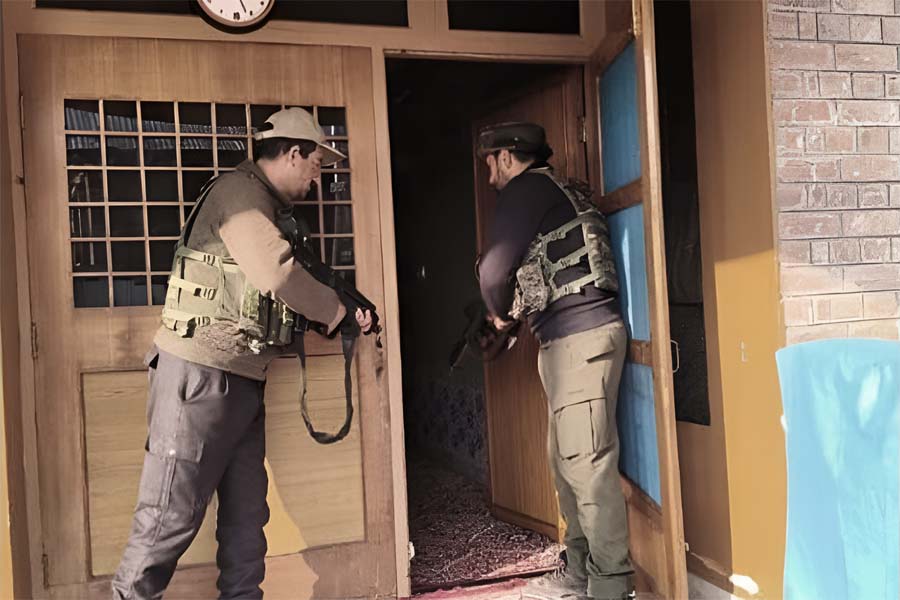
Indian authorities in Jammu and Kashmir have launched one of their biggest security crackdowns in recent months, raiding hundreds of homes linked to the banned Muslim organisation Jamaat-e-Islami (JeI).
Police said the operations, carried out across the southern districts of Kulgam, Sopore, and Shopian, targeted the homes of JeI members and their associates.
More than 200 locations were searched in a single day as part of what police described as an effort to “dismantle the terror network and its local support.”
Over the past four days, security forces have conducted more than 400 Cordon and Search Operations (CASOs) in Kulgam district alone. During these operations, entire neighbourhoods are sealed off while soldiers search homes one by one. Many residents say such searches have become a regular part of life in the region.
According to police, the searches focused on locals accused of helping militant groups, as well as former fighters and relatives of those killed in encounters.
Around 500 people have been questioned, and several have been detained under laws that allow imprisonment without formal charges or trial. Some detainees have been moved to District Jail Mattan in Anantnag.
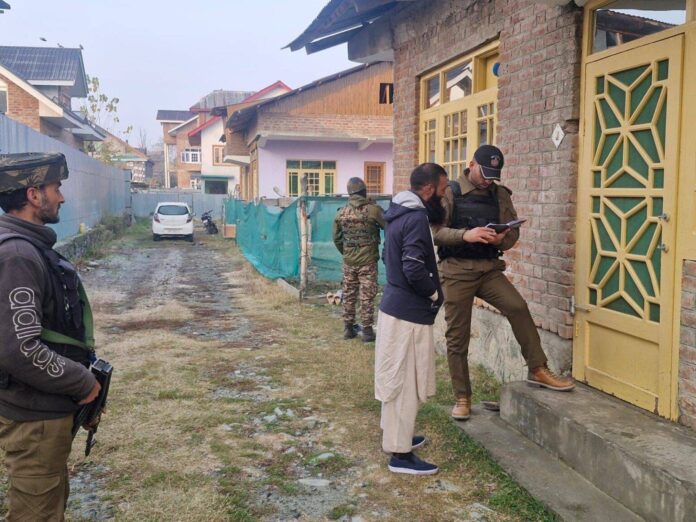
Interrogations in Indian occupied Kashmir against Muslims.
Officials also claimed to have seized “incriminating materials and digital devices” to trace networks linked to militant activities, though these claims have not been independently verified.
Locals gripped by fear
Residents in Kulgam told local reporters that the raids began before dawn and lasted for hours. Villagers said security personnel surrounded their areas, collected mobile phones, and questioned families about relatives living outside Kashmir.
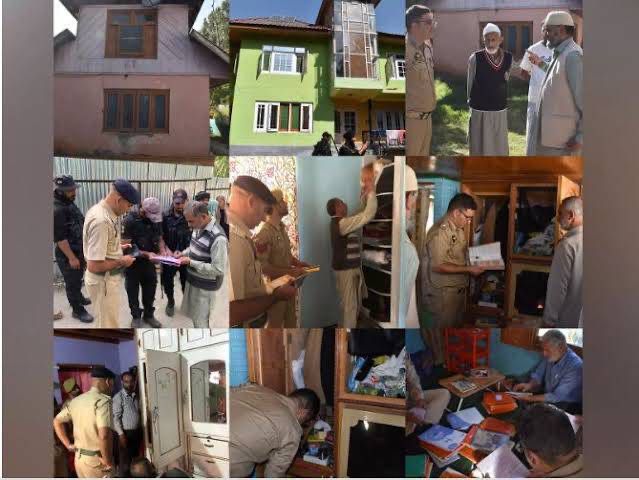
“Fear has gripped our villages,” said a local from Kulgam. “They entered every home, checked cupboards, phones, everything. We don’t know what they’re looking for anymore.”
__________________________________________________________________________

https://whatsapp.com/channel/0029VaAtNxX8fewmiFmN7N22
__________________________________________________________________________
Police have justified the operations as part of a broader security drive following a recent car blast in Delhi, which authorities linked to a Jaish-e-Mohammed (JeM) module. Officials said the blast took place after several hideouts across Jammu and Kashmir, Haryana, and Uttar Pradesh were dismantled by security agencies.
Security checks have since intensified across Anantnag, Pulwama, Baramulla, and Ganderbal, where vehicles are being stopped and searched daily.
What is Jamaat-e-Islami?
Jamaat-e-Islami (JeI) Jammu and Kashmir is a decades-old Islamic movement that once ran schools, charities, and welfare institutions across the region. The group was banned in 2019 under India’s Unlawful Activities (Prevention) Act (UAPA), the same year the government revoked Kashmir’s limited autonomy.
The government accused JeI of supporting militant groups, a charge the organisation has repeatedly denied. JeI leaders say their work is peaceful and focused on “education and social reform guided by Islamic values.”
Since the ban, dozens of JeI leaders have been arrested, and many of its properties sealed. The latest raids are seen by residents as a continuation of the state’s broader clampdown on religious and social organisations in Kashmir.
Ongoing pressure
Kashmir, a Muslim-majority region claimed by both India and Pakistan, has remained heavily militarised for more than three decades.
In August 2019, India revoked Article 370 of its constitution, ending the region’s semi-autonomous status. Since then, hundreds of politicians, activists, and journalists have been detained under laws such as the UAPA and the Public Safety Act (PSA), which allow detention without trial.
Amnesty International has said that “the use of anti-terror laws to silence civil society and religious groups undermines basic human rights.” Indian officials, however, maintain that these laws are necessary to combat militancy and maintain order.
With heavy security deployment, regular searches, and digital surveillance, everyday life in Kashmir remains tense. Many schools and mosques once run by Jamaat-e-Islami remain closed. Residents say frequent raids and interrogations have created an atmosphere of fear.
“It feels like we’re constantly under watch,” said a university student from Shopian. “They say it’s about security, but people feel targeted.”
By: Alen Bašić
is article is republished from 5Pillars. Read the original article.

__________________________________________________________________________
FOLLOW INDEPENDENT PRESS:
WhatsApp CHANNEL
https://whatsapp.com/channel/0029VaAtNxX8fewmiFmN7N22

TWITTER (CLICK HERE)
https://twitter.com/IpIndependent

FACEBOOK (CLICK HERE)
https://web.facebook.com/ipindependent

YOUTUBE (CLICK HERE)
https://www.youtube.com/@ipindependent

Think your friends would be interested? Share this story!