Sat 10 January 2026:
While Western policymakers obsess over centrifuges, sanctions, and proxy militias, they are staring past the Islamic Republic’s greatest existential threat: its own children. Iran is no longer a revolutionary state; it is a terrified, cornered theocracy clinging to power, frightened not of American warships or Israeli jets alone, but of teenagers with smartphones, dreams of changing their country, and an unbending refusal to inherit their parents’ chains.
More than 60 per cent of Iran’s population is under 30. They did not march in 1979. They did not chant for Khomeini when he descended from the plane upon his arrival from Paris. They do not see holiness in turbans or salvation in martyrs’ graves. With eyes flaming red, they see only abject failure. They grew up amid broken promises, vanishing dreams, collapsing currency, authoritarian hypocrisy, and a ruling clerical elite that spends more time policing hair and killing joy than governing competently.
__________________________________________________________________________

https://whatsapp.com/channel/0029VaAtNxX8fewmiFmN7N22
__________________________________________________________________________
When Mahsa Amini died in morality police custody in 2022, the world framed it as a protest against hijab laws. It wasn’t. It was far more profound. It was a generational mutiny. Young women tore off their scarves not in defiance of a dress code, but in rejection of the entire religious authority itself. The chant that echoed across Iran was not about fabric. It was about freedom. “We do not want your Islamic Republic” was the unspoken, and occasionally screamed, truth on the streets.
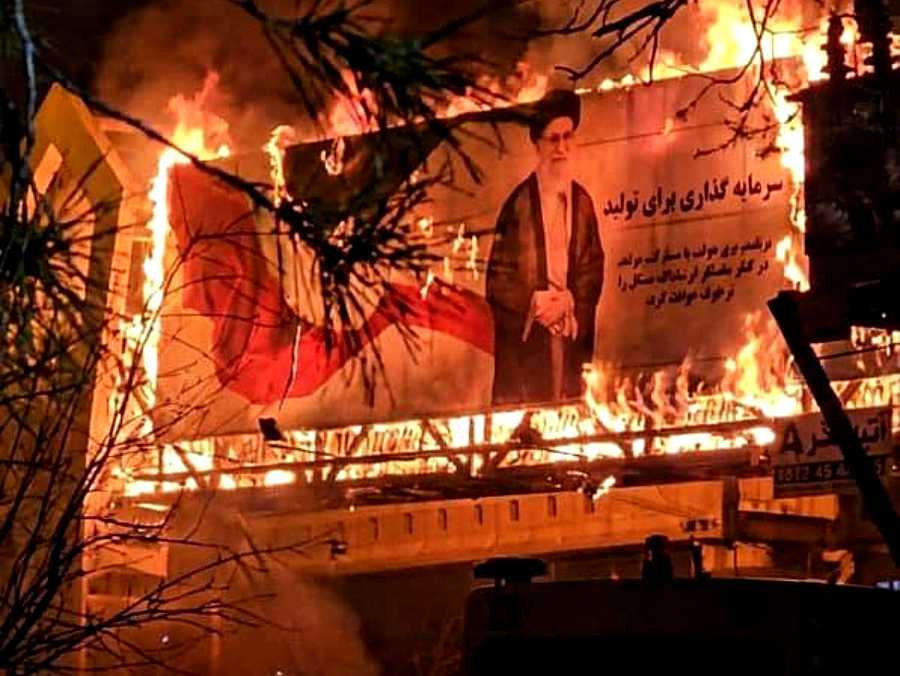
Iran’s rulers grasp the danger, and they are terrified. That is why they spend more money and time on repression than relief. That is why universities are militarized, funerals become flashpoints, and football stadiums become battlegrounds. The regime’s nightmare explains its brutality, because a sea of people has risen, advancing to tear down the halls of power.
Birth rates are collapsing. Youth unemployment hovers near 25 per cent. The brain drain bleeds tens of thousands of the country’s brightest minds every year. The average age of Iran’s leadership rises, while the patience of its youth evaporates into vicious anger. This is not a governing class; it is a geriatric aristocracy clutching power as the country’s future screams for oxygen.
The mullahs have built their rule on two pillars: fear and myth. Fear, through the iron fists of the Basij and Revolutionary Guard, and the myth of divine revolution, to wage a holy war against American imperialism. But a myth dies when daily life becomes laced with misery. Fear erodes when repression becomes routine. You cannot terrify and subdue a generation that has already lost everything.
Analysts and audacious critics inside Iran speak of a society “rotting from within”. Corruption is not incidental; it is structural. Clerics preach piety while their children buy villas in Toronto and Istanbul. Officials speak of resistance while funneling wealth into offshore accounts. Billions vanish while citizens queue for bread. This is not Islamic justice. It is organized theft dressed in religious sermons.
This is why the regime cannot inspire. It can only intimidate.
And yet, even intimidation is crumbling. The security state is exhausted. The soldiers are aging, hungry, and live on a subsistence wage. The morality police cannot arrest a generation. The regime can shut down the internet, but it cannot erase memory and extinguish anger. It cannot force a generation to believe in something it has already buried.
What does this mean for the world? For US policy? For regional security?
It means Iran is not a rising revolutionary powerhouse. It is a fragile, brittle, decaying theocracy staring down the demographic reckoning of its own making. It means the regime’s foreign military ventures are not a strength; they are a source of insecurity and drainage on its economy. It lashes outward because it fears collapse inward. It is distracted by exporting ideological ambition while its own citizens burn with resentment.
This is the Achilles’ heel Washington has yet to grasp. Iran’s fate will not be decided in Vienna negotiations or shadow wars with Israel. It will be determined in classrooms, dormitories, college campuses, underground music venues, encrypted chat rooms, and whispered conversations in Tehran’s winter nights. It will be decided by young Iranians who refuse to surrender their future to clerical ghosts.
Political Islam in Iran is aging, collapsing, decomposing — and the young generation protesting across the land is not waiting patiently for reform. They are screaming rupture and lining up to topple the trembling edifice.
Iran’s rulers can imprison dissenters, shut down cities, and spill blood. But they cannot command love. And no regime, even those armed to the teeth, survives once it becomes despised by its own children.
That is not a strategy. That is history; and history is already knocking on the Islamic Republic’s door.
The statements, views and opinions expressed in this column are solely those of the author and do not necessarily represent those of Independent Press.
Author:

__________________________________________________________________________
FOLLOW INDEPENDENT PRESS:
WhatsApp CHANNEL
https://whatsapp.com/channel/0029VaAtNxX8fewmiFmN7N22

TWITTER (CLICK HERE)
https://twitter.com/IpIndependent

FACEBOOK (CLICK HERE)
https://web.facebook.com/ipindependent

YOUTUBE (CLICK HERE)
https://www.youtube.com/@ipindependent

Think your friends would be interested? Share this story!