Sun 09 November 2025:
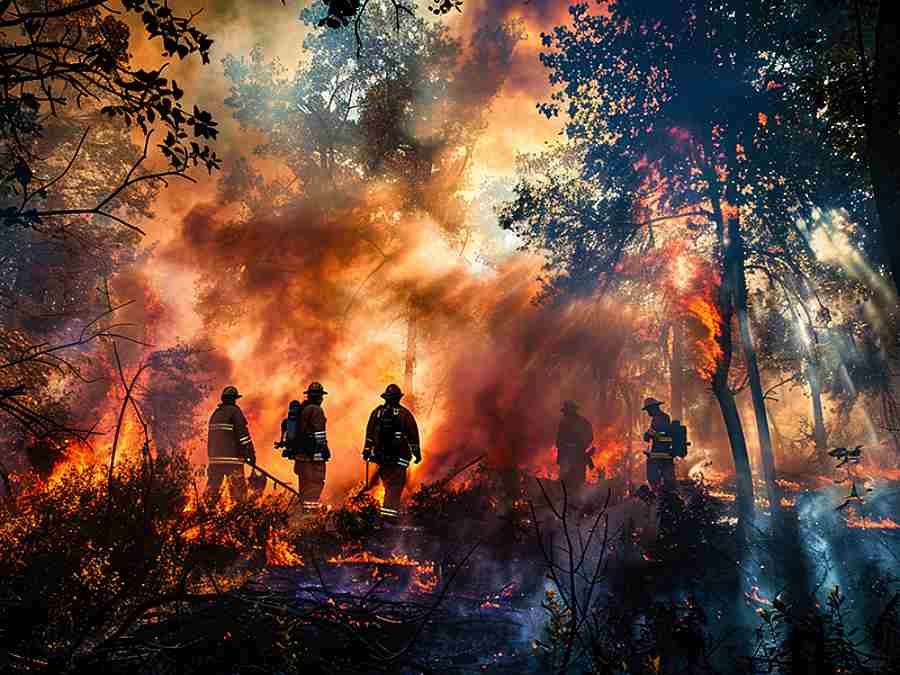
A wildfire has engulfed up to 1,800 hectares (4,448 acres) of New Zealand’s Tongariro National Park since Saturday.
No casualties or structural damage have been reported. Evacuations are ongoing for campers in the park and nearby facilities. On Saturday, 43 hikers and a warden were airlifted to safety, and nine more hikers were evacuated on Sunday, local RNZ News reported.
Firefighters say the blaze is 20% contained. Assistant Commander of New Zealand Fire and Emergency said aerial operations are a top priority, with five fixed-wing planes and 12 helicopters deployed on Sunday, supported by ground crews.
The fire was first reported Saturday afternoon, initially covering 50 hectares. Firefighting efforts were paused overnight due to the terrain and fire scale.
__________________________________________________________________________

https://whatsapp.com/channel/0029VaAtNxX8fewmiFmN7N22
__________________________________________________________________________
Tongariro National Park, New Zealand’s first national park established in 1887, covers 80,000 hectares and holds dual UNESCO World Heritage status for its cultural and natural significance. Popular trails, including the Tongariro Crossing, are closed, and a section of State Highway 47 has been shut. A no-fly zone is in place.
Nine out of ten fires are human-started—discarded cigarettes, unextinguished campfires, downed power lines, or arson.
The remaining 10% come from nature’s spark: lightning. Fuel is the buffet. Dry grass, pine needles, dead branches, and beetle-killed trees pile up like kindling. In a healthy forest, fire clears this understory.
But decades of fire suppression have left overloads of tinder in many regions. Weather turns sparks into infernos. Hot, bone-dry air sucks moisture from plants; winds above 20 mph fan flames and hurl embers a mile ahead, spotting new fires.
Enter climate change, the accelerant. Burning coal, oil, and gas has pumped CO₂ into the atmosphere, trapping heat. Global temperature is up 1.2°C since 1900. That extra warmth evaporates soil moisture weeks earlier each spring.
SOURCE: INDEPENDENT PRESS AND NEWS AGENCIES
__________________________________________________________________________
FOLLOW INDEPENDENT PRESS:
WhatsApp CHANNEL
https://whatsapp.com/channel/0029VaAtNxX8fewmiFmN7N22

TWITTER (CLICK HERE)
https://twitter.com/IpIndependent

FACEBOOK (CLICK HERE)
https://web.facebook.com/ipindependent

YOUTUBE (CLICK HERE)
https://www.youtube.com/@ipindependent

Think your friends would be interested? Share this story!