Mon 13 April 2026:
Three eminent international law and human rights experts have found that crimes against Muslims in the states of Assam and Uttar Pradesh may amount to apartheid as a crime against humanity, involving inhumane acts committed within an institutionalised regime of systematic oppression and domination over a racialised group.
The Panel is calling on the UN Human Rights Council to immediately mandate an independent fact-finding body to preserve evidence for future accountability. Their conclusions are in a new report, ‘Alleged Violations of International Law Against Muslims in Uttar Pradesh and Assam, India 2022-25’, which was launched on Tuesday, 31 March at an event in King’s College London.
Over four years, from July 2022 to January 2026, the Panel of Independent International Experts examined violations against Muslim communities in Assam and Uttar Pradesh. These two states, which together are home to over 53 million Muslims and where the Panel found that abuses are most widespread and systematic.
The panel included Sonja Biserko, Founder, Helsinki Committee for Human Rights in Serbia, and member of UN Human Rights Investigation into North Korea (2014); Marzuki Darusman, Former Prosecutor General of Indonesia, Chair of the UN Panel of Experts on Sri Lanka, and Chair of the UN Fact Finding Mission on Myanmar; and Stephen Rapp, Former Chief of Prosecutions, International Criminal Tribunal for Rwanda; Chief Prosecutor, Special Court for Sierra Leone; former US Ambassador-at- Large for War Crimes Issues.
“The UN must establish fact-finding missions to investigate the violations and adopt resolutions to demand remedial action from India. And third-party states should make use of tools under their command to initiate Universal Jurisdiction proceedings against perpetrators, and impose targeted sanctions against them, so as also to deter future abuses,” Rapp said in a press statement.
The Panel applied a standard of proof comparable to the Prosecutor’s preliminary examination at the International Criminal Court to determine whether these alleged violations warrant a formal international investigation
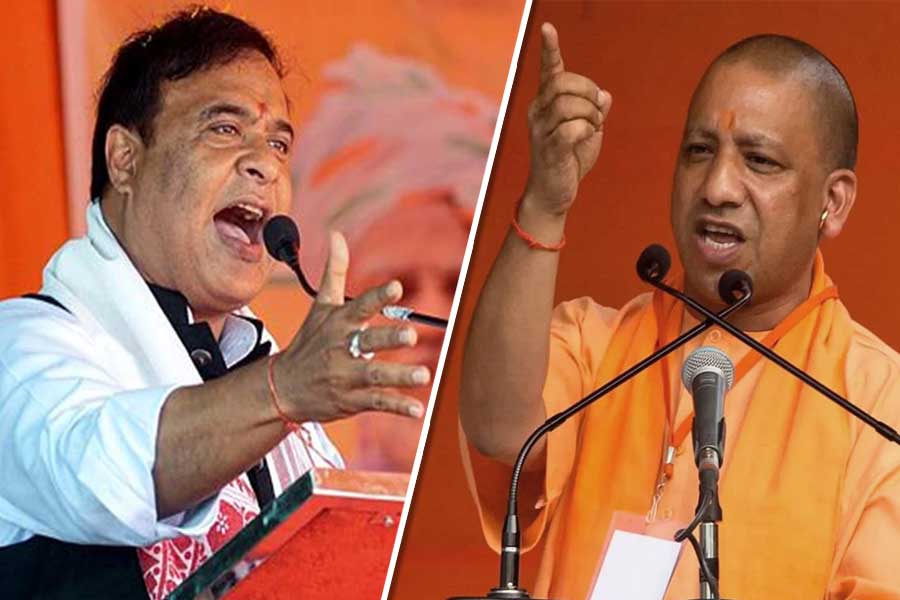
According to the report, in both Assam and Uttar Pradesh, the Chief Ministers also hold the portfolio of Home Minister, bearing direct responsibility for the police and the executive machinery implicated in these violations. Their repeated public characterisation of Muslims as security and demographic threats has functioned as a permissive signal for violence by non-state actors.
The Panel also concludes that Muslim victims face systematic barriers to justice at every stage and have no realistic prospect of securing redress through existing domestic mechanisms.
Experts say Bengali Muslims face apartheid in Assam
In Assam, the Panel found credible evidence of a systematic campaign targeting Bengali-speaking Muslims. This includes the arbitrary deprivation of nationality through discriminatory citizenship processes, exposing thousands to the risk of statelessness.
Multiple statements by the Chief Minister Himnata Biswa Sarma, portraying Bengali-speaking Muslims as ‘infiltrators’ and existential threats and invoking violent confrontation, were made in circumstances that appear to be preparing the ground for ethnic cleansing.
“In light of the erga omnes obligation to prevent genocide, such rhetoric warrants urgent measures to hold the Chief Minister accountable and stop such violence-inciting speech in the future,” the summary of the report said.
The investigation highlights large-scale forced evictions and home demolitions, which the Panel suggests may amount to the crime against humanity of persecution.
The report concludes that the institutionalised stripping of rights in Assam may constitute the crime of apartheid
Between May 2025 and January 2026, at least 2,450 Bengali-speaking Muslims were expelled from Assam, a figure acknowledged by the Chief Minister himself, including Rohingya refugees, Bangladeshi migrants, and Indian citizens. These large-scale expulsions constitute deportation or forcible transfer as a crime against humanity.
Reports from June 2025 indicate that at least 17,600 families had been uprooted since the BJP came to power in 2016 in Assam government. This pattern of forced evictions and home demolitions, alongside the systematic stripping of citizenship and residence rights from Bengali-speaking Muslims, constitutes persecution and apartheid as crimes against humanity.
__________________________________________________________________________

https://whatsapp.com/channel/0029VaAtNxX8fewmiFmN7N22
__________________________________________________________________________
‘Half-encounter’ in UP is torture as a crime against humanity
The report concludes that the widespread and systematic practice of so-called ‘half-encounter’ maimings by Uttar Pradesh Police may amount to torture as a crime against humanity, involving the intentional infliction of severe physical pain or suffering upon persons in custody or under the control of state agents as part of a widespread or systematic attack directed against a civilian population.
It also flags the institutionalised pattern of anti-Muslim hate speech in Uttar Pradesh, which may amount to persecution as a crime against humanity, insofar as it reflects the intentional and severe deprivation of fundamental rights on religious grounds as part of a widespread or systematic attack against Muslims.
Similarly, the official targeting of Muslims protesting discrimination, and separately, the discriminatory enforcement measures directed at Muslims engaged in meat-related trades, may also amount to persecution as a crime against humanity.
The state has also utilised “punitive demolitions” of homes and businesses as a form of summary punishment against Muslim protesters. Discriminatory enforcement of national security and anti-conversion laws has led to prolonged pre-trial detentions and the criminalisation of religious freedom.
The panel reccomended Indian government to fulfil ICCPR, Genocide Convention, and Responsibility to Protect (R2P) obligations; implement HRC resolution 58/29 and the Rabat Plan of Action on incitement to hatred. The experts directed the Supreme Court of India to ensure the expedient resolution of constitutional challenges to laws impacting Muslims as a religious minority.
SOURCE: INDEPENDENT PRESS AND NEWS AGENCIES
__________________________________________________________________________
FOLLOW INDEPENDENT PRESS:
WhatsApp CHANNEL
https://whatsapp.com/channel/0029VaAtNxX8fewmiFmN7N22

TWITTER (CLICK HERE)
https://twitter.com/IpIndependent

FACEBOOK (CLICK HERE)
https://web.facebook.com/ipindependent

YOUTUBE (CLICK HERE)
https://www.youtube.com/@ipindependent

Think your friends would be interested? Share this story!