Sat 14 February 2026:
Russian Deputy Foreign Minister Sergey Ryabkov on Saturday denied that the BRICS economic bloc sought to transform into a military alliance.
In an interview with the state news agency TASS, Ryabkov said BRICS is neither a military alliance nor a collective security organization with obligations regarding mutual military assistance.
“It was never conceived in that spirit, and there are no plans to transform BRICS in that direction,” Ryabkov said, arguing that the 11-member bloc’s portfolio does not include military exercises or arms control.
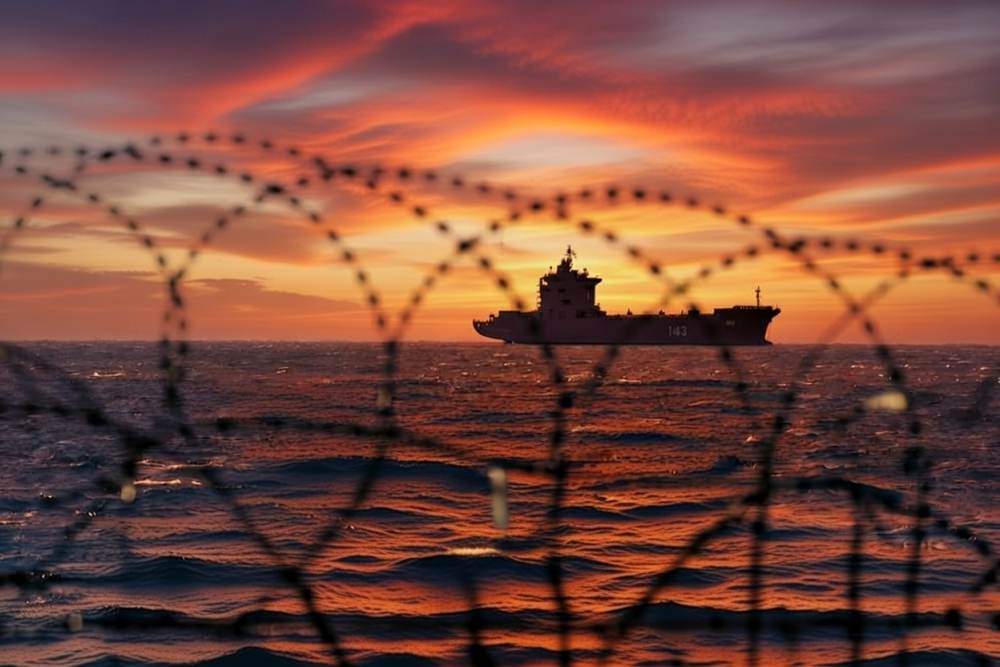
Ryabkov also denied a recent naval exercise held in South Africa was a “BRICS event,” and that members that took part did so in their national capacity. He was referring to the “Will for Peace 2026” drills held on Jan. 9-16, which included China, Iran, and Russia.

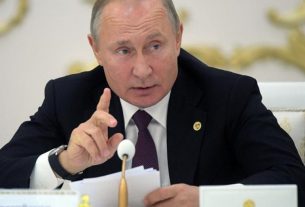
Russian Deputy Foreign Minister Sergey Ryabkov.
Asked whether BRICS could protect tankers belonging to members from attacks and ensure their safety, Ryabkov said the bloc has no potential beyond improving logistics and ensuring greater protection from sanctions, and that security must be “ensured by other means.”
BRICS was formed in 2009 by Brazil, Russia, India, and China, with South Africa joining in 2010. Egypt, Saudi Arabia, the United Arab Emirates, Ethiopia, Indonesia, and Iran later joined, expanding the group to 11 members, alongside 10 partner countries.
The Russian deputy foreign minister said the growth of trade between BRICS countries significantly exceeds the global average, “an indication that BRICS, without being some kind of ‘magic wand,’ can actually help solve problems.”
__________________________________________________________________________

https://whatsapp.com/channel/0029VaAtNxX8fewmiFmN7N22
__________________________________________________________________________
Ryabkov said BRICS can and should express solidarity with Iran, and that Moscow and Beijing are in contact with the country and working on “ensuring the appropriate political environment” for negotiations between Tehran and Washington.
According to him, the focus now is “on the negotiations Iran is conducting with its partners, on the work Iran is doing indirectly — primarily through Arab intermediaries — with the Americans,” which he believes will continue.
The US and Iran held indirect talks in Muscat on Feb. 6 with Omani mediation to discuss Tehran’s nuclear program, marking the end of a roughly eight-month suspension after the US launched strikes on Iranian nuclear facilities during the 12-day Iran-Israel war in June 2025.
Washington has also significantly increased its military footprint in the region as US President Donald Trump warns Iran, which recently faced widespread protests over worsening economic conditions, that it must make a deal.
Uranium enrichment remains a central point of dispute, with the US demanding Iran halt uranium enrichment and transfer highly enriched uranium out of the country.
The US has also sought to include Iran’s missile program and its support for armed groups in the region in the negotiations, but Tehran has repeatedly said it would not negotiate issues beyond its nuclear program.
-Source: AA
__________________________________________________________________________
FOLLOW INDEPENDENT PRESS:
WhatsApp CHANNEL
https://whatsapp.com/channel/0029VaAtNxX8fewmiFmN7N22

TWITTER (CLICK HERE)
https://twitter.com/IpIndependent

FACEBOOK (CLICK HERE)
https://web.facebook.com/ipindependent

YOUTUBE (CLICK HERE)
https://www.youtube.com/@ipindependent

Think your friends would be interested? Share this story!