Sat 06 December 2025:
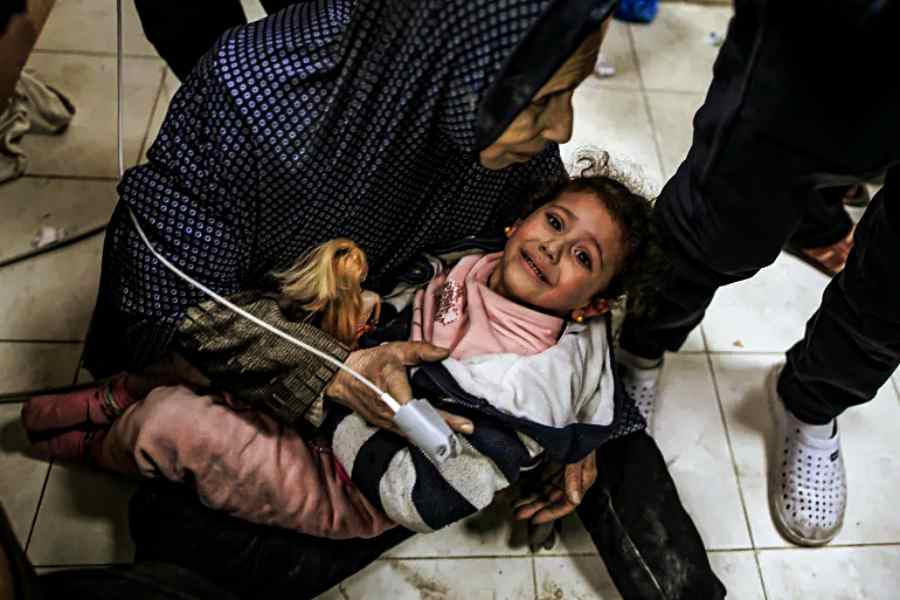
Nestor Owomuhangi, the UN Population Fund’s representative to Palestine, says the truce between Israel and Hamas “was desperately needed but it is not an end to the war for women and girls” in the Gaza Strip.
Speaking during a UN briefing via video-link from Gaza, Owomuhangi said most Palestinian families in the enclave are living in overcrowded shelters “where hunger and disease threaten daily”.
“More than 57,000 households in Gaza are now headed by women. Many of them are deeply vulnerable with no income to support their children,” he said, adding winter rain and flooding have worsened peoples’ suffering.
“People no longer ask for warmth, education or proper food. They ask for a tent, a small heater, or a light. Their expectations have collapsed, as devastating as any destroyed building.”
__________________________________________________________________________

https://whatsapp.com/channel/0029VaAtNxX8fewmiFmN7N22
__________________________________________________________________________
Gaza mothers give birth amid collapsing health system
Every week in Gaza, at least 15 women give birth outside any health facility, often without a trained midwife, pain relief or basic medical supplies.
Some are forced to deliver alone. Others rely on neighbours with no medical training. For many, childbirth has become a matter of survival.
Before the fragile ceasefire got underway in October, the UN reproductive health agency, UNFPA, estimated that 55,000 pregnant women were trapped in “a spiral of displacement, bombardment and acute hunger”, with no reliable access to care.
In the ruins of a maternity hospital, #Gaza’s mothers still find care. @UNFPA representative in Palestine, says the agency is working to keep maternity care alive.https://t.co/HEymzD3n0q pic.twitter.com/akyrn4erTE
— UN News (@UN_News_Centre) December 4, 2025
The impact has been devastating: premature births have risen sharply, along with miscarriages and stillbirths linked to severe malnutrition, exhaustion and constant fear.
Around 130 babies are born each day across Gaza. More than a quarter are delivered by caesarean section. One in five is born too early or underweight, often with complications that would normally require specialised care.
One of the midwives, Sahar, described delivering a friend’s premature baby in the besieged Zeitoun neighbourhood with nothing but a kitchen knife heated over a fire. “I had no gloves, no tools,” she said. “I used the knife to cut the umbilical cord and wet wipes as bandages.”
She recounted another attempt to reach a woman in labour while drones circled overhead.
“They were shooting at anything that moved. I had to shout instructions from a distance,” she said.
By the time she reached the woman, the baby had already emerged, blue and struggling to breathe. “He needed an incubator, but there was none.”
Mr. Owomuhangi said UNFPA is helping to ensure 98 per cent of births still take place in facilities but warned that 18 births a day are happening well beyond the hospital gates, often with tragic consequences.
Sahar described one such case where a woman haemorrhaged after delivery. “There was no blood, no transport, no doctor. We couldn’t stop the bleeding,” she said. The mother died, leaving behind her newborn.
SOURCE: INDEPENDENT PRESS AND NEWS AGENCIES
__________________________________________________________________________
FOLLOW INDEPENDENT PRESS:
WhatsApp CHANNEL
https://whatsapp.com/channel/0029VaAtNxX8fewmiFmN7N22

TWITTER (CLICK HERE)
https://twitter.com/IpIndependent

FACEBOOK (CLICK HERE)
https://web.facebook.com/ipindependent

YOUTUBE (CLICK HERE)
https://www.youtube.com/@ipindependent

Think your friends would be interested? Share this story!