Fri 23 January 2026:
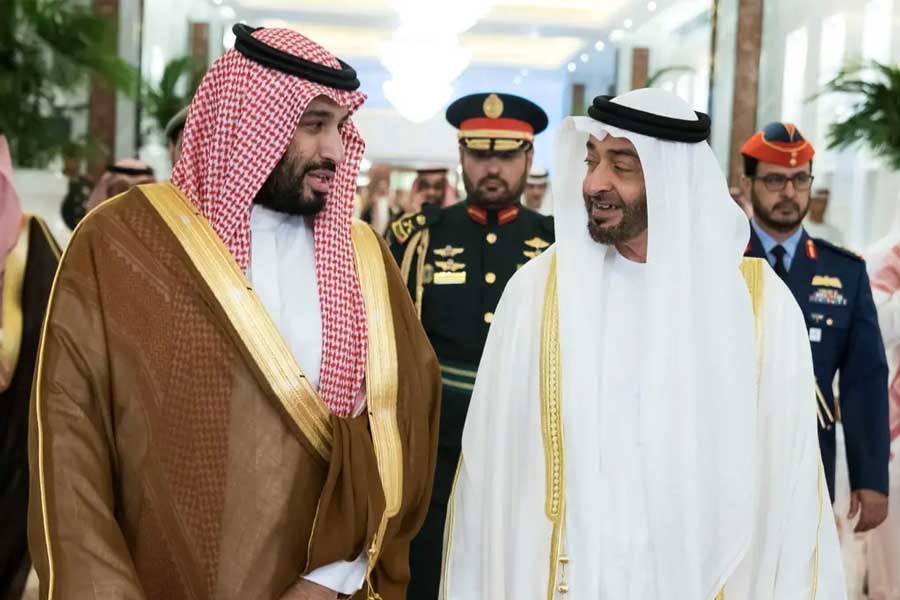
Saudi Arabia has intensified its media campaign against the United Arab Emirates, exposing a deepening rift between the two Gulf states over Yemen, regional dominance and influence in the wider Middle East.
Saudi state broadcaster Al-Ekhbariya has aired reports accusing the UAE of operating secret prisons in Yemen and backing separatist militias that threaten Saudi interests. One report from the Hadhramaut region showed narrow metal-barred cells alleged to be part of Emirati-run detention facilities. The segment followed a statement by Hadhramaut governor Salem Al-Khanbashi, who accused the UAE of managing illegal sites in the province.
The sharp escalation in rhetoric comes not simply in response to the UAE’s recent withdrawal from Yemen, but from Saudi Arabia’s growing perception that Abu Dhabi’s actions in the region pose a direct threat to Riyadh’s national security and strategic interests. Saudi has treated the UAE‑backed Southern Transitional Council’s advances in Hadhramaut and Al‑Mahra—provinces bordering Saudi Arabia—as a red line, arguing that Emirati support for separatist forces risks fragmenting Yemen and destabilising the kingdom’s southern flank.
__________________________________________________________________________

https://whatsapp.com/channel/0029VaAtNxX8fewmiFmN7N22
__________________________________________________________________________
While the UAE withdrawal was widely interpreted as a step towards de‑escalation, the renewed Saudi media campaign indicates that the kingdom now views Emirati policies, particularly its reliance on non‑state militants, as part of a broader challenge to Saudi influence and security across the region.
Saudi-aligned analysts and influencers have called for the closure of land borders and airspace between the countries. One prominent Saudi commentator described the UAE’s actions in Yemen as a “betrayal of partnership,” accusing Abu Dhabi of enabling the Southern Transitional Council’s (STC) recent offensive in Hadhramaut and Al-Mahra, provinces on Yemen’s eastern border with Saudi Arabia. Riyadh views these advances as a direct threat to its national security.
The feud has roots in the fragmented alliance both states led in Yemen’s war against the Houthis. While Saudi Arabia backed the internationally recognised Yemeni government, the UAE supported separatist groups such as the STC, whose territorial ambitions often clashed with Saudi goals.
But the divergence now extends beyond Yemen. Tensions have emerged over Sudan, the Horn of Africa and the broader use of proxy actors. Analysts say Riyadh favours a return to centralised state structures, while Abu Dhabi sees value in cultivating non-state clients and militias.
Prominent Saudi voices have begun to frame the rift not as a contest for dominance, but as a philosophical divide. Writing on X, Saudi analyst Salman Al-Oqeily suggested the UAE’s reliance on proxies undermines the goal of restoring stable nation-states. He noted that the kingdom seeks a unified, sovereign state model, while the UAE prefers influence through its armed militants and proxies.
In one of his latest tweets, Al-Oqeily said: “The axis of chaos will not be deterred from its destructive projects except through a comprehensive confrontation.!”
من الواضح ان القاعدة تلقت امر عمليات من صديقها في ابوظبي لتصفية الحسابات مع المغادرين قارب عيدروس الزبيدي الغارق ! ولإفساد خطط تمدين عدن وخلط أوراق امنها واستقرارها !
محور الفوضى لن يرتدع عن مشاريعه التخريبية إلا بمواجهة شاملة . https://t.co/juuI7sEPCW— سليمان العقيلي (@aloqeliy) January 21, 2026
At the same time, Saudi media has increasingly sought to draw contrasts between Abu Dhabi and Dubai, hinting at a domestic power imbalance within the Emirati federation. This tactic appears calculated to exploit internal fissures, recalling similar smear campaigns deployed during the 2017 Gulf crisis, when Saudi Arabia and the UAE blockaded Qatar.
These exchanges mark a rare public spat between Gulf monarchies, which traditionally maintain the appearance of unity in public despite political disagreements behind closed doors. The coordinated tone of Saudi outlets and social media activists suggests the attacks are sanctioned at the highest level.
Observers say the fallout could reshape the Gulf and the wider region. Saudi Arabia, increasingly assertive under Crown Prince Mohammed bin Salman’s centralised leadership, appears willing to challenge what it sees as Emirati overreach.
-MEMO
__________________________________________________________________________
FOLLOW INDEPENDENT PRESS:
WhatsApp CHANNEL
https://whatsapp.com/channel/0029VaAtNxX8fewmiFmN7N22

TWITTER (CLICK HERE)
https://twitter.com/IpIndependent

FACEBOOK (CLICK HERE)
https://web.facebook.com/ipindependent

YOUTUBE (CLICK HERE)
https://www.youtube.com/@ipindependent

Think your friends would be interested? Share this story!