Tue 02 December 2025:
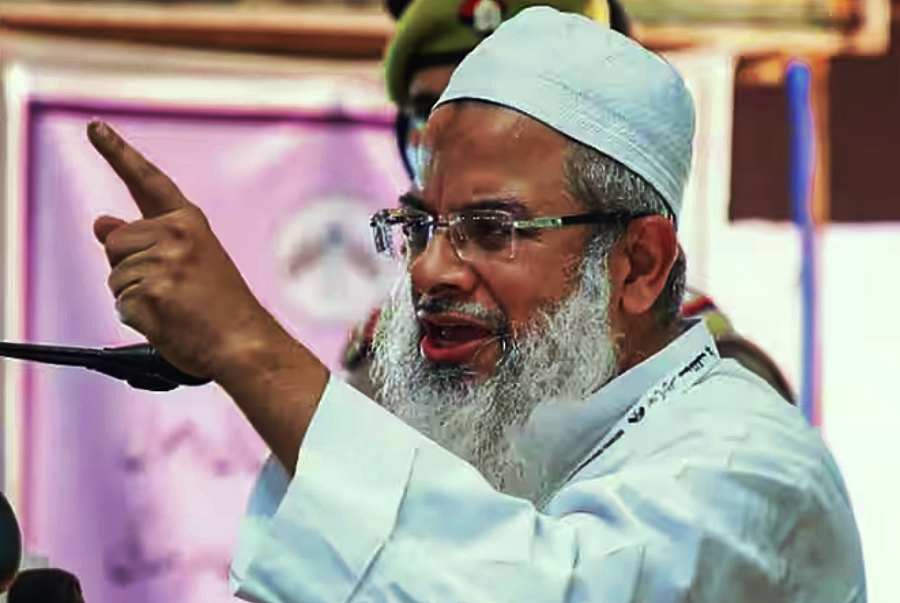
Jamiat Ulema-e-Hind (JUH) president Maulana Mahmood Madani has sparked a nationwide debate with his sharp criticism of the Supreme Court, the central government, and what he described as a “systematic campaign” to target India’s Muslim community. Speaking at a JUH gathering in Bhopal, Madani accused constitutional institutions of failing minorities and warned that attempts to demonise Islamic concepts—particularly “jihad”—were part of a broader ideological assault.
His remarks, which touched on judicial independence, religious freedom, “ghar wapsi” campaigns, anti-Muslim rhetoric, and the misuse of terms like “love jihad,” have triggered strong reactions from political groups, Hindutva organisations, and civil-society actors. The controversy has also reignited long-standing debates about secularism, minority rights, and the changing relationship between state institutions and India’s Muslim population.
__________________________________________________________________________

https://whatsapp.com/channel/0029VaAtNxX8fewmiFmN7N22
__________________________________________________________________________
Madani’s Charge: ‘Judiciary Acting Under Pressure’
In one of his strongest public critiques yet, Madani said the Supreme Court could be called “Supreme” only as long as it strictly adhered to constitutional principles. He pointed to several recent verdicts—especially those concerning temple-mosque disputes and issues of Muslim personal law—as examples of judicial decisions that have weakened minority confidence.
He argued that cases protected under the Places of Worship Act, 1991 were being reopened in ways that suggested political influence. Madani cited the Babri Masjid judgement, the triple-talaq ruling, and ongoing litigation involving the Gyanvapi, Mathura, and Dhar temple-mosque disputes, saying these trends created a “perception of judicial partisanship.”
Without naming specific judges, Madani claimed that certain court decisions appear to align “suspiciously” with majoritarian demands and that the judiciary must remain “independent, not an extension of government authority.”
“Our Constitution protects every community,” he said. “But today, minorities see courts giving verdicts that appear to satisfy the majority sentiment rather than uphold constitutional equality.”
On ‘Jihad’: ‘A Sacred Term Turned into a Weapon’
A major portion of Madani’s speech addressed the misuse of the term “jihad” in political and media narratives. He condemned expressions such as “love jihad,” “land jihad,” “spit jihad,” and “economic jihad,” saying these were not merely rhetorical distortions but deliberate strategies to stigmatise Muslims.
Madani clarified that in Islamic tradition, “jihad” signifies a moral and spiritual struggle against injustice—not violence. “Wherever there is oppression, there will be jihad,” he said, emphasising that this struggle refers to constitutional, moral and social efforts to resist injustice.
He cautioned that equating “jihad” with terrorism has allowed anti-Muslim narratives to flourish unchallenged. “Those who misuse the word want to portray Muslims as inherently violent. They seek to criminalise our faith itself,” he said.
At the same time, he reiterated that Indian Muslims reject violent interpretations of the term. “This country is our homeland; our struggle is within the law and the Constitution,” he asserted.
‘Ghar Wapsi’ and Charges of Double Standards
Madani also criticised the growing wave of “ghar wapsi” initiatives—programmes aimed at converting non-Hindus to Hinduism under the claim of “returning” them to their ancestral faith.
He argued that while Muslim or Christian proselytisation is legally scrutinised and often criminalised under anti-conversion laws, “ghar wapsi” efforts openly take place with political patronage and police protection.
“When Muslims speak of da‘wah (inviting to religion), they are accused of deception. But when others convert Muslims in the name of ghar wapsi, it is celebrated as social reform,” he said. This, he argued, reflected a “dangerous double standard” that erodes the secular fabric of India.
Madani also questioned why states conduct raids or file FIRs against Muslim preachers while organisations conducting mass Hindu conversions face little legal interference. “Is religious freedom applicable only to one community?” he asked.
Bulldozers, Boycotts, and ‘Systematic Marginalisation’
Madani said Muslims were facing legal, economic and social discrimination on multiple fronts—ranging from mob attacks and hate speech to bulldozer demolitions, vigilantism, and targeted economic boycotts.
He described symbolic pressures—such as demands to chant particular slogans, sing specific songs, or publicly demonstrate loyalty—as “coercive nationalism” aimed at forcing cultural assimilation.
“A society that forces its minorities to prove their patriotism again and again is not confident; it is insecure,” he said. “And a community that blindly submits to such pressure becomes a dead community.”
He warned that these forms of coercion were undermining India’s pluralistic ethos. “We love our country, but we will not surrender our religious dignity,” he declared.
Madani’s Warning: ‘India’s Situation Extremely Sensitive’
Calling the present environment “highly sensitive and deeply worrying,” Madani said Muslim youths are growing up in a climate where their identity is constantly questioned. He urged both the government and civil society to recognise the long-term consequences of marginalisation.
“When a community feels cornered, deprived of justice, and targeted by the state and its institutions, it threatens the unity and integrity of the nation,” he said.
Madani insisted that despite provocations, Indian Muslims have remained peaceful and committed to constitutional democracy. “India is our home. We have always worked for its progress and will continue to do so,” he added.
Political Reactions and Outrage
Madani’s remarks quickly drew sharp responses:
From the BJP and allied groups
Ruling-party leaders accused him of making “incendiary, divisive comments” and attempting to incite Muslims by invoking the idea of “jihad,” despite his contextual explanation. Hindutva organisations alleged that his speech whitewashed extremist theology.
Some BJP figures demanded legal action, saying Madani had insulted the Supreme Court and attempted to undermine public faith in constitutional bodies.
From Muslim and civil-society groups
Reactions were mixed.
Many organisations expressed agreement with his concerns about discrimination and judicial trends. Others cautioned that invoking “jihad”—even in a moral sense—could be misinterpreted and used to further vilify Muslims.
Activists and scholars questioned why criticism of judicial decisions should be labeled anti-national when similar critiques from other communities are tolerated.
What Lies Ahead
Madani’s speech has intensified an ongoing national debate about:
judicial independence safeguarding the Places of Worship Act rising hate campaigns against Muslims coercive nationalism and religious identity freedom of religious expression and propagationthe unequal application of anti-conversion laws
Whether the Supreme Court or government responds formally remains to be seen.
But Madani’s remarks have already energised discussions within Muslim organisations, drawn criticism from political opponents, and forced civil society to confront deeper questions about India’s secular structure and the protection of minority rights.
This article is republished from Muslim Mirror. Read the original article.

__________________________________________________________________________
FOLLOW INDEPENDENT PRESS:
WhatsApp CHANNEL
https://whatsapp.com/channel/0029VaAtNxX8fewmiFmN7N22

TWITTER (CLICK HERE)
https://twitter.com/IpIndependent

FACEBOOK (CLICK HERE)
https://web.facebook.com/ipindependent

YOUTUBE (CLICK HERE)
https://www.youtube.com/@ipindependent

Think your friends would be interested? Share this story!