Sun 19 October 2025:
The complete regrowth of lost teeth has long been a sought-after dream in dentistry. Although current artificial solutions like implants and dentures partially restore function, they cannot fully replicate the biological integrity and sensation of a natural tooth. Scientists are thus working to understand the cellular mechanisms behind natural tooth formation.
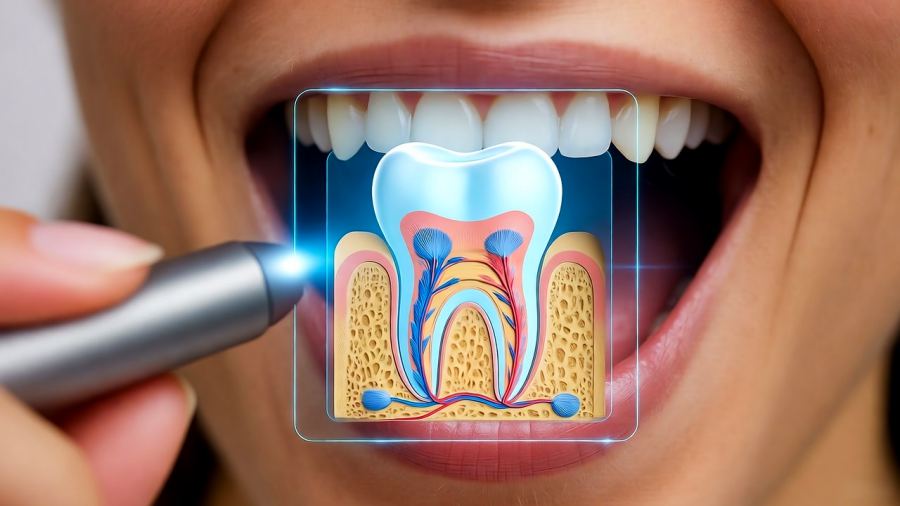
The formation of the tooth and the surrounding bone is a complex process. Delicate communication networks between the enamel, dental pulp, and jawbone cells create the tooth’s crown, root, and supporting tissues. The details of these signaling networks had not been fully resolved until now.
__________________________________________________________________________

https://whatsapp.com/channel/0029VaAtNxX8fewmiFmN7N22
__________________________________________________________________________
To address this knowledge gap, Associate Professor Mizuki Nagata (Tokyo University of Science) and Dr. Wanida Ono (Texas Health Science Center, Houston), collaborated with scientists from the University of Michigan.
The study, conducted on genetically modified mice, investigated the signals that cause stem cells to differentiate during tooth development. The findings were published in two separate articles in the July 2025 issue of the journal Nature Communications.
The researchers identified a previously uncharacterized group of mesenchymal stem cells that separates into two different cell lines:
The First Group: Located in the soft tissue at the tip of the tooth root, called the apical papilla. These cells produce the CXCL12 protein, which also plays a role in bone marrow. When activated via the Wnt signaling pathway, they can differentiate into odontoblasts (which form dentin, the tooth’s main substance), cementoblasts (which produce cementum), and even osteoblasts (which generate new bone tissue).
The Second Group: Found within the dental follicle surrounding the developing tooth. These cells carry the PTHrP protein and can form the periodontal ligament, cementum, and alveolar bone under specific conditions. However, this transformation occurs only when a signaling pathway called Hedgehog–Foxf is suppressed. Dr. Nagata explained, “This mechanism regulates bone formation through a controlled signal on/off system specific to dental tissues.”
The research revealed, in unprecedented detail, how the tooth root and surrounding bone are naturally shaped. These findings may form the basis for future stem cell-based treatments for tooth and bone regeneration.
Dr. Nagata concluded, “Our work reveals the mechanism governing tooth root formation, providing a scientific basis for innovative treatments where dental pulp, gum, and bone tissues can be regenerated.”
-Source: AA
__________________________________________________________________________
FOLLOW INDEPENDENT PRESS:
WhatsApp CHANNEL
https://whatsapp.com/channel/0029VaAtNxX8fewmiFmN7N22

TWITTER (CLICK HERE)
https://twitter.com/IpIndependent

FACEBOOK (CLICK HERE)
https://web.facebook.com/ipindependent

YOUTUBE (CLICK HERE)
https://www.youtube.com/@ipindependent

Think your friends would be interested? Share this story!