Tue 02 December 2025:
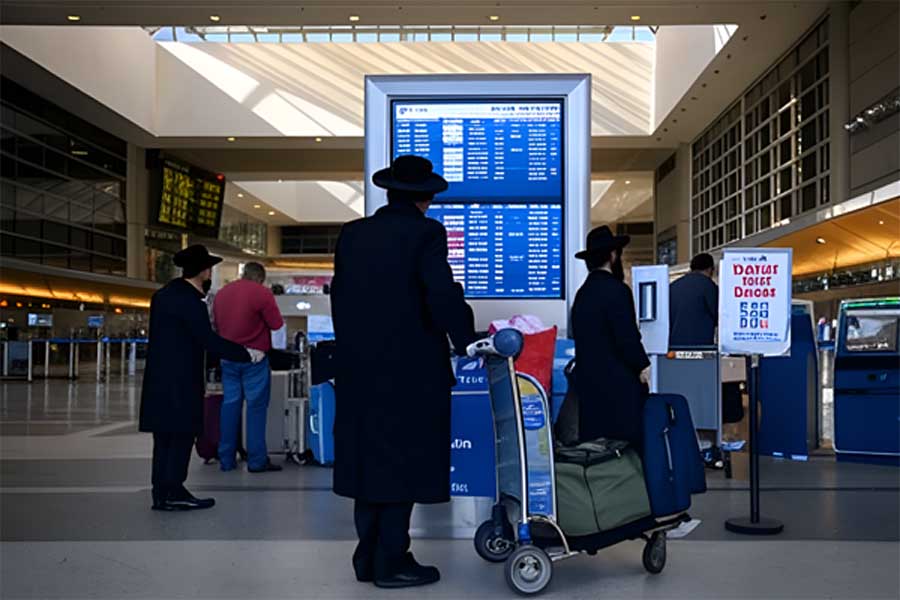
Israel today is grappling not with the battlefield alone, but with a far subtler, far more consequential collapse: the evaporation of confidence among its own citizens. Recent data from the Israel Democracy Institute (IDI) paints a disquieting picture. According to the April 2025 survey, more than a quarter of Israelis — approximately 27 per ent — are seriously contemplating leaving the country. For a nation long mythologised as resilient, cohesive, and invincible, these numbers represent not just a shift in sentiment, but an existential fissure.
The timing of the survey amplifies its significance. Conducted before major escalations such as the Israel-Iran war and the high-profile hostage negotiations, the poll nevertheless reflects the early tremors of disillusionment. Israelis’ faith in their nation’s future is faltering; many no longer believe they can reclaim what has been lost. Where once narratives of unity, social cohesion, and collective endurance flourished — particularly after the horror of Hamas’ 7 October 2023 attack — a more sober, anxious, and fractured consciousness is taking root.
__________________________________________________________________________

https://whatsapp.com/channel/0029VaAtNxX8fewmiFmN7N22
__________________________________________________________________________
To understand this shift, one must first recognise the ideological scaffolding Israel has relied upon for decades. The state’s social and political narrative rested on four pillars: moral clarity, military superiority, unshakeable Western backing, and social cohesion. Each has been critically undermined. Moral clarity has been called into question by the protracted, devastating campaign in Gaza, which has drawn global condemnation for its humanitarian toll. Military supremacy, once a cornerstone of national pride, has been challenged by asymmetrical engagements, extended hostilities, and mounting civilian casualties. Western support, once presumed immutable, is now increasingly conditional and contested in international forums. And social cohesion — long celebrated as a unifying force across diverse ethnic, religious, and political lines — has splintered along multiple fronts, from intra-Jewish ideological divides to tensions with Palestinian citizens of Israel, to discontent among settlers and peripheral communities.
The survey reveals something more than mere dissatisfaction. It reflects a profound disengagement from the Zionist promise itself. For generations, Zionism articulated the vision of a homeland where Jews would find security, prosperity, and collective dignity. That promise, embedded deeply in the Israeli psyche, now seems increasingly hollow. Young Israelis in particular see themselves trapped within a system defined by militarism, political rigidity, and social inequity. They confront sky-high living costs, a widening economic gap, entrenched far-right influence, and an existential political uncertainty that leaves little room for hope. A growing sense of isolation — both geographically and morally — feeds into the contemplation of emigration.
In past crises, Israelis turned to national solidarity, trusting that shared sacrifice and resilience would carry them through. Today, that solidarity is fraying. The government’s handling of hostages and military operations has sparked accusations of incompetence and moral compromise. Conflicts between secular and religious Jews, and between urban elites and peripheral populations, have sharpened long-standing resentments. Palestinian citizens of Israel are increasingly alienated, facing heightened surveillance, harassment, and legal marginalisation. What appeared as national cohesion after 2023 is now recognised as a fragile façade, capable of cracking under stress.
Economic factors exacerbate this psychological erosion. Israel’s reliance on a highly mobile, high-tech economy means that many of those most capable of contributing to growth are the same people now considering departure. Brain drain, investor wariness, and declining tourism are not just economic concerns; they are signals that Israel’s global relevance and internal viability are being questioned. The “Start-Up Nation” myth is being replaced by an image of militarised instability, political dysfunction, and uncertainty over fundamental civil rights.
Internationally, Israel is facing a legitimacy crisis. Protests, UN resolutions, and proceedings in the International Court of Justice and the International Criminal Court underscore a growing global perception of Israel’s moral failings. Once shielded by unquestioning Western support, the country now senses that this foundation is eroding. Moral exceptionalism, which had provided a sense of national security and self-justification, is under assault — leaving a population increasingly anxious about both international standing and domestic future.
Fear has become a defining emotion in Israeli society. Citizens worry that the conflict is unending, that far-right theocracy is gaining permanent political dominance, and that prolonged occupation has become a moral and strategic dead end. Concerns about isolation, economic decline, and generational inheritance of perpetual militarism weigh heavily on public consciousness. The political narrative that once offered pride and purpose has been replaced with existential anxiety.
This fear is compounded by demographic signals. In surveys, it is particularly young, secular, and highly educated Israelis — often those holding second citizenships — who are most likely to consider leaving. In this context, emigration is no longer a mere convenience; it becomes a rational response to an existential crisis. It represents a quiet rejection of the system rather than open rebellion, yet its cumulative impact is enormous: a slow bleed of confidence, talent, and civic engagement.
The fracture is not only ideological or emotional. It is social, political, and generational. The narrative of Israeli resilience — cultivated after every previous crisis — now seems inadequate, even toxic. Young citizens question the very legitimacy of institutions. They see social divisions deepen, government failures multiply, and democratic norms erode under the strain of perpetual conflict and nationalist excess. Civil society, once a source of hope and mediation, finds itself squeezed between militarized governance and public disillusionment.
The implications are profound. Israel is not collapsing in a spectacular, observable implosion; it is dissolving slowly, through attrition in trust, civic engagement, and social cohesion. When a quarter of a population contemplates emigration, it signals a crisis far deeper than policy disputes or temporary fatigue. It reflects a population disengaged from national purpose, uncertain of leadership, and doubting whether the social contract remains credible.
The path forward is uncertain, but the consequences of inaction are clear. Without meaningful political reform, inclusive governance, economic opportunity, and moral accountability, Israel risks further demographic and psychological attrition. National identity, once reinforced by shared purpose and historical narrative, may instead be eroded by fear, alienation, and migration. Every citizen lost to emigration is a citizen removed from the collective project, a fragment of social cohesion dissolved.
Israel’s current crisis demonstrates a critical truth: a state’s endurance is not guaranteed by military victories, global support, or historical mythology. It survives through the faith of its citizens, their belief in shared purpose, and the legitimacy of its institutions. When that faith evaporates, no military shield, no ideological narrative, and no external alliance can compensate. A nation can exist on maps, in embassies, and in treaties — but it lives, truly, only in the hearts of its people.
More than 25 per cent of Israelis now report that they are considering leaving. That is the starkest indicator of evaporation: a nation losing confidence not to external conquest, but to internal despair. For Israel, the challenge is not simply survival in a military or geopolitical sense; it is survival in the moral, psychological, and civic dimensions that define a living, functioning society.
If Israel is to endure, it must confront this reality with honesty. It must rebuild trust, provide economic opportunity, ensure equitable governance, and restore the civic and moral foundations that sustain a nation. Otherwise, the state risks being remembered not as an enduring homeland, but as a society that quietly lost its own people — and with them, the future it promised.
The statements, views and opinions expressed in this column are solely those of the author and do not necessarily represent those of Independent Press.
Author:

__________________________________________________________________________
FOLLOW INDEPENDENT PRESS:
WhatsApp CHANNEL
https://whatsapp.com/channel/0029VaAtNxX8fewmiFmN7N22

TWITTER (CLICK HERE)
https://twitter.com/IpIndependent

FACEBOOK (CLICK HERE)
https://web.facebook.com/ipindependent

YOUTUBE (CLICK HERE)
https://www.youtube.com/@ipindependent

Think your friends would be interested? Share this story!