Sat 11 April 2026:
Analysts say the US mischaracterised and falsely labelled the attacks as a Christian genocide and misunderstood how complex terrorism is in Nigeria.
Two months ago, the United States arrived in Nigeria with the language of resolve—offering intelligence, training, and strategic support to help confront a deepening terror crisis. But on Thursday, news broke that Washington ordered non-essential embassy staff and their families to leave Abuja, citing worsening insecurity.
The contrast is hard to ignore. A world superpower arriving in messianic apparel yet asking embassy staff to flee less than two months later raises a pressing question that some analysts say perhaps begins with how the terror attacks have been framed at first.
Nigerian security analyst Mubarak Aliyu argues that early external interpretations — particularly from the United States, which falsely framed it as ‘‘Christian genocide’’ — distorted a deeply layered crisis, and now confronts Washington with the uncomfortable reality that the war against terror it thought it understood is not quite the one being fought.
__________________________________________________________________________

https://whatsapp.com/channel/0029VaAtNxX8fewmiFmN7N22
__________________________________________________________________________
‘False narrative’
“The US mischaracterised and falsely labelled the attacks as a ‘Christian genocide’. There was a misunderstanding of how complex terrorism in Nigeria is, and there was a misunderstanding of how many actors exist in the space,” Aliyu tells TRT Afrika.
According to the analyst, violence in Nigeria cannot be reduced to a single, and even worse, false narrative as the US did. The security challenge is instead a convergence of multiple forces: communal clashes, ethnic tensions, criminal banditry, separatist movements, and terrorism by Boko Haram and Daesh – all overlapping, sometimes feeding into each other.
“The US narrative was false and wasn’t backed up by available conflict data,” Aliyu says.
That misreading, he suggests, may have shaped the kind of interventions the US had offered.
Residents inspect the damage after U.S. forces had launched a strike against Daesh terrorists in Nigeria.
A US airstrike in late 2025, which Washington claimed targeted terrorists in north-west Nigeria, for instance, remains difficult to evaluate.
“We don’t know how many terrorists were actually neutralised,” Aliyu says. “But we know that it has increased tensions. Terrorist groups tend to use these kinds of acts to recruit — to say, ‘this is why we are against western influence.’”
After that December strike, a wave of terror attacks was unleashed. Just this week, grieving families gathered for mass burials in Plateau State, north-central Nigeria, after gunmen opened fire on residents in the Angwan Rukuba community of Jos North Local Government Area, killing at least 30 people.
A structural fault
For security analyst Kabiru Adamu, also from Nigeria, the scale and persistence of violence point to something more structural.
“The national security apparatus has not taken very clear and cogent steps to bring the activities of terrorists to an end,” Adamu tells TRT Afrika.
The numbers reinforce that concern. In 2024, at least 9,662 people were killed in violent incidents across Nigeria, with the vast majority in the north. By 2025, fatalities rose to 11,968, according to data from the Armed Conflict Location & Event Data Project (ACLED).
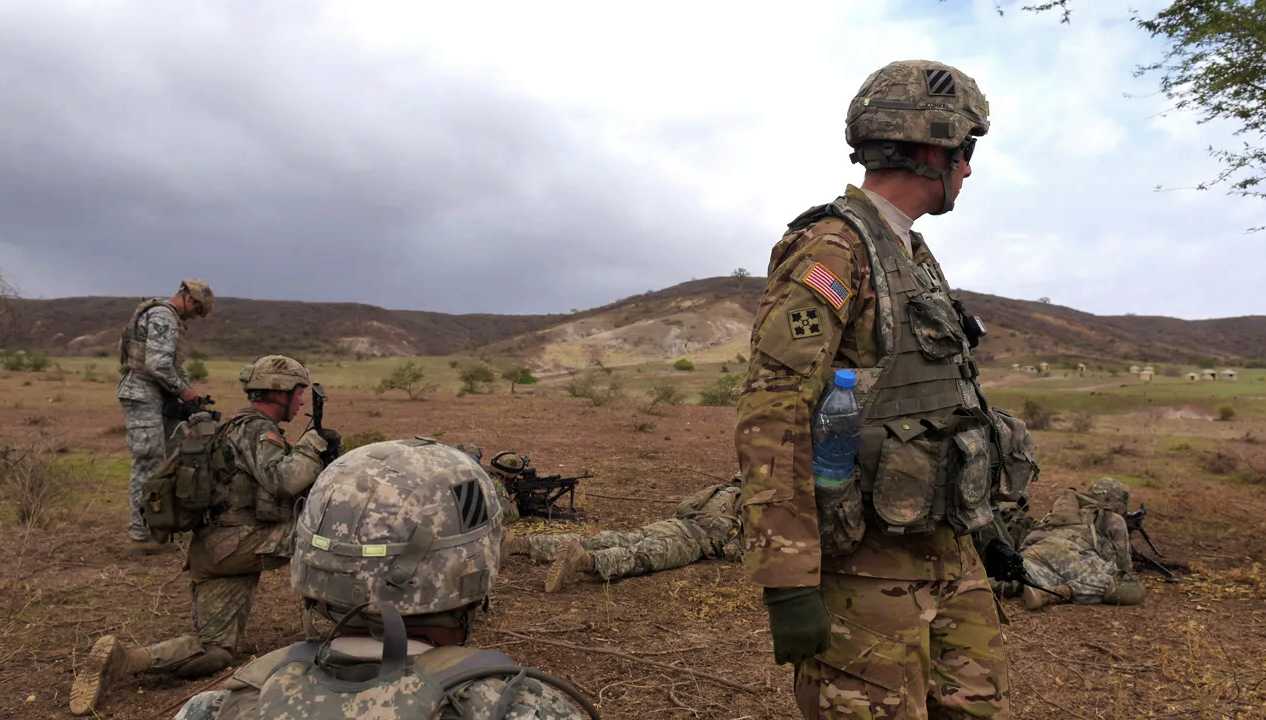
Despite intensified operations — and now ‘‘US support’’ — the trend continues upward. The US had said its hundreds of troops would be giving the Nigerian security forces training, intelligence and technical support rather than engaging directly in combat operations.
Adamu argues this is because armed groups have evolved into resilient systems, sustained by four critical enablers.
A self-sustaining economy
Armed groups are no longer just bike-riding criminals but have become economic actors, Adamu says.
“They control mining sites, engage in kidnap for ransom, and collect taxes and dues. For as long as they can generate revenue, they are likely able to continue their activities.”
According to investigations conducted and published by the International Centre for Investigative Reporting in 2025, terrorists controlled illegal gold mining sites in areas such as in parts of Kaduna, Zamfara and Niger States.
This shadow economy allows them to fund operations independently. The United Nations Institute for Disarmament Research reports that Nigerian security forces have repeatedly carried out “kinetic actions” against bandit groups operating in rural and forested areas rich in ground minerals.
“Cutting off these revenue streams is as important as any battlefield victory,” Adamu says.
Many analysts had also expressed skepticisms about the US position on the insecurity in Nigeria, with some alluding to Washington’s interest in Nigeria’s vast oil and solid mineral resources.
Access to weapons
“We’ve not done much to stop their ability to procure weapons and ammunition,” says Aliyu.
The growing sophistication of these groups is evident. Beyond small arms, there is an increasing use of technology. In recent months, the Nigerian military has reported attacks supported by armed drones in the northeast — a sign that non-state actors are adapting quickly.
The US says it is offering intelligence, training, and strategic support to the Nigerian military. Photo: Reuters
“A lot of armed groups are now adopting digital technologies, including drones as well, to conduct attacks, to conduct surveillance. And the government seems to be struggling to keep up with this level of evolution,” Aliyu says.
An endless supply of recruits
While the military has recorded successes in eliminating key commanders, Adamu says this has not translated into long-term gains.
“The government is killing their commanders, but it’s not preventing them from recruiting new members. So, they regenerate and restructure.”
The implication means without disrupting recruitment pipelines — often fuelled by poverty, ideology, and local grievances — the conflict risks becoming self-perpetuating.
The United Nations Institute for Disarmament Research reports that many children in northeast Nigeria were abducted or coerced into joining armed groups. UNICEF, for example, reports that more than 3,500 children were recruited and used by non-state armed groups between 2013 and 2017.
Mobility: the overlooked advantage
Finally, there is mobility issue, according to Aliyu.
“They are a highly mobile criminal enterprise, using motorbikes to move from point A to point B. Nigeria has not done much to prevent their access to these.”
From fuel supply to repair networks, terrorists have maintained logistical flexibility that allows them to strike quickly and retreat with minimal resistance.
“You even see them welding contraptions on these bikes… So where are they getting the energy for that?”
Witnesses have repeatedly reported their attackers arrive in packs on motorbikes—engines roaring, dust rising—like organised bike gangs swarming villages, attacking, looting before vanishing into surrounding forests before help can arrive.
A crisis of trust
Yet beyond strategy and tactics lies a more fragile foundation: trust.
Adamu stresses that modern security depends on people — communities willing to share intelligence. But in many parts of Nigeria, that relationship has broken down.
Past heavy-handed operations and military misfires that killed civilians have deepened suspicion, Adamu observes.
The result is a critical ‘‘gap in human intelligence’’ — often the most effective tool against insecurity.
Author:

Producer, TRT Afrika
Source: TRT Afrika English
__________________________________________________________________________
FOLLOW INDEPENDENT PRESS:
WhatsApp CHANNEL
https://whatsapp.com/channel/0029VaAtNxX8fewmiFmN7N22

TWITTER (CLICK HERE)
https://twitter.com/IpIndependent

FACEBOOK (CLICK HERE)
https://web.facebook.com/ipindependent

YOUTUBE (CLICK HERE)
https://www.youtube.com/@ipindependent

Think your friends would be interested? Share this story!