Sat 13 June 2026:
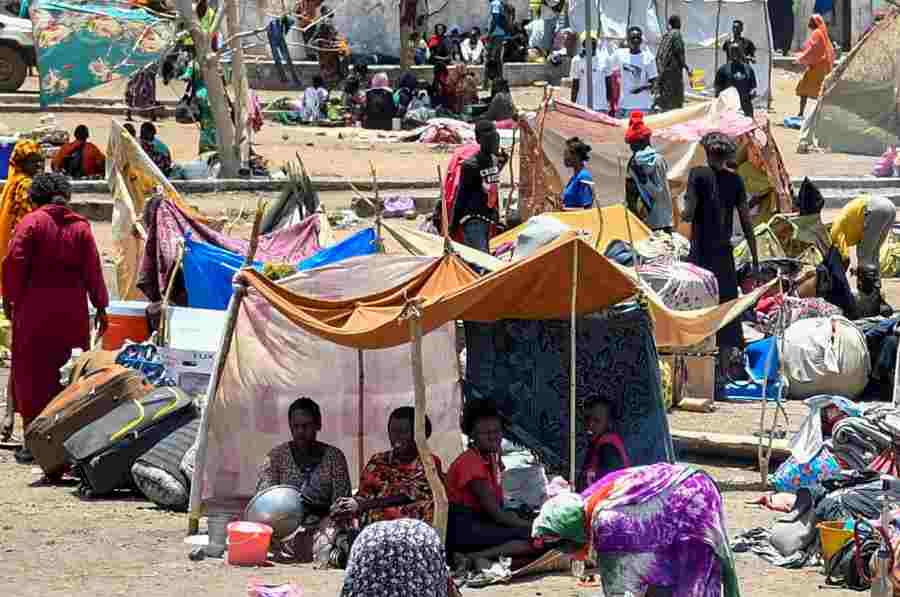
One in every 70 people worldwide remain forcibly displaced, according to a report released by the UN High Commissioner for Refugees (UNHCR) on Wednesday, which noted that global displacement has declined for the first time in a decade, though it remains at unacceptably high levels.
Launching the report in Geneva, UN High Commissioner for Refugees Barham Salih called on the international community to support a new decade-long initiative aimed at halving the number of refugees living in protracted displacement.
Overall, the report found that the global refugee population fell by 3% in 2025 to 41.6 million, marking a rare decline amid persistently high displacement levels.
It also highlighted a positive development, with nearly 46,000 stateless people acquiring citizenship across 24 countries during the year.
The report noted that 5.4 million people fled violence and persecution across borders in 2025. At the same time, returns gathered pace, with 14.7 million displaced people returning to their homes or countries of origin, including 4.4 million refugees and 10.3 million internally displaced persons.
Much of the increase was driven by developments in Afghanistan, Sudan and Syria. Refugee returns reached their second-highest level in six decades, although UNHCR cautioned that many took place under pressure and in insecure conditions.
__________________________________________________________________________

https://whatsapp.com/channel/0029VaAtNxX8fewmiFmN7N22
__________________________________________________________________________
More than 70% of refugees and other people in need of international protection originated from six countries: Afghanistan, South Sudan, Sudan, Syria, Ukraine and Venezuela.
The largest host countries in 2025 were Colombia (2.8 million), Germany (2.7 million), Türkiye (2.4 million), Uganda (1.9 million), Iran (1.7 million), Chad (1.5 million) and Pakistan (1.3 million).
Meanwhile, conflict and violence continued to drive large-scale internal displacement. According to the Internal Displacement Monitoring Centre, an estimated 68.6 million people were internally displaced by the end of 2025, down 7% from the previous year.
Sudan remained the world’s largest internal displacement crisis, with 9.1 million people uprooted within the country.
The report also highlighted the impact of the war in the Middle East, which began in February 2026, displacing an estimated one million people in Lebanon by mid-May and 3.2 million people in Iran by the end of March.
“For too many refugees, displacement starts as a lifeline but lasts a lifetime,” Salih said, noting that “Humanitarian aid saves lives, but it is not the end point and does not enable refugees to become active agents in control of their futures.”
“We need a paradigm shift that creates a new sense of hope and opportunity for people fleeing war and persecution,” he said.
Salih drew particular attention to the scale of protracted displacement, warning that 7 in 10 refugees are now living in long-term exile many below the poverty line and that resettlement pathways have collapsed rather than expanded.
In 2025, refugee arrivals through resettlement or sponsorship pathways fell by more than half year on year to just 81,800 globally.
To address this, Salih set out a measurable target: to reduce by more than half, over the next decade, the number of refugees in long-term displacement reliant on humanitarian assistance.
“Asylum and protection are life-saving and not up for debate, but we cannot accept a future in which millions of refugees remain trapped for years or decades without realistic prospects of rebuilding their lives,” he said.
The report’s modest progress was, however, overshadowed by new displacement crises emerging in 2026.
Since the US-Israel war on Iran began in late March 2026, Israeli attacks have forcibly displaced more than one million people in Lebanon, with a further 3.2 million internally displaced across Iran.
Sudan, meanwhile, remained the world’s largest internal displacement crisis at the end-2025, with 9.1 million people displaced within the country. On the 75th anniversary of the 1951 Refugee Convention which established the legal basis for international refugee protection and originally covered 2.1 million refugees in post-war Europe the total number of displaced people remains nearly 56 times higher than when the convention was adopted.
SOURCE: INDEPENDENT PRESS AND NEWS AGENCIES
__________________________________________________________________________
FOLLOW INDEPENDENT PRESS:
WhatsApp CHANNEL
https://whatsapp.com/channel/0029VaAtNxX8fewmiFmN7N22

TWITTER (CLICK HERE)
https://twitter.com/IpIndependent

FACEBOOK (CLICK HERE)
https://web.facebook.com/ipindependent

YOUTUBE (CLICK HERE)
https://www.youtube.com/@ipindependent

Think your friends would be interested? Share this story!