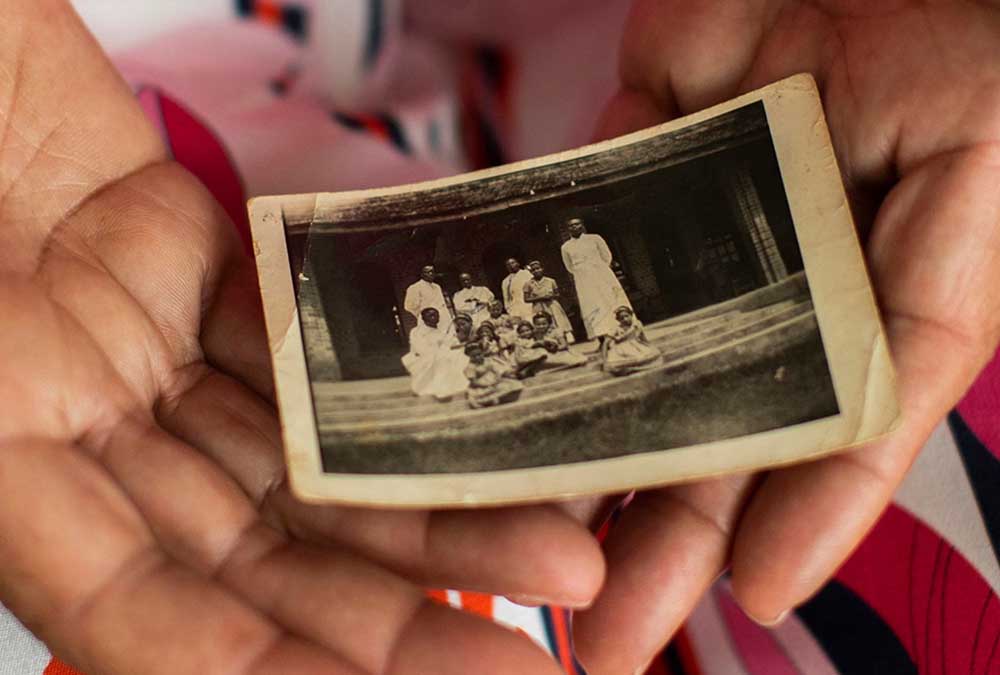
 Monique Bitu Bingi, one of the plaintiffs in the case, holds holds a photo of herself as a young girl before she was forcibly removed from her parents. Photograph: Francisco Seco/AP
Wed 27 May 2026:
The Belgian government lost a final appeal on Friday over a verdict that declared the forced placement of five women into an orphanage during colonial times a crime against humanity.
Brussels was ordered to pay reparations in 2024 to the mixed-race women – born in Belgian-ruled Congo in the late 1940s – finding they had been abducted in “an inhumane act of persecution”.
The Belgian state appealed against the decision at the country’s top court, but lost, in what the women’s lawyer described to AFP as “a historic decision”.
“It’s the first conviction of a European state for a crime against humanity during colonisation,” said the lawyer, Michele Hirsch.
__________________________________________________________________________

https://whatsapp.com/channel/0029VaAtNxX8fewmiFmN7N22
__________________________________________________________________________
Fate of biracial children
The case was the first in Belgium to shed light on the fate of biracial children born in the former Belgian colonies – DR Congo, Rwanda and Burundi – who are thought to number around 15,000, though there has never been an official count.
Most of the children born of a union between a black woman and a white man were not recognised by their father and were not allowed to mix with either whites or Africans.
As a result, many were placed under state guardianship and put in orphanages usually run by the Catholic Church.
The women at the centre of the legal case said they were taken away from their families, brought up in a convent, mistreated and then abandoned when the Belgian Congo gained independence in 1960.
They were awarded compensation of 50,000 euros ($58,000) each.
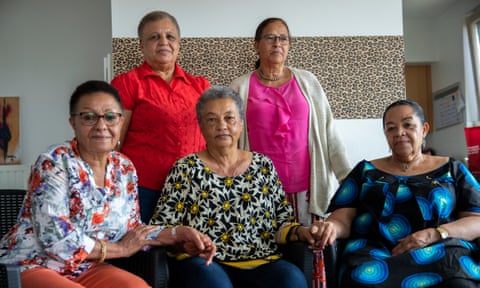
The women who challenged the Belgian government, clockwise from top left: Simone Ngalula, Monique Bitu Bingi, Léa Tavares Mujinga, Noëlle Verbeeken and Marie-José Loshi. Photograph: Francisco Seco/AP
King Leopold II reign
Belgium’s rule over what is now the Democratic Republic of Congo was one of the harshest imposed by the European powers that ruled most of Africa in the late 19th and 20th centuries.
King Leopold II governed the vast country – a swathe of central Africa the size of continental western Europe – as his personal property between 1885 and 1908, before it became a Belgian colony.
__________________________________________________________________________
FOLLOW INDEPENDENT PRESS:
WhatsApp CHANNEL
https://whatsapp.com/channel/0029VaAtNxX8fewmiFmN7N22

TWITTER (CLICK HERE)
https://twitter.com/IpIndependent

FACEBOOK (CLICK HERE)
https://web.facebook.com/ipindependent

YOUTUBE (CLICK HERE)
https://www.youtube.com/@ipindependent

Think your friends would be interested? Share this story!