Sun 26 April 2026:
China Friday announced it had discovered two new lunar minerals, state media reported.
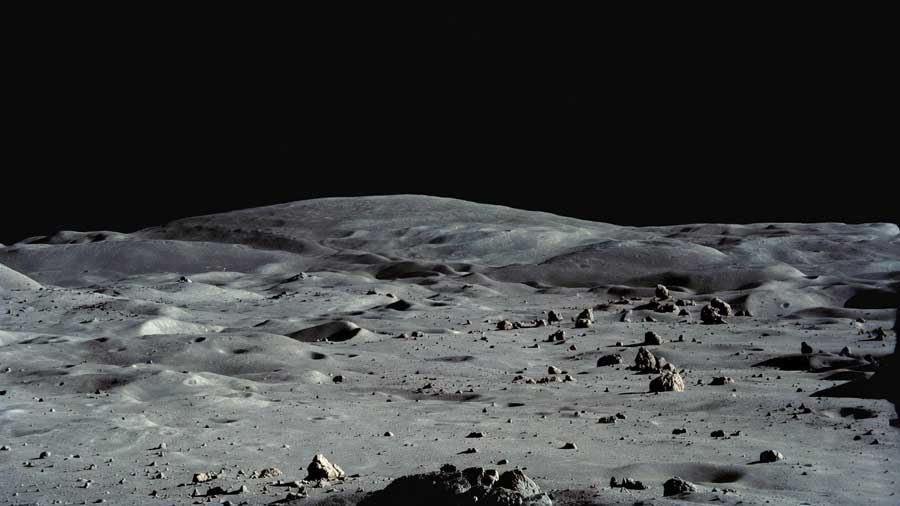
The minerals were discovered from the lunar samples brought back by the Chang’e-5 mission, said the China National Space Administration (CNSA).
The Chang’e-5 mission returned to Earth in December 2020, bringing home some 1,731 grams of lunar samples from Oceanus Procellarum — China’s first lunar samples — and also marking the first lunar samples brought to Earth in 44 years.
__________________________________________________________________________

https://whatsapp.com/channel/0029VaAtNxX8fewmiFmN7N22
__________________________________________________________________________
Li Ziying, chief scientist at the China National Nuclear Corporation (CNNC) and leader of the team that discovered magnesiochangesite-(Y), explained that this new mineral was found in the basaltic debris from the drilled samples brought back by the Chang’e-5 mission in 2020.
It is a calcium rare earth phosphate mineral belonging to the same group as changesite-(Y), yet possesses unique identifying features: extremely small in size, appearing as short columnar crystals with grain diameters of only 2 to 30 micrometers — approximately one thirtieth to one third the width of a human hair — invisible to the naked eye, with a distinctive structure, according to Li.
The unique composition and structure of magnesiochangesite-(Y) provide a new mineralogical sample for studying the Moon’s formation and evolution, magmatic activity, and chemical differentiation, Ge said.
He added that the research team has established a mature technical system for studying new minerals in lunar soil, with micron-scale single crystal sample preparation technology reaching internationally advanced levels.
Hou Zengqian, an academician of the Chinese Academy of Sciences, noted that the discovery of changesite-(Ce) not only enriches the variety of minerals in nature, particularly on the Moon, revealing the crystal chemical complexity of merrillite-group minerals in lunar soil, and indicating the diversity of lunar material composition and evolution processes.
As research on lunar samples continues to deepen, human understanding of the material composition and evolutionary processes of the Moon and even terrestrial planets will continue to expand, Hou added.
Earlier, the Chinese astronauts had discovered their first lunar mineral, changesite-(Y), in 2022.
During the opening ceremony of the 2026 Space Day of China in Chengdu, capital of southwestern China’s Sichuan province, the CNSA said the minerals were approved by the Commission on New Minerals, Nomenclature and Classification of the International Mineralogical Association.
In 2019, China conducted a historic first landing on the far side of the moon by the Chang’e-4 probe.
SOURCE: INDEPENDENT PRESS AND NEWS AGENCIES
__________________________________________________________________________
FOLLOW INDEPENDENT PRESS:
WhatsApp CHANNEL
https://whatsapp.com/channel/0029VaAtNxX8fewmiFmN7N22

TWITTER (CLICK HERE)
https://twitter.com/IpIndependent

FACEBOOK (CLICK HERE)
https://web.facebook.com/ipindependent

YOUTUBE (CLICK HERE)
https://www.youtube.com/@ipindependent

Think your friends would be interested? Share this story!