Sat 09 August 2025:
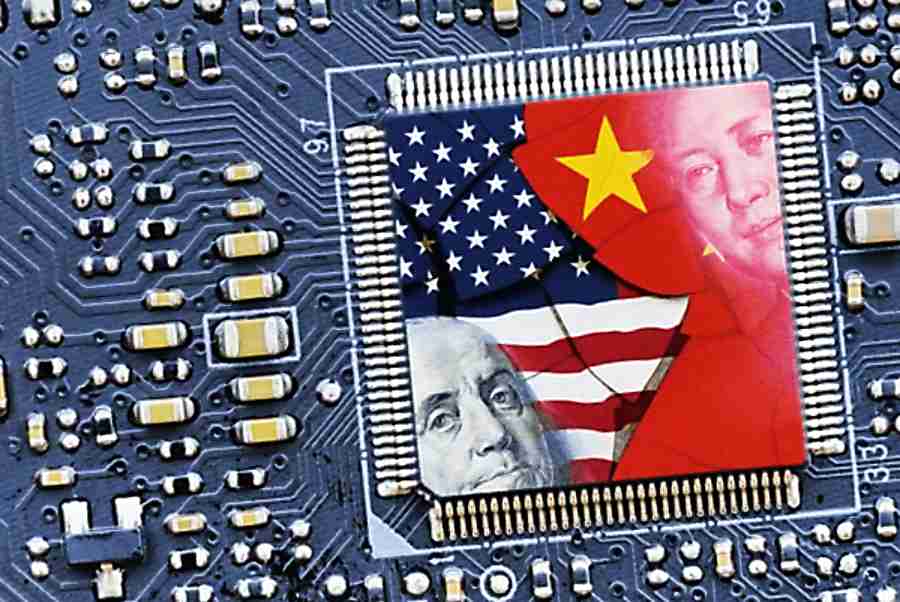
In the US-China technology rivalry, which came to light with the bans the US imposed on Huawei in 2019, the biggest competition in recent years has been in the chip sector. In recent days, allegations of espionage and theft have risen to the top of the agenda in a process that has continued with reciprocal chip and raw material export bans by both countries.
After the US Department of Justice accused two Chinese citizens, Chuan Geng and Shiwei Yang, of “knowingly and willingly” exporting graphics processing units (GPUs) used to power artificial intelligence without authorization from October 2022 to July 2025, the two Chinese citizens were brought to court. The ministry’s statement alleged that the individuals accused of sending Nvidia chips to China had shipped Nvidia H100 GPUs, described as the most powerful chips on the market, to China.
__________________________________________________________________________

https://whatsapp.com/channel/0029VaAtNxX8fewmiFmN7N22
__________________________________________________________________________
Another piece of news regarding chip espionage came from Taiwan. According to a statement by Taiwanese prosecutors last Tuesday, three people were detained on suspicion of stealing technological trade secrets from the world’s largest chip manufacturer, Taiwan Semiconductor Manufacturing Co (TSMC).
The U.S.-China tech rivalry is a high-stakes competition for global dominance in advanced technologies like AI, 5G, semiconductors, and quantum computing. It’s driven by economic, military, and ideological factors.
The U.S. holds an edge in innovation, software, and chip design, with companies like NVIDIA and Google leading. China excels in manufacturing, scale, and rapid deployment, leveraging state-backed firms like Huawei and massive domestic investment.
Both nations are racing to control critical supply chains, especially semiconductors, with the U.S. imposing export controls and sanctions to curb China’s access to advanced chips. China responds with heavy subsidies and efforts to achieve tech self-sufficiency. Geopolitically, the rivalry fuels tensions over data privacy, cybersecurity, and global standards, with each side accusing the other of espionage and unfair trade practices.
This competition shapes global alliances, with countries forced to pick sides, impacting markets and innovation worldwide.
SOURCE: INDEPENDENT PRESS AND NEWS AGENCIES
__________________________________________________________________________
FOLLOW INDEPENDENT PRESS:
WhatsApp CHANNEL
https://whatsapp.com/channel/0029VaAtNxX8fewmiFmN7N22

TWITTER (CLICK HERE)
https://twitter.com/IpIndependent

FACEBOOK (CLICK HERE)
https://web.facebook.com/ipindependent

YOUTUBE (CLICK HERE)
https://www.youtube.com/@ipindependent

Think your friends would be interested? Share this story!