Sun 27 September 2026:
Federal forces accuse Tigray rebels and Eritrea of fuelling instability as clashes spread into Afar and Amhara
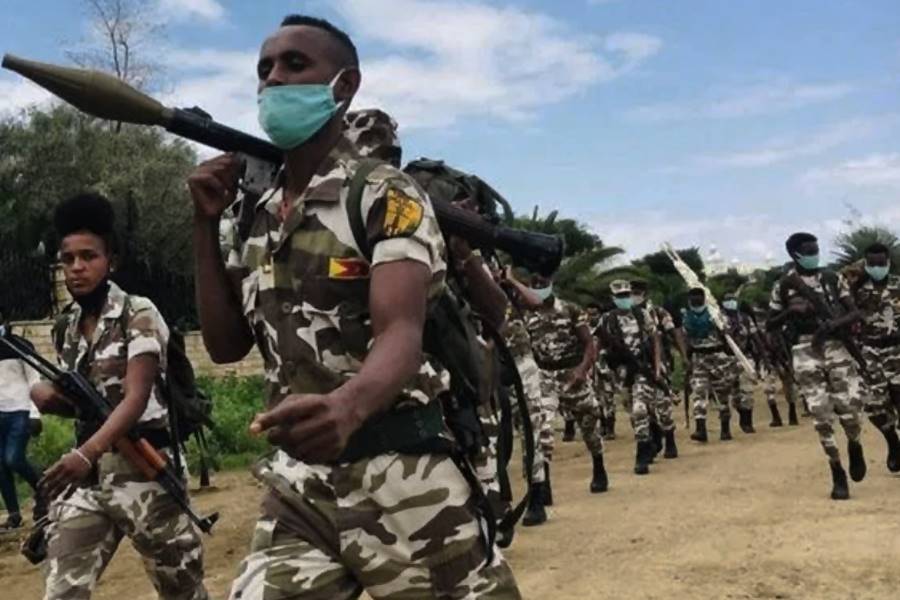
Ethiopia’s federal military says it is responding with restraint to escalating tensions in the country’s north, as renewed fighting raises fears that the country could slide back into a wider civil war.
In his first public remarks on the latest military developments, Army Chief of Staff Field Marshal Berhanu Jula said federal forces were responding to what he described as provocations from the Tigray front with “wisdom and restraint”.
Berhanu also accused neighbouring Eritrea of financing and supporting armed groups in an effort to weaken Ethiopia. He described the newly formed “Tsimdo” alliance as part of a longstanding pattern of hostile alliances that, he argued, could not challenge the federal government without external backing.
Eritrea has rejected the accusations, amid concerns in Asmara that landlocked Ethiopia could seek to expand its access to the Red Sea through military action.
__________________________________________________________________________

https://whatsapp.com/channel/0029VaAtNxX8fewmiFmN7N22
__________________________________________________________________________
Fighting spreads beyond Tigray
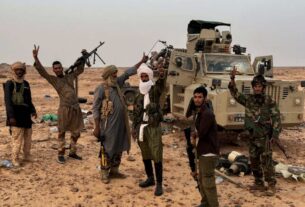
The latest violence has expanded from Tigray into neighbouring Afar and Amhara regions following the formation of an alliance of seven armed groups seeking to remove Prime Minister Abiy Ahmed’s government.
In Afar, fighting has centred around Abala, where federal forces are attempting to prevent rebel forces from taking control.
In North Wollo, an Amhara zone bordering Tigray, the Ethiopian army said it killed 272 Tigrayan fighters and wounded another 260 during a counter-offensive.
The Tigray People’s Liberation Front (TPLF), however, has described the military campaign differently.
The TPLF’s Tigray Army said federal forces had launched a “full-scale offensive” involving infantry, mechanised units and drones.
Addisalem Balema, a member of the TPLF central committee, told Al Jazeera that the situation had developed into a “full war”.
Fighting has also been reported around Sama, Soqota and Raya Alamata, with government forces reportedly advancing towards Alamata.
Army says it prefers “strategic calm”
Despite the escalation, Ethiopia’s military command says it is favouring a strategy of “strategic calm” rather than committing to a large-scale confrontation.
Military officials argue that support for the Tigray front is declining and that divisions within its leadership are weakening the group.
Internet connectivity was reportedly disrupted across northern Ethiopia on Friday, one day after the United Nations expressed alarm over reports that drones were being used against civilians in the region.
Pretoria Agreement under severe strain
The renewed fighting has placed the 2022 Pretoria Agreement under significant pressure.
The agreement brought an end to a devastating two-year conflict in Tigray that caused widespread deaths, displacement and humanitarian suffering.
The latest escalation comes only weeks after Washington lifted sanctions imposed on Ethiopia and Eritrea over atrocities associated with the previous conflict, saying the “national emergency … has expired”.
The renewed hostilities now represent a major challenge to the peace agreement and have raised concerns that fighting could spread further and involve armed groups from other parts of Ethiopia.
Ethiopia and Eritrea trade accusations
Addressing the UN General Assembly, Ethiopia’s president sought to present the country as a contributor to regional stability.
He accused unnamed outside actors of interfering in Ethiopia’s internal affairs while highlighting Addis Ababa’s involvement in peace initiatives in neighbouring Sudan.
Eritrea, meanwhile, has denied Ethiopia’s allegations that it is backing armed groups against the federal government.
The deteriorating situation also carries wider regional implications because of the longstanding tensions between Ethiopia and Eritrea and Ethiopia’s strategic interest in securing reliable access to the Red Sea.
Expert blames federal government for peace deal’s collapse
Alemayehu Weldemariam, a professor of law at Indiana University, said the federal government bears significant responsibility for the deterioration of the Pretoria Agreement.
“This war has been in the making for a while now. Much of the provisions in the cessation of hostilities [in the 2022 agreement] were primarily sabotaged by the federal government itself,” he said.
Weldemariam pointed to restrictions on fuel, services and cash in Tigray, as well as what he described as the government’s failure to establish the interim administration envisaged under the agreement.
“What was supposed to be an interim arrangement turned out to be permanent,” he said, adding that Tigray had subsequently been excluded from national elections.
With fighting now reported across several northern regions, the latest developments are placing Ethiopia’s post-2022 peace process under increasing pressure and raising concerns about a broader conflict.
SOURCE: INDEPENDENT PRESS AND NEWS AGENCIES
__________________________________________________________________________
FOLLOW INDEPENDENT PRESS:
WhatsApp CHANNEL
https://whatsapp.com/channel/0029VaAtNxX8fewmiFmN7N22

TWITTER (CLICK HERE)
https://twitter.com/IpIndependent

FACEBOOK (CLICK HERE)
https://web.facebook.com/ipindependent

YOUTUBE (CLICK HERE)
https://www.youtube.com/@ipindependent

Think your friends would be interested? Share this story!