Sun 12 October 2025:
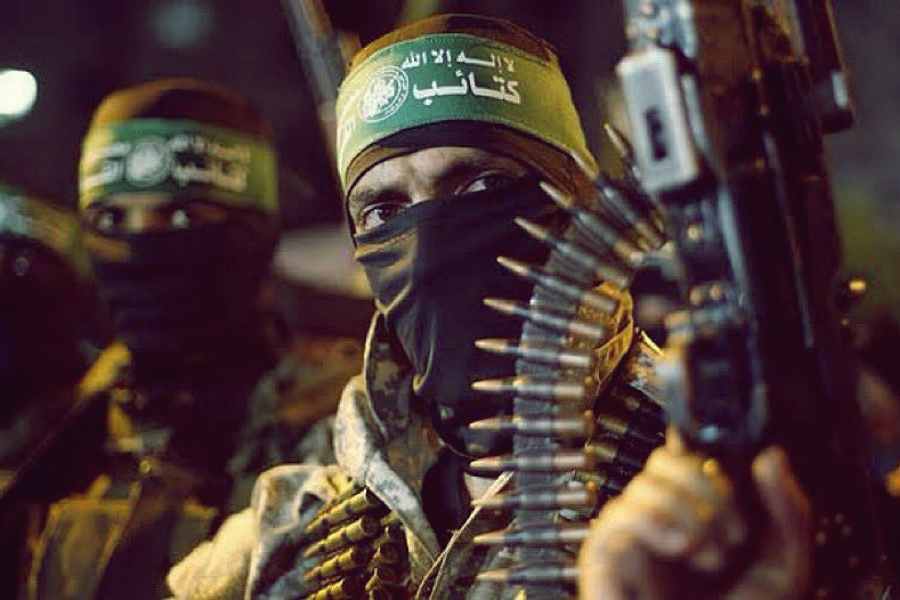
History in the Arab world moves in circles. When Hamas announced that it would accept parts of the Gaza Plan proposed by Donald Trump’s administration, many analysts interpreted it merely as a tactical move, a desperate attempt by a battered movement to survive. Yet, beyond the surface of politics and war fatigue lies a much deeper historical rhythm, the same one that created the Arab states themselves.
More than a hundred years after the Sykes–Picot Agreement carved the Middle East into artificial sovereignties, the ghosts of those lines still move the pen. What Hamas faces today is not an isolated geopolitical predicament but the return of an old story, one of maps drawn in Europe, of Arab compliance dressed as independence, and of the enduring dominance of Western powers over the fate of the region.
__________________________________________________________________________

https://whatsapp.com/channel/0029VaAtNxX8fewmiFmN7N22
__________________________________________________________________________
When British and French diplomats sat down in 1916 to divide the crumbling Ottoman Empire, they created the first generation of Arab states. Syria, Iraq, Lebanon, and Jordan were not born from national awakenings but from secret correspondences and imperial bargains. The Arab Revolt that broke out under Sharif Hussein of Mecca was sold to his followers as a struggle for freedom from Ottoman tyranny.
In reality, it was a transaction with London and Paris, a rebellion outsourced to imperial interests. Arab leaders of that time believed that by aligning with the West they could exchange loyalty for nationhood. What they received instead were mandates and protectorates, borders drawn with rulers and compasses, and sovereignty contingent on European approval.
The tragedy of that historical moment was not only the betrayal of promises but the establishment of a political pattern that endures today. The same moral DNA that produced the Sykes–Picot map continues to shape the political reflexes of Arab regimes. Their dependence on external power, first European, now American, remains the defining feature of the modern Arab state system. It is this legacy that explains why, when Gaza bleeds, Arab capitals offer sympathy instead of solidarity. The logic is structural, not emotional. The very birth certificates of many Arab states bear the signatures of Western midwives.
Hamas, in this sense, stands today where the Ottomans once stood, a symbol of resistance to Western imposition, an inconvenient reminder that the region once had its own axis of power independent of Europe. The Ottoman Empire, for all its flaws, represented a political center of gravity within the Muslim world. Its fall left a vacuum that the Arab elites of the early twentieth century eagerly filled with Western patronage.
They accepted the protection and recognition of London and Paris in exchange for the illusion of sovereignty. A century later, most Arab states continue to operate under the same dependency, only the masters have changed. The capital that matters now is Washington, not Istanbul. The approvals that define policy come not from Cairo or Riyadh, but from the Pentagon and the White House.
It is within this continuum that Hamas’s partial acceptance of the Gaza Plan must be understood. The plan, conceived in Washington and refined through negotiations led by American envoys and Western diplomats, proposes an international transitional administration for Gaza. At its heart is the Gaza International Transitional Authority (GITA), a body that would govern the strip under international oversight.
Among its proposed figures is Tony Blair, the former British prime minister whose political legacy in the Middle East is marked by the Iraq War and the deepening of Western interventionism. His presence on the so called “Board of Peace,” chaired by Donald Trump, is not incidental. It is symbolic, a reminder that the architects of the old colonial order still hold the blueprint.
That the fate of Gaza is once again being drafted far from Palestinian soil is itself a repetition of history. Just as the borders of the Arab world were sketched in European drawing rooms, the administrative future of Palestine is being determined in Washington’s corridors. The language may have changed, “peace process” has replaced “mandate,” and “international authority” has replaced “protectorate”, but the power relations remain the same. What is presented as reconstruction and stabilisation is, in practice, a reassertion of Western managerial control over Arab destinies.
Hamas’s acceptance, then, is not an act of ideological conversion but of survival. After two years of relentless bombardment, blockade, and isolation, the organisation finds itself militarily exhausted and diplomatically cornered. With regional allies like Iran overstretched and Arab neighbours unwilling to jeopardise their relations with Washington or Tel Aviv, Hamas faces the cold arithmetic of isolation. The Gaza Plan, for all its flaws, offers a temporary cease in the bleeding, a chance to breathe, regroup, and survive politically, even if it means accepting a deal written by its adversaries.
For Hamas, this is the paradox of resistance in the post Sykes–Picot Middle East, to fight Western domination, one must sometimes submit to its terms. Iran faces a similar dilemma. Both are ideologically opposed to the Western-led order yet function within a system where that order defines the boundaries of their survival. Their defiance earns them no allies among Arab governments that long ago traded their independence for Western protection. The “Arab street” may still sympathise with the Palestinian cause, but the “Arab palace”, the political leadership, calculates its interests through a different lens, one tinted by American security guarantees and Israeli intelligence cooperation.
This absence of collective Arab solidarity is not accidental, it is structural, born from the very origins of these states. The same Arab leaders who once conspired with Britain and France against the Ottomans have descendants in power who now conspire, quietly, to normalise ties with Israel under American patronage. The circle has closed: betrayal has become tradition. To expect genuine unity from such a political landscape is to ignore the century-long conditioning of dependency that has shaped the Arab order since 1916.
In this sense, the Gaza Plan is not just a ceasefire proposal, it is the second Sykes–Picot, a political arrangement disguised as humanitarian necessity. It redraws not geographical borders but political hierarchies, reaffirming who decides and who obeys. Tony Blair’s involvement makes the symbolism unmistakable. The same Britain that once partitioned the region now returns as “mediator,” this time under American leadership. The message is clear: Western stewardship over Arab affairs is not a relic of the past but an ongoing system.
For the people of Gaza, however, historical symbolism offers little comfort. After years of siege and destruction, what they need most is a pause, food, medicine, electricity, shelter, a semblance of normal life. In that immediate sense, the Gaza Plan may bring relief. Even a flawed peace can be preferable to endless war. For Hamas, accepting the plan, even partially, is an acknowledgment of exhaustion, not defeat. For ordinary Gazans, it is a necessary truce with reality.
Yet, in the longer arc of history, the implications are troubling. By accepting a plan designed outside of Palestine, with administrators appointed by Western powers, Hamas risks legitimising a new form of external control over Palestinian self determination. What was once the British Mandate of Palestine may now reappear as an American-managed “transition.” The actors have changed, but the script remains familiar.
The Gaza Plan thus exposes the persistent asymmetry that has defined Arab politics since Sykes–Picot, a world in which the power to decide still lies beyond the region. Hamas’s reluctant assent is the latest chapter in a century-long story of coerced consent, the political inheritance of a region whose maps and mandates were never truly its own. In accepting the plan, Hamas joins a lineage of Arab actors who, under duress or delusion, have chosen survival within the boundaries drawn for them.
And so history loops back on itself. A century after Arab leaders traded the Ottoman yoke for Western tutelage, their descendants once again watch as foreign powers decide the fate of an Arab land. The ink has changed color, but the map remains the same.
Author:

__________________________________________________________________________
FOLLOW INDEPENDENT PRESS:
WhatsApp CHANNEL
https://whatsapp.com/channel/0029VaAtNxX8fewmiFmN7N22

TWITTER (CLICK HERE)
https://twitter.com/IpIndependent

FACEBOOK (CLICK HERE)
https://web.facebook.com/ipindependent

YOUTUBE (CLICK HERE)
https://www.youtube.com/@ipindependent

Think your friends would be interested? Share this story!