Tue 26 May 2026:
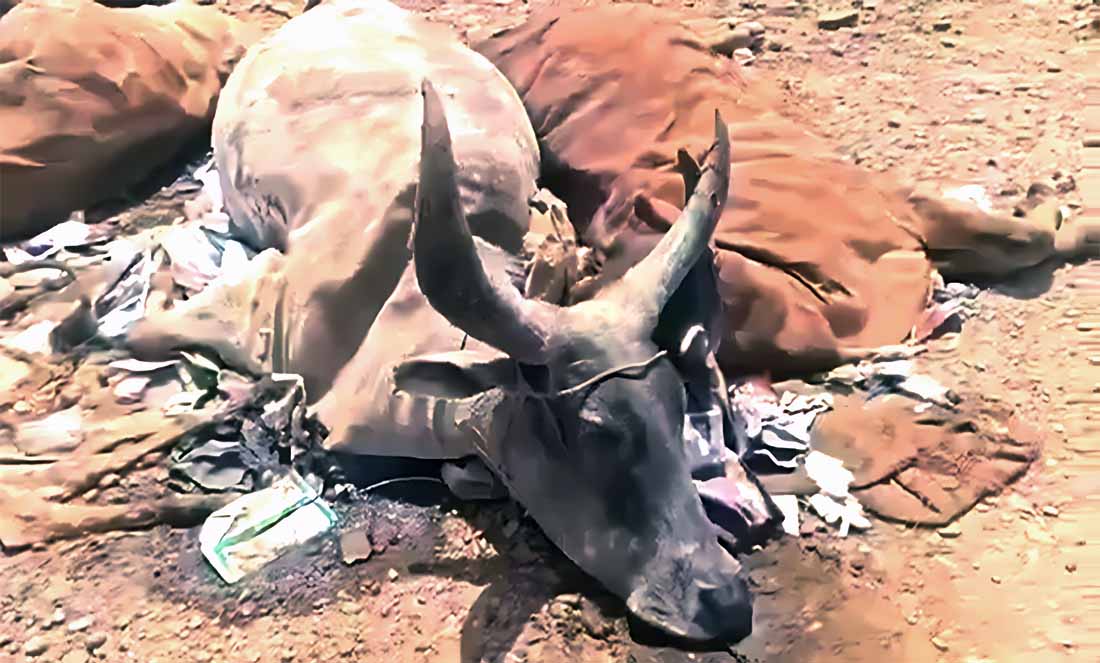
The visuals angered many locals and cow lovers, who said the condition in which the animals were found exposed the reality behind repeated claims of cow welfare and protection.
Hundreds of cow carcasses discovered in India’s Jaisalmer, public anger erupts online.
Read more here: https://t.co/6Y4jA7WV7I pic.twitter.com/gaQj4nNwtr
— INDEPENDENT PRESS (@IpIndependent) May 26, 2026
According to police and local officials, the carcasses had allegedly been dumped in the open instead of being disposed of in the designated area assigned to the contractor responsible for handling dead animals within Municipal Council limits.
The matter came to light after a group of Gau Premis visited the dumping yard on Saturday and found carcasses scattered across the area. As the videos spread across social media on Sunday, anger began building among local residents and people associated with cow welfare groups.
__________________________________________________________________________

https://whatsapp.com/channel/0029VaAtNxX8fewmiFmN7N22
__________________________________________________________________________
Following the uproar, Jaisalmer District Collector Anupama Jorwal sought a factual report on the matter, while Municipal Council Commissioner Lajpal Singh Sodha issued a show cause notice to the contractor concerned.
Contractor issued notice after carcasses found dumped in open
The notice was served to Goparam, son of Dudaram, a resident of Barmer district, who had been awarded the contract for lifting dead animals, skin, and bones within Jaisalmer Municipal Council limits for the financial year 2025-26.
In the notice, the Municipal Council stated that dead animals were being dumped openly at the site, leading to environmental pollution and anger among nearby residents.
Officials said a separate pit and designated area had already been identified for disposal of dead animals, but the contractor allegedly failed to use the approved space.
The notice warned that repeated violations could lead to legal action, cancellation of the contract, and forfeiture of the contractor’s security deposit.
After the administration stepped in, JCB machines were deployed at the dumping yard to clear the carcasses and begin disposal work.
Locals question cattle welfare claims
The incident has also reignited debate around the condition of stray cattle and the functioning of gaushalas in the state.
Residents and cow welfare supporters said the images exposed serious gaps in cattle management despite repeated public claims around cow protection.
India sees increase in violence by cow vigilantes
Since the Bharatiya Janata Party (BJP) took power in 2014, incidents of cow-related violence have seen a marked increase.
Cow vigilantism in India refers to violent, mob-based vigilante attacks by Hindu nationalist groups against minorities—primarily Muslims and Dalits—under the pretext of stopping illegal cattle slaughter and the beef trade. Cows are revered in Hinduism, and cattle slaughter is banned in the majority of Indian states.
Victims, often truck drivers, traders, and farmers, are subjected to harassment, beatings, and lynchings, frequently fueled by rumors or unverified allegations.
Vigilante groups frequently film their acts, circulating them on social media. Reports indicate these groups sometimes utilize these incidents for extortion and intimidation.
Cow-Protection Vigilantes and Livelihoods
Vigilante attacks by cow protection groups and stricter laws on cow slaughter and transportation of cattle have disrupted India’s cattle trade and the rural agricultural economy, as well as leather and meat export industries that are linked to farming and dairy sectors.
India is the largest beef exporter in the world, exporting buffalo meat worth about US$4 billion a year. However, after the BJP government came to power in 2014, exports have mostly declined. The leather industry has also been affected, with a government economic survey noting that “despite having a large cattle population, India’s share of cattle leather exports is low and declining due to limited availability of cattle for slaughter.”
The government has authority to enact laws and policies restricting the buying and selling of cattle but, in doing so, need to guard against disproportionately harming minority communities and ensure that any such laws or policies are consistent with the right to a livelihood for all Indians.
Muslims and Dalits have been disproportionately affected by the laws, policies, and unlawful attacks harming cattle-related industries. Slaughterhouses and meat shops are mostly run by Muslims. Dalits traditionally carry out jobs to dispose of cattle carcasses and skin them for commercial purposes such as leather and leather goods. The resulting policies are harming entire communities, particularly farmers and laborers.
“It’s not just about Muslims,” said P. Sainath, an author, journalist, and expert on India’s agricultural economy. Previously, cattle owners, including many Hindus, who were unable to cope with the economic burden of keeping unproductive livestock, sold the cattle to slaughterhouses. Now, he said, forced to continue feeding and caring for them, many have simply abandoned the animals. This has caused problems for farmers with stray cattle destroying their crops.
M.L. Parihar, an author and agricultural expert, said: “The Hindutva leaders who are promoting this obsession with cows don’t realize how much loss they are causing to their own Hindu community, and damage they are causing to their country.”
SOURCE: INDEPENDENT PRESS AND NEWS AGENCIES
__________________________________________________________________________
FOLLOW INDEPENDENT PRESS:
WhatsApp CHANNEL
https://whatsapp.com/channel/0029VaAtNxX8fewmiFmN7N22

TWITTER (CLICK HERE)
https://twitter.com/IpIndependent

FACEBOOK (CLICK HERE)
https://web.facebook.com/ipindependent

YOUTUBE (CLICK HERE)
https://www.youtube.com/@ipindependent

Think your friends would be interested? Share this story!