Wed 10 June 2026:
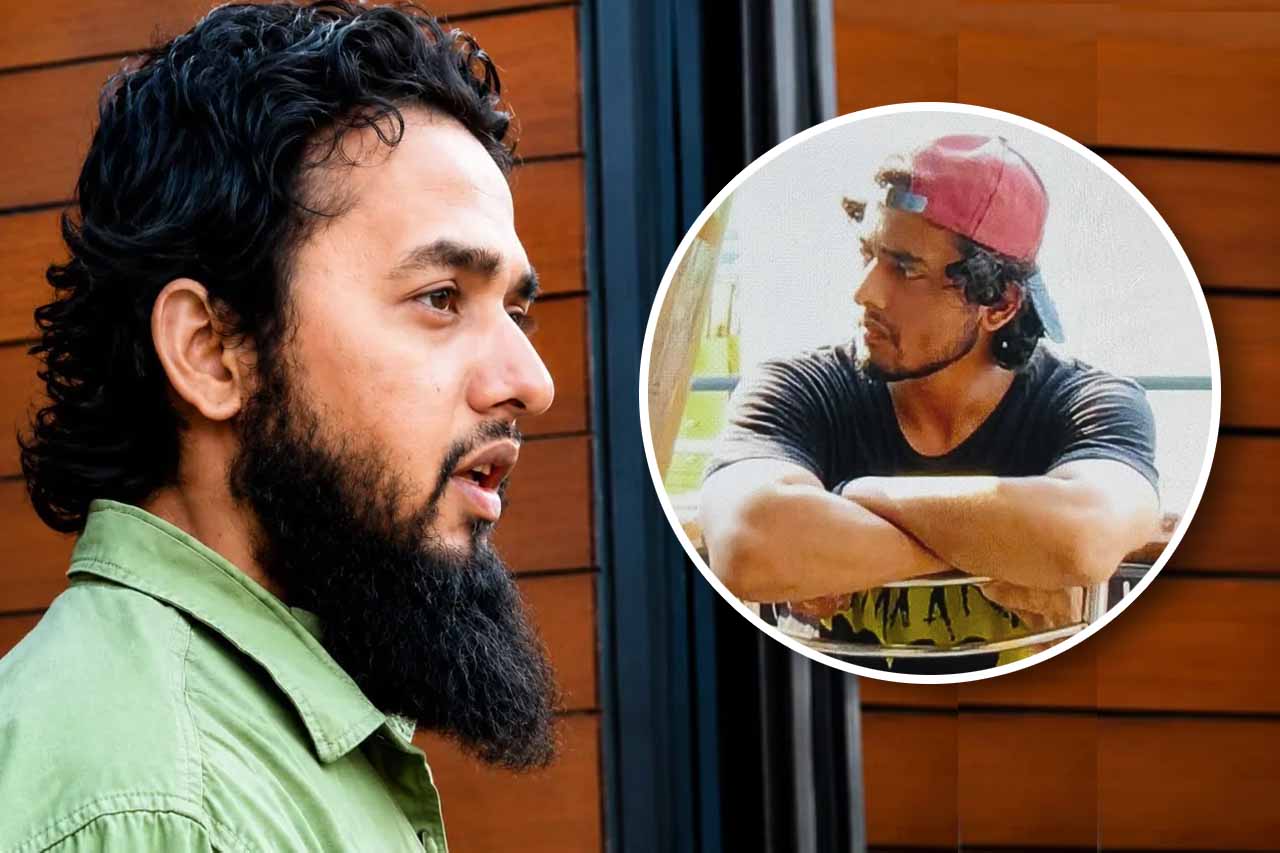
In Shamli, Uttar Pradesh, 30-year-old Ayush Malik has publicly clarified that his conversion to Islam was entirely voluntary and not the result of coercion or deception. Addressing media, Ayush stated, “I was in no way forced or cheated. I have known about Islam since my childhood. I converted because I felt good about it. Now I am a Muslim, Alhamdulillah.”
Soon after Ayush Malik started speaking to the media clarifying that he was not forced to convert. @smitaprakash sent @ANI reporter to Shamli Police and Ayush Father to get their statements. The News agency has still not put out a statement by Ayush Malik. Every other channel… https://t.co/PpRqFFQQ89 pic.twitter.com/I8dKUDkdLU
— Mohammed Zubair (@zoo_bear) June 8, 2026
The controversy erupted after Ayush’s father, Devraj Malik—a prominent medical trader with multiple showrooms—filed a police complaint alleging that Chandni Qureshi and her father, Islam Qureshi, had trapped his son to gain access to family property. Chandni, who worked as a gym trainer, developed a relationship with Ayush, leading to their marriage. Both Chandni and her father are currently in judicial remand following their arrest by Shamli Police.
Shamli Superintendent of Police NP Singh noted that Devraj Malik is a well-established businessman with three married daughters and one son. The family claims Ayush, the youngest, has distanced himself, now sporting a long beard, Islamic topi, and kurta-pyjama while maintaining minimal contact. Police mentioned Ayush’s interest in the teachings of late Pakistani scholar Dr. Israr Ahmed, whose Quranic exegesis videos influenced many across South Asia.
__________________________________________________________________________

https://whatsapp.com/channel/0029VaAtNxX8fewmiFmN7N22
__________________________________________________________________________
Ayush firmly debunked claims of sudden radicalization or property motives. He explained that his journey towards Islam was gradual, spanning years of study and reflection. “It is not like one day I got an epiphany… No one forced me to follow Dr. Israr. I like his videos, and hence I follow them,” he said. He added that he informed his family about his conversion and nikkah in February and explicitly stated he has no interest in his father’s property, suggesting it be distributed among his mother and sisters.
“I had an inclination towards Islam since childhood, and by 2012 my faith had strengthened,” he told Times of India. “About four years ago, I converted to Islam and around the same time married Chandni. I kept it private because of the prevailing environment, but informed my parents in February. I am a major and so is my wife. Legally, we have every right to do what we have done.
I will fight for her.”
Despite the rift, Ayush expressed love for both families: “They are still my family and I love both sides. I cannot leave one to stay with another.” He also alleged that his father might be under pressure from right-wing elements. The case highlights complex intersections of personal faith, family expectations, and interfaith relationships in India.
India’s anti-conversion laws and the Ghar Wapsi (homecoming) movement are at the center of a major debate surrounding religious freedom, minority rights, and secularism in India. These interconnected issues reflect the tension between protecting traditional faiths and ensuring constitutional freedoms.
State-level legislation often known as “Freedom of Religion” acts generally prohibit religious conversions that are achieved through “force, fraud, or allurement”.
State Reach: Approximately 12 Indian states (including Uttar Pradesh, Uttarakhand, Madhya Pradesh, and Rajasthan) have enacted these statutes.
Strict Penalties: Punishments for violations can be severe, in some cases leading to prison sentences up to life in prison. Recent amendments have even sought to criminalize digital communication or the sharing of testimonies that may be interpreted as enticing conversion or disparaging other faiths.
Controversy: Critics argue these laws are heavily weaponized against religious minorities (particularly Christians and Muslims) and interfaith couples. The assumption of guilt and police scrutiny often result in harassment and the erosion of individual autonomy. The Indian Supreme Court has raised concerns about the broad, vague definitions of fraudulent conversion and the resulting misuse of these laws.
The Ghar Wapsi Controversy
Ghar Wapsi—translating to “homecoming”—is an organized campaign led by right-wing Hindu nationalist groups to convert non-Hindu Indians (mainly Muslims and Christians) to Hinduism.
The Ideology: The movement operates on the belief that all Indians share ancestral Hindu roots, and thus converting back to Hinduism is merely returning “home”.
Legal Double Standard: Critics and human rights advocates point out a stark contradiction. While anti-conversion laws heavily penalize minority proselytization, Ghar Wapsi events often occur under the protection of, or with the backing of, right-wing organizations and are seldom investigated for coercion or pressure.
Caste Dynamics: Experts note that Ghar Wapsi programs and restrictive conversion laws ultimately work to undermine the strategy of Dalits (Scheduled Castes) using religious conversion as a means to escape caste oppression and systemic apartheid.
SOURCE: INDEPENDENT PRESS AND NEWS AGENCIES
__________________________________________________________________________
FOLLOW INDEPENDENT PRESS:
WhatsApp CHANNEL
https://whatsapp.com/channel/0029VaAtNxX8fewmiFmN7N22

TWITTER (CLICK HERE)
https://twitter.com/IpIndependent

FACEBOOK (CLICK HERE)
https://web.facebook.com/ipindependent

YOUTUBE (CLICK HERE)
https://www.youtube.com/@ipindependent

Think your friends would be interested? Share this story!