Thu 17 September 2026:
Inflation, collapsing wages and the weakening rial are pushing thousands of Afghan migrants to return from Iran
Thousands of Afghans are returning from Iran as the country’s economic crisis, soaring inflation and the sharp decline of the rial erode jobs, wages and savings, Reuters reported Thursday.
Iran’s consumer prices have increased by nearly 90% compared with a year earlier, while food inflation has approached 130%, according to data from Iran’s Statistical Centre. Afghan migrants returning home told Reuters that employment opportunities had declined sharply and that their earnings were no longer sufficient to keep up with the rising cost of essential goods.
The deteriorating economic situation is particularly significant for Afghans who have spent years working in Iran and sending money back to support relatives in Afghanistan.
__________________________________________________________________________

https://whatsapp.com/channel/0029VaAtNxX8fewmiFmN7N22
__________________________________________________________________________
Savings and Incomes Hit Hard
Surveys by the International Organization for Migration cited by Reuters indicate that only 29% of recently returned Afghans still had savings. Their average income had also fallen by almost one-third compared with levels before the economic crisis.
The figures highlight the financial pressure facing migrant households, many of whom depend on informal or low-paid employment in sectors such as construction, agriculture, manufacturing and services.
For some migrants, returning to Afghanistan is therefore no longer simply a consequence of deportation or immigration policy but a response to the shrinking economic opportunities available in Iran.
More Than 2 Million Afghans Have Left Iran
More than 2 million Afghans have left Iran over the past two years, according to data from the UN refugee agency.
A significant proportion were deported or pressured to leave before the latest wave of voluntary returns. However, Reuters reported that increasing numbers of women and entire families are now choosing to return because of Iran’s worsening economic conditions.
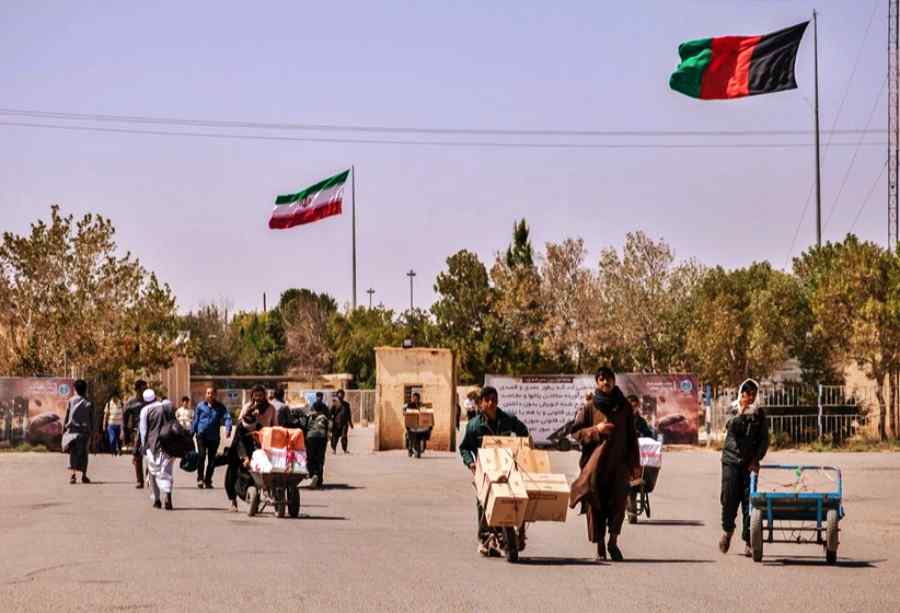
At the Islam Qala border crossing, one of the principal routes between Iran and Afghanistan, between 20 and 40 families are voluntarily returning each day, according to senior Taliban official Abdul Ghani Qazizadeh.
“The wages they earn are no longer enough to cover their basic living expenses,” he said, adding that many workers also complained that Iranian employers had withheld wages.
Economic Crisis Adds to Afghanistan’s Migration Challenge
The movement comes against the backdrop of a long and complicated migration relationship between Afghanistan and Iran. Millions of Afghans have lived or worked in Iran over the years, driven by conflict, insecurity, limited economic opportunities and repeated humanitarian crises in Afghanistan.
Iran has traditionally been an important destination for Afghans because of its geographic proximity and demand for low-cost labour. Many migrants have supported families in Afghanistan through remittances.
However, Iran’s economic difficulties have reduced the value of those earnings. High inflation means that even when workers continue receiving wages in nominal terms, their purchasing power can fall substantially.
The depreciation of the Iranian rial has added another layer of pressure by increasing the cost of imported goods and contributing to uncertainty for workers and businesses.
Returning Families Face New Uncertainty
For Afghans returning voluntarily, leaving Iran does not necessarily mean an end to economic hardship.
Afghanistan continues to face major challenges including unemployment, poverty, limited access to essential services and a weak economy. Families arriving from Iran may therefore have to rebuild their livelihoods in an environment where employment opportunities are already scarce.
The return of large numbers of Afghans could also increase pressure on communities along the border and on humanitarian organisations providing food, shelter, healthcare and other assistance.
With Iran’s inflation crisis continuing to undermine household purchasing power, the latest movement represents a significant shift in the migration pattern between the two neighbouring countries — with economic hardship increasingly becoming a factor pushing Afghan families back across the border.
SOURCE: INDEPENDENT PRESS AND NEWS AGENCIES
__________________________________________________________________________
FOLLOW INDEPENDENT PRESS:
WhatsApp CHANNEL
https://whatsapp.com/channel/0029VaAtNxX8fewmiFmN7N22

TWITTER (CLICK HERE)
https://twitter.com/IpIndependent

FACEBOOK (CLICK HERE)
https://web.facebook.com/ipindependent

YOUTUBE (CLICK HERE)
https://www.youtube.com/@ipindependent

Think your friends would be interested? Share this story!