Fri August 07 2026:
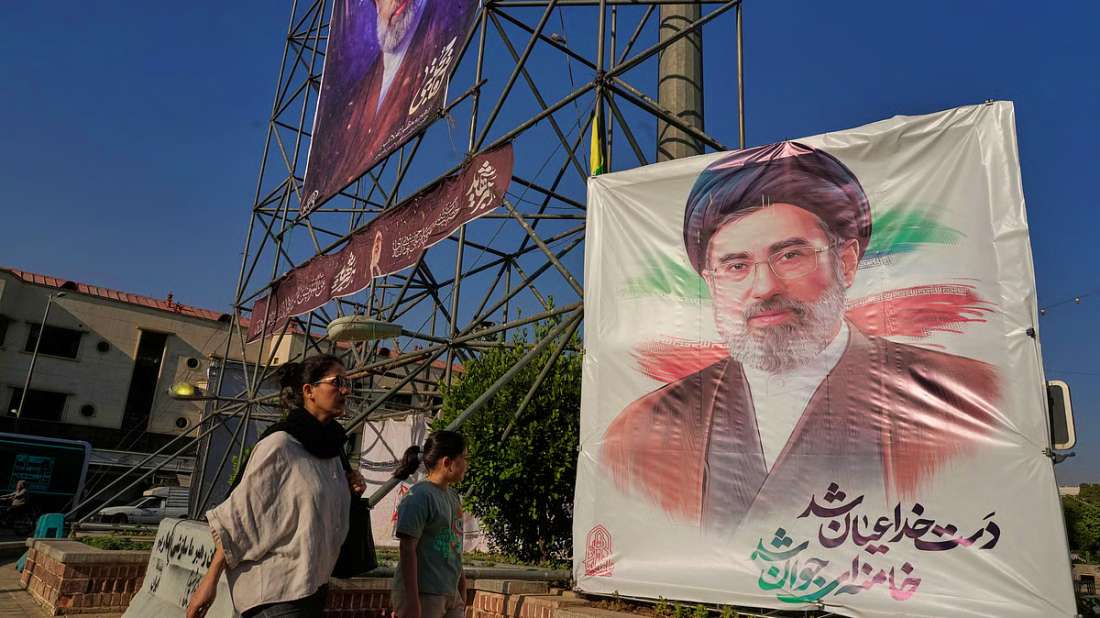
Iranian Supreme Leader Mojtaba Khamenei’s health has come under renewed scrutiny after IranWire, citing two sources close to President Masoud Pezeshkian’s administration, reported that senior officials are increasingly concerned about his condition.
According to IranWire, Khamenei has not met any cabinet members since the February 28 US-Israeli strikes that killed his father and predecessor, Ayatollah Ali Khamenei, along with other members of his family. The outlet said rumours that the younger Khamenei is in an “extremely critical condition” and could die soon are circulating within Iran’s highest levels of government.
One source close to the Pezeshkian administration told IranWire that Khamenei’s physical condition was poor, adding that officials “would not be surprised” if they soon heard news of his death.
IRAN’S SUPREME LEADER ‘NOT COMMUNICATING’ WITH ANYONE, HIS FATHER-IN-LAW SAYS
The claims have not been independently verified. Iranian authorities have not announced that Khamenei is critically ill.
Iranian officials have previously disputed reports that his injuries were severe. State-linked officials have described his injuries as limited and maintained that he remains involved in strategic decision-making.
‘SACRED UNITY’: IRAN’S SUPREME LEADER CALLS FOR CALM AMID POLITICAL DIVIDES
The speculation has been amplified by Khamenei’s unusually low public profile since taking over as supreme leader. He has made no public appearances or televised speeches since assuming the position, with Iranian state media publishing only written statements attributed to him.
Last week, Gholam-Ali Haddad-Adel, Mojtaba’s father-in-law, told the ISNA News Agency that Khamenei “is not communicating with any party or individual for specific reasons.” He, however, did not give any further details.
Haddad-Adel said Mojtaba is like his father, former Supreme Leader Ali Khamenei, “in every way,” expressing hope that he is “in good health.”
President Pezeshkian himself said in a state television interview this week that communicating with Khamenei was currently “very difficult”, adding another layer to speculation surrounding the supreme leader’s condition.
IRAN LEADERSHIP RIFT? PRESIDENT SAYS COMMUNICATION WITH KHAMENEI ‘VERY DIFFICULT’
Separately, a report by Iran International, said Pezeshkian was taken to an undisclosed location in Tehran for a brief meeting with a man presented as Supreme Leader Mojtaba Khamenei. According to the report, the meeting took place inside a darkened vehicle and Pezeshkian was unable to see the man’s face. He later reportedly questioned whether the voice he heard actually belonged to Khamenei.
90 percent gone
U.S. President Donald Trump publicly claimed that Mojtaba was “90% gone” or in critical condition following military strikes, though no direct proof of his death has been provided.
Reports surfaced in March 2026 that the CIA and U.S. intelligence agencies assessed Mojtaba Khamenei as “probably gay” and briefed President Trump.
President Trump publicly referenced the intelligence community’s assessment during media interviews and later made indirect remarks using the claim during a public speech.
Leaks published in outlets like the New York Post claimed the intelligence assessment included allegations of past personal relationships and behaviors, though officials noted a lack of hard physical proof.
In its March 2 report, The New York Post wrote: “When Trump was informed of this data, he could not hide his surprise and laughed out loud.” According to informed sources, others present in the room also laughed, and one senior intelligence official “has been unable to stop laughing about it for several days.”
CBS News also reported, without sharing specific details, that sources inside the U.S. government, the intelligence community, and people close to the President say the information gathered suggests that Ali Khamenei was also aware of certain issues related to his son’s personal life.
Why Governments Delay Announcing a Leader’s Death
Experts believe that when a head of state dies, governments rarely announce the news immediately. In authoritarian regimes and fragile political systems, an immediate disclosure risks triggering market collapses, military confusion, or civil unrest. To prevent public panic and defend against hostile foreign action, state actors buy crucial time to consolidate power, secure military command, and orchestrate a smooth political succession before making an official announcement.
A notable example occurred in December 2011 following the death of North Korean leader Kim Jong Il. After he suffered a fatal heart attack, state media remained silent for 51 hours while top regime officials secured control, managed internal political factions, and solidified his son, Kim Jong Un, as the undisputed successor. The public was only informed once the transition was firmly in place.
SOURCE INDEPENDENT PRESS AND NEWS AGENCIES
__________________________________________________________________________
FOLLOW INDEPENDENT PRESS:
WhatsApp CHANNEL
https://whatsapp.com/channel/0029VaAtNxX8fewmiFmN7N22

TWITTER (CLICK HERE)
https://twitter.com/IpIndependent

FACEBOOK (CLICK HERE)
https://web.facebook.com/ipindependent

YOUTUBE (CLICK HERE)
https://www.youtube.com/@ipindependent

Think your friends would be interested? Share this story!