Mon 07 September 2026:
DeepLitterAI can identify marine litter nearly twice as fast as humans and may support real-time monitoring
Japanese researchers have developed an artificial intelligence system designed to improve the detection of plastic waste on the seabed, local media reported Thursday.
The system, known as DeepLitterAI, was created by scientists at the Japan Agency for Marine-Earth Science and Technology. According to Kyodo news agency, which cited the journal Environmental Pollution, the technology can process data at almost twice the speed of human observers.
Researchers expect the system to eventually support real-time monitoring of marine plastic pollution.
AI trained on decades of seabed footage
The team compiled a dataset of approximately 12,000 images from seabed footage collected by the agency since 1983.
The images included small pieces of litter, as well as rocks and marine animals that can easily be mistaken for waste. To reduce false detections, researchers trained the system using different image patterns, including blurring and image inversion.
Although a significant amount of plastic entering the ocean eventually settles on the seabed, identifying it accurately remains challenging.
“We can quickly identify areas where large amounts of waste accumulate and use this information to implement countermeasures,” said Ryota Nakajima, a biological oceanographer involved in the research.
__________________________________________________________________________

https://whatsapp.com/channel/0029VaAtNxX8fewmiFmN7N22
__________________________________________________________________________
System detects small objects
During tests using real seabed footage, DeepLitterAI was able to identify the type and quantity of litter even when objects occupied only 5% to 10% of the image’s width.
The system successfully detected 80% of major waste items, including plastic bottles and polythene bags. Its results differed from expert visual inspections by approximately 10%.
The Problem of Marine Plastic Pollution
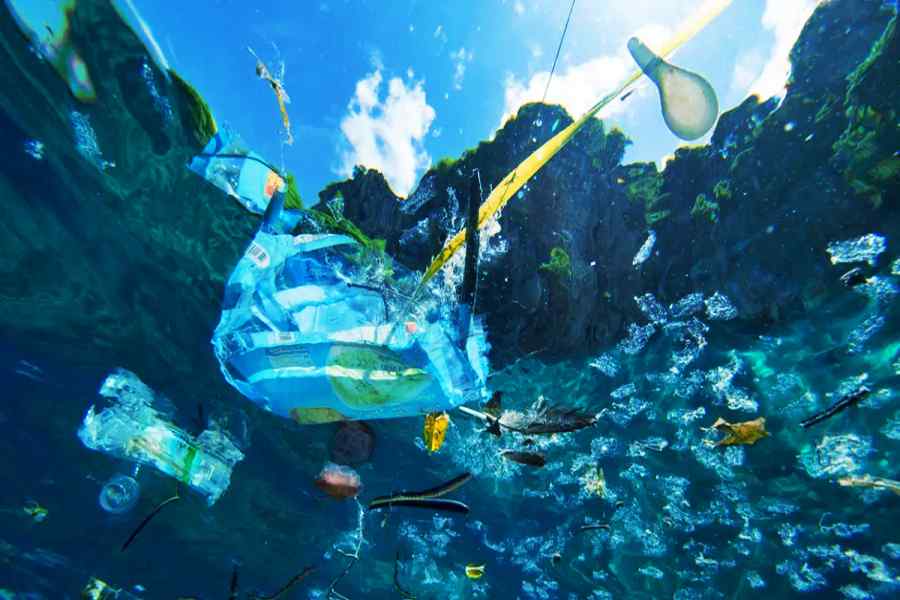
Most plastic that enters the ocean does not stay on the surface. The majority eventually sinks, accumulating on the seafloor from shallow coasts all the way to the deepest trenches, including the Mariana Trench more than 10 kilometers down.
There it smothers sediments, blocking oxygen and nutrient exchange and creating low-oxygen conditions that harm the animals living in the mud. Plastic bags dragged by currents carve unnatural tracks across the bottom, altering the seafloor faster than the creatures that normally shape it.
Bottom-dwelling animals such as worms, sea cucumbers and deep-sea corals ingest the fragments. This reduces their feeding, growth, reproduction and survival. In the cold, dark deep ocean, plastics degrade extremely slowly and can persist for centuries or longer.
The result is a lasting change to Earth’s largest habitat: disrupted food webs, new surfaces that carry microbes and toxins, and even a slowdown in the ocean’s ability to lock away carbon. The plastic problem is not just floating garbage — it is a permanent layer on the seafloor.
SOURCE: INDEPENDENT PRESS AND NEWS AGENCIES
__________________________________________________________________________
FOLLOW INDEPENDENT PRESS:
WhatsApp CHANNEL
https://whatsapp.com/channel/0029VaAtNxX8fewmiFmN7N22

TWITTER (CLICK HERE)
https://twitter.com/IpIndependent

FACEBOOK (CLICK HERE)
https://web.facebook.com/ipindependent

YOUTUBE (CLICK HERE)
https://www.youtube.com/@ipindependent

Think your friends would be interested? Share this story!