Sat 08 August 2026:
“The Kenya Wildlife Service is committed to establishing the facts and keeping the public informed every step of the way,” KWS Director General Erustus Kanga said in a statement on Friday.
KWS also sought to calm concerns over the impact on tourism, saying: “KWS reassures the public and tourism sector players that Amboseli National Park remains open and is operating normally.”
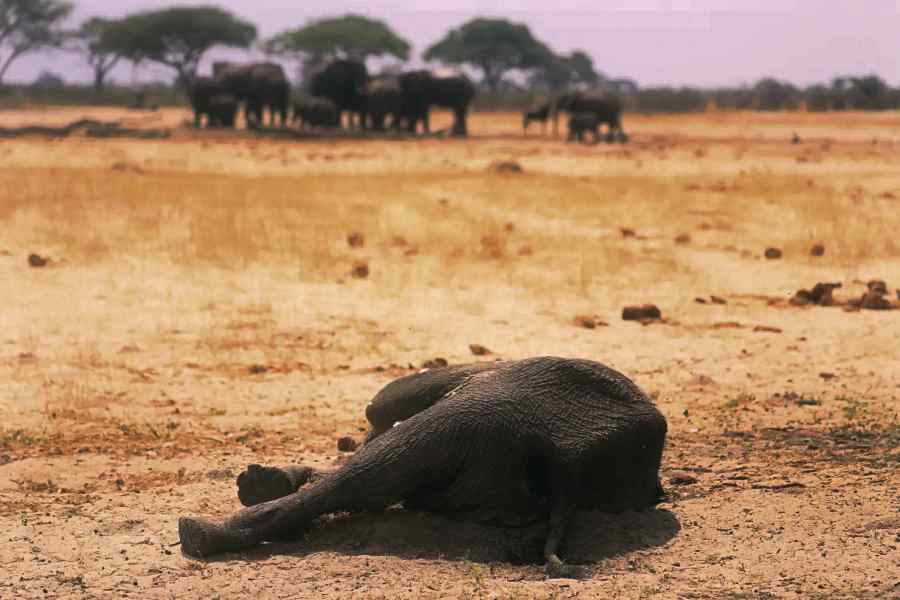
According to the agency, preliminary laboratory analysis conducted by the University of Nairobi indicates that cyanide poisoning is the probable cause of the deaths examined.
__________________________________________________________________________

https://whatsapp.com/channel/0029VaAtNxX8fewmiFmN7N22
__________________________________________________________________________
It said confirmatory testing is continuing to match laboratory findings with individual case records and trace how the elephants were exposed.
KWS said veterinary and scientific teams from Nairobi, Tsavo and Amboseli were deployed after the first case was detected on June 24 to examine affected animals, conduct postmortem examinations, collect samples and carry out disease surveillance.
Toxicological, microbiological and environmental analyses are also underway.
The agency said a multi-agency technical team is investigating whether pesticides or other crop protection chemicals were improperly used, stored or disposed of in the Kimana, Kuku, Kitenden and wider Amboseli ecosystem.
Investigators are also examining whether contaminated water or Cynodon plectostachyus, a cyanogenic grass species, may have contributed to the suspected poisoning.
KWS said findings so far do not indicate an infectious or transmissible disease, allaying concerns that the deaths were caused by an outbreak affecting wildlife.
Amboseli National Park, located about 240 kilometers (149 miles) southeast of the Kenyan capital, Nairobi, is one of Africa’s best-known wildlife destinations and is internationally renowned for its large elephant population and views of Mount Kilimanjaro.
The wildlife agency said it will continue providing updates as more verified information becomes available and urged members of the public with credible information about the incident to report it through its official communication channels.
SOURCE: INDEPENDENT PRESS AND NEWS AGENCIES
__________________________________________________________________________
FOLLOW INDEPENDENT PRESS:
WhatsApp CHANNEL
https://whatsapp.com/channel/0029VaAtNxX8fewmiFmN7N22

TWITTER (CLICK HERE)
https://twitter.com/IpIndependent

FACEBOOK (CLICK HERE)
https://web.facebook.com/ipindependent

YOUTUBE (CLICK HERE)
https://www.youtube.com/@ipindependent

Think your friends would be interested? Share this story!