Thu 18 June 2026:
At least 8,500 attacks on education took place globally in 2024 and 2025, marking an increase of more than 40 percent from the previous two-year period, according to a report by the Global Coalition to Protect Education from Attack (GCPEA).
The report, titled Education Under Attack 2026, published on Monday by the GCPEA, states that attacks during 2024 and 2025 harmed at least 10,600 school and university students, teachers, professors, and education personnel across 83 countries, including 55 countries not experiencing active armed conflict.
The GCPEA documented the highest numbers of attacks in Colombia, the Democratic Republic of the Congo (DRC), Ethiopia, Haiti, Palestine, and Ukraine.
__________________________________________________________________________

https://whatsapp.com/channel/0029VaAtNxX8fewmiFmN7N22
__________________________________________________________________________
According to the report, India witnessed a rise in attacks on educational institutions, students, and teachers during the 2024–2025 reporting period, with at least 17 reported attacks on schools, 64 attacks on school students and education personnel, and 154 attacks on higher education institutions and communities.
Many of the incidents were linked to ethnic violence in Manipur, bomb threats, arson attacks, and police crackdowns on protests by students, teachers, and education workers.
“Following the deadly attack in Jammu and Kashmir (Pahalgam attack), the angry rhetoric by national broadcast networks and social media users led to Hindu mob attacks against Muslims, particularly Kashmiri students, vendors, and workers in various states, who faced intimidation, threats, and assault,” the report highlighted.
The report also noted that religiously motivated violence against minorities, including Muslims and Christians, continued during the period, while authorities in several states carried out demolitions of Muslim homes, shops, and religious sites despite a Supreme Court ruling against such punitive actions.
In addition, natural disasters, including floods and landslides, disrupted education across multiple states, affecting hundreds of thousands of children and damaging hundreds of schools.
“Flooding and landslides occurred in several states during the reporting period — including Uttarakhand, Punjab, West Bengal, Himachal Pradesh, Bihar, Kerala, Assam, and Mizoram — leading to temporary disruptions in education,” the report said.
The report documented the use of force, detentions, and arrests against thousands of students, teachers, and education personnel participating in protests, as well as instances of military use of schools and attacks on universities and colleges, particularly in conflict-affected regions.
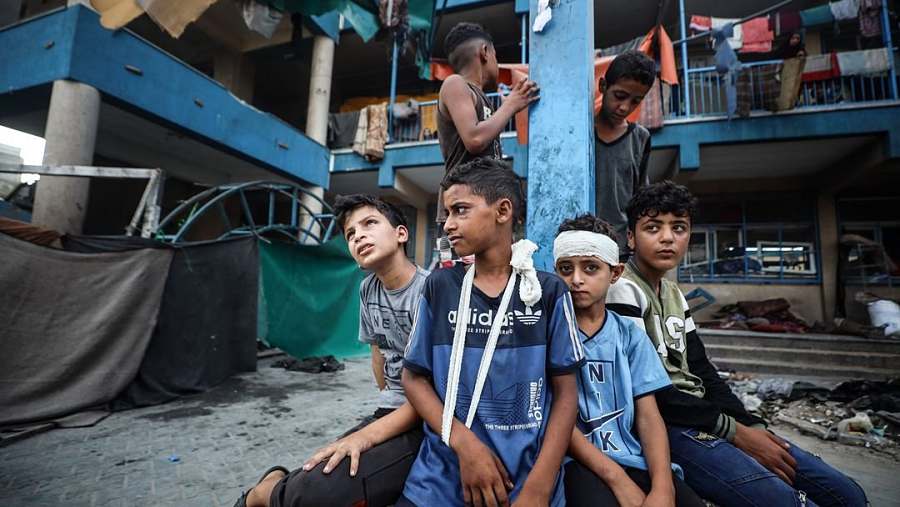
The report states that in Palestine, more than 2,000 attacks targeted education, and by the end of 2025 nearly all schools in Gaza had been damaged or destroyed. In Ukraine, more than 900 attacks on schools were recorded. Haiti, newly profiled in this report, experienced more than 400 attacks, while Cameroon, Myanmar, Nigeria, and Yemen recorded the highest numbers of people harmed or killed.
The GCPEA found that 1,700 students and staff were killed or injured in attacks across these four countries.
More than 700 students and staff were reportedly kidnapped in Nigeria. In Myanmar, reports indicated that at least 80 students and staff were killed and at least 240 were injured in attacks on education.
Reports of military use of schools nearly doubled. The GCPEA documented more than 1,900 instances, with Colombia, the DRC, and Ethiopia being the most affected. When armed forces or armed groups take over schools, education is disrupted and vital infrastructure is damaged. It also increases the risk of children being forcibly recruited into armed groups, subjected to sexual violence, or becoming targets of attacks.
The report stressed that girls and women faced heightened risks of violence and exclusion, reporting targeted attacks on girls’ schools and conflict-related sexual violence in Cameroon, the Central African Republic, Colombia, Haiti, Nigeria, and Afghanistan.
In Afghanistan, authorities shut down learning centres for girls above Grade 6 and detained female teachers, continuing their assault on girls’ education.
The report also pointed to the growing use of explosive weapons in populated areas, including drone-borne explosives, in roughly 300 attacks on education. Many occurred during class hours, killing students and educators and forcing prolonged school closures.
The GCPEA urged universal endorsement of the Safe Schools Declaration and called on governments, United Nations agencies, and donors to take five urgent actions, including strengthening legal protections for children and education systems, ending the military use of schools, sustaining and protecting global monitoring of attacks, safeguarding education during electoral cycles, and resourcing early warning and anticipatory action systems.
“We believe the true increase is far higher,” said Felicity Pearce, lead researcher for the Education Under Attack 2026 report.
“Escalating conflict, shrinking humanitarian access, and widespread information blackouts mean many attacks are never reported,” she stressed.
Lisa Chung Bender, director of the GCPEA, said the report’s findings sounded the alarm about the growing threat to education, stating that “they are a warning that the global norms that once protected children are collapsing.
“A warning that the world is drifting toward a place where even the youngest are no longer off-limits. And a warning that if we do not hold the line now, we may never get it back,” she added.
Reacting to the report, UNICEF Education stated on X on Monday that the findings “underscore a growing global crisis and the urgent need to protect education in conflict.”

This article is republished from Maktoob Media. Read the original article.
__________________________________________________________________________
FOLLOW INDEPENDENT PRESS:
WhatsApp CHANNEL
https://whatsapp.com/channel/0029VaAtNxX8fewmiFmN7N22

TWITTER (CLICK HERE)
https://twitter.com/IpIndependent

FACEBOOK (CLICK HERE)
https://web.facebook.com/ipindependent

YOUTUBE (CLICK HERE)
https://www.youtube.com/@ipindependent

Think your friends would be interested? Share this story!