Tue 07 April 2026:
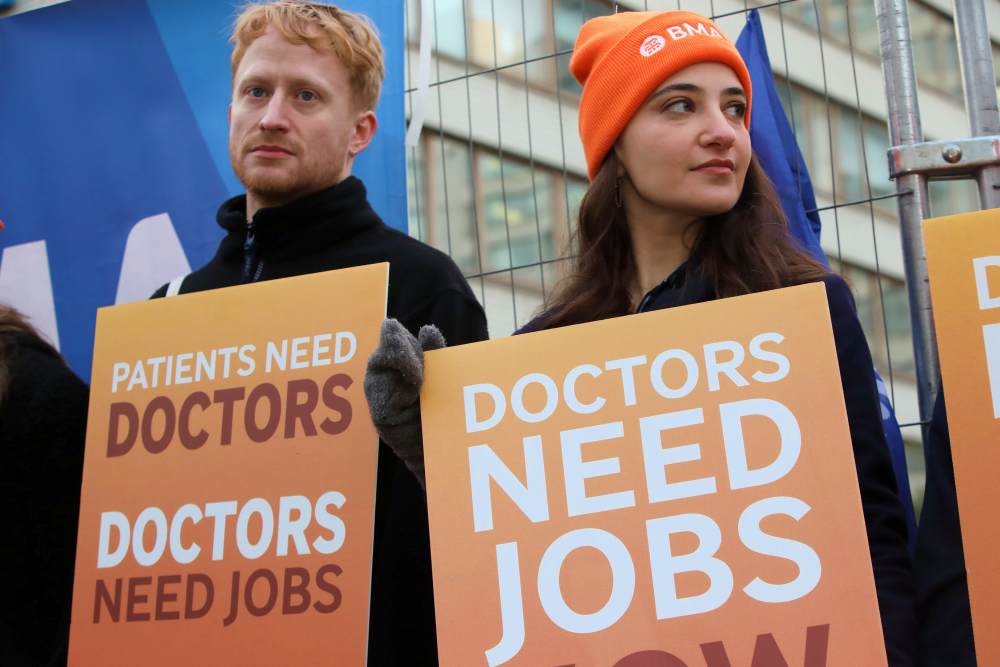
Thousands of resident doctors across England began a six-day strike Tuesday in a long-running dispute with the government over pay.
The walkout, the 15th round of industrial action, started at 7 am local time (0600GMT) and is set to continue until 7 am on Monday, April 13. The British Medical Association, or BMA, said last month that its Resident Doctors Committee rejected Health Secretary Wes Streeting’s latest offer of a 3.5% pay increase after weeks of talks.
In an April 1 statement, the association said the government could still avert the strike by returning to negotiations with a “credible offer” on pay and working conditions.
“We remain willing and available to re-enter negotiations, but we are not willing to risk locking in further pay erosion,” the BMA said. It added that the government changed its position on pay at the last moment, leaving doctors with “no option but to make ourselves heard from the picket line.”
National Health Service England urged patients not to delay seeking care during the strike period. “This strike is expected to be particularly challenging due to the shorter notice period,” it said Monday.
__________________________________________________________________________

https://whatsapp.com/channel/0029VaAtNxX8fewmiFmN7N22
__________________________________________________________________________
With this upcoming round of strikes, costs to the NHS are estimated to go above £3bn since 2023, with Tuesday seeing the 60th day of industrial action by resident doctors in the past three years, according to analysis by the Times and Telegraph. The Guardian put this estimate to the NHS which said that while it did not provide formal figures, it did not object to the £3bn estimate.
Talks on Tuesday and Wednesday last week failed to reach a compromise that would have led to the BMA suspending or cancelling the strike. The union and ministers remain far apart on a number of key issues, including pay.
Speaking to the Guardian before the walkout, Streeting said the BMA had not only killed off chances of securing better pay and more jobs for medics, but now threatened to derail progress made by the NHS on waiting times.
“After months of detailed negotiations, collaboration and compromise, we put forward a deal would have delivered an average pay rise this year of 4.9%, a pay boost of at least 6.2% for the lowest-paid doctors, and an overall pay increase of 35.2% on average compared with four years ago.”
Speaking on Monday, the BMA resident doctors committee chair, Dr Jack Fletcher, said he was serious about ending the dispute and he blamed the government for the talks breaking down.
“My colleagues and I have spent months in the negotiating room, and a deal was taking shape, yet at the last minute the government quietly watered it down, reducing the money on the table, then stretching what was left over too many years to make it worthwhile,” he said.
“These strikes were entirely avoidable. We offered the government several opportunities to undo their last-minute goalpost shift and they refused.”
Fletcher said it was even harder to understand why the government had pulled the plug on an offer to create 1,000 extra places in specialist medical training this year.
The strike is due to end at 7am next Monday. Patients have been urged to attend planned appointments unless they have been contacted to reschedule, and those with life-threatening emergencies should still call 999 or attend A&E.
SOURCE: INDEPENDENT PRESS AND NEWS AGENCIES
__________________________________________________________________________
FOLLOW INDEPENDENT PRESS:
WhatsApp CHANNEL
https://whatsapp.com/channel/0029VaAtNxX8fewmiFmN7N22

TWITTER (CLICK HERE)
https://twitter.com/IpIndependent

FACEBOOK (CLICK HERE)
https://web.facebook.com/ipindependent

YOUTUBE (CLICK HERE)
https://www.youtube.com/@ipindependent

Think your friends would be interested? Share this story!