Mon 17 November 2025:
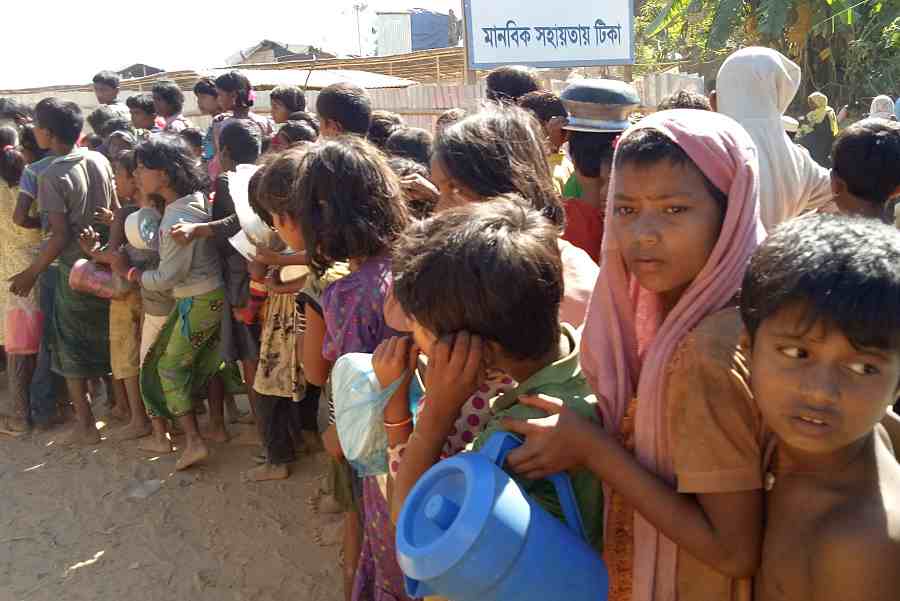
Director and Founder of Restless Beings, Mabrur Ahmed, warned that conditions inside the Rohingya refugee camps in Bangladesh had continued to deteriorate as education systems collapsed and families endured increasingly harsh living environments.
Nearly a decade of displacement had left the community confined to shelters never intended for long-term residence, with limited access to schooling, resources, or political resolution.
Education remained one of the most urgent concerns. Formal schooling in the camps ended at a primary level, leaving adolescents without structured learning, skills development or meaningful prospects.
Severe cuts from international donors further reduced access, pushing thousands of children out of even the limited education that once existed.
“The education that’s provided for the Rohingya is very, very limited. It’s only from class one up to class 4, so you have a whole population of children… from maybe eight or nine years old all the way through to their late teens, who are basically without any type of education, and we’re restricted by what kind of education we can provide for the children.”
Despite these challenges, Restless Beings has continued to maintain its women’s centre and learning centres thanks to steady public support.
The organisation’s decision to avoid institutional or government funding allowed its work to remain consistent while other groups scaled back or closed. That independence, Ahmed noted, had become essential for a community living with prolonged uncertainty.
“We don’t rely on institutional or governmental funding of any sort. We rely only on public donations, and as a result, we’ve been able to continue our work for years and years, even when many children who once had access to education now don’t have that because of cuts.”
__________________________________________________________________________

https://whatsapp.com/channel/0029VaAtNxX8fewmiFmN7N22
__________________________________________________________________________
London Café Supporting Rohingya Children
Part of that support came from Route 25, a coffee shop in London established to fund Restless Beings’ programmes in the camps. The initiative demonstrated how small, everyday actions could translate into real impact.
Women in the empowerment centre had also begun producing classroom furniture, creating a cycle of skills development and community investment.
“That cup of coffee that you buy at Route 25? Well, look at what it achieves. When I show the school in the video, you see children crowded together learning, and even the furniture was built by women in our centre as part of their woodwork training.”
Ahmed encouraged South Africans who wished to support the initiative to donate or explore community-funded models similar to Route 25, arguing that sustainable, locally rooted contributions could outlast temporary spikes in global attention.
“If someone has an idea, please let us know. Get in touch with us. Let’s make it happen. Let’s turn charity into something accessible and sustainable so that we can support people long after the world’s attention has moved on.”
This article originally published in Salaamedia click here

__________________________________________________________________________
FOLLOW INDEPENDENT PRESS:
WhatsApp CHANNEL
https://whatsapp.com/channel/0029VaAtNxX8fewmiFmN7N22

TWITTER (CLICK HERE)
https://twitter.com/IpIndependent

FACEBOOK (CLICK HERE)
https://web.facebook.com/ipindependent

YOUTUBE (CLICK HERE)
https://www.youtube.com/@ipindependent

Think your friends would be interested? Share this story!