Thu 24 July 2025:
Consumer prices rise to a four-month high, driven by increasing food costs and placing further strain on household budgets ahead of the Reserve Bank’s interest rate announcement.
A sudden increase in South Africa’s inflation rate has pushed the cost of living to a four-month high, creating a challenging economic environment for both consumers and monetary policymakers. The annual consumer price index (CPI) accelerated to 3.0% in June, up from 2.8% in May, according to data released by Statistics South Africa on Wednesday.
This uptick, primarily fuelled by rising food prices, complicates the upcoming interest rate decision by the South African Reserve Bank’s Monetary Policy Committee (MPC). While the SA inflation rate has remained within the lower end of the central bank’s 3% to 6% target range for nine consecutive months, the latest figures introduce a new layer of uncertainty. The MPC, which reduced the repo rate by 25 basis points to 7.25% in May, is now faced with a more complex forecasting landscape.
Reserve Bank Governor Lesetja Kganyago recently highlighted the difficulties in predicting economic trends, citing international factors like “Chinese deflation, a weaker dollar and uncertainty about how nations will respond to US President Donald Trump’s tariff onslaught.” He noted, “There are things that we are not sure about. We do not know in which direction they would go.” The MPC is scheduled to announce its next interest rate decision on July 31.
__________________________________________________________________________

https://whatsapp.com/channel/0029VaAtNxX8fewmiFmN7N22
__________________________________________________________________________
Household budgets under pressure
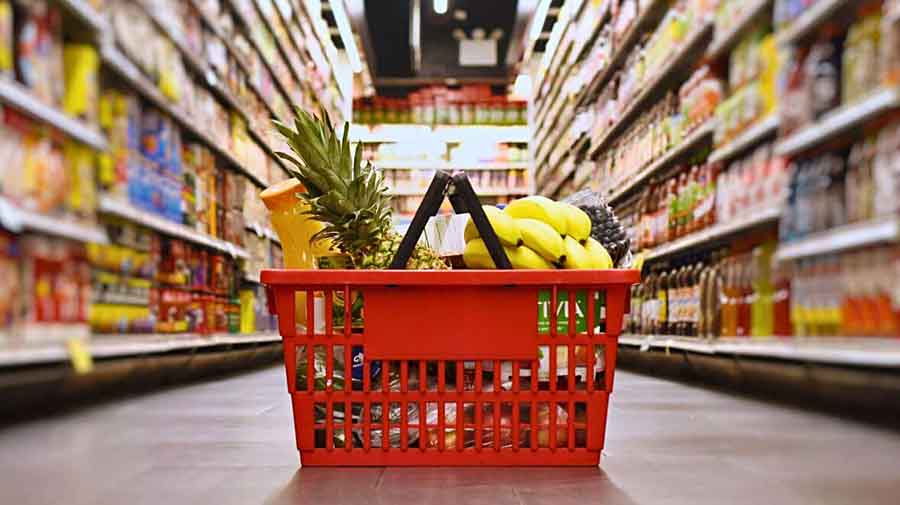
For ordinary South Africans, the headline SA inflation figure translates into tangible pressure on daily expenses. The June 2025 Household Affordability Index from the Pietermaritzburg Economic Justice and Dignity Group (PMBEJD) reveals the real-world impact of these price increases. The cost of an average household food basket, containing 44 basic items, surged by R187.96 month-on-month to R5 557.77. Year-on-year, the basket is R372.43 more expensive.
The PMBEJD report underscores a critical affordability crisis, stating that the National Minimum Wage of R4,775.04 is “insufficient to afford the Household Food Basket.” This shortfall leaves millions of families unable to cover the cost of basic nutrition, let alone other essential expenses like transport and electricity.
The report also highlights that in June, the cost of feeding a child a basic nutritious diet was R1 032.74, an amount that consumes over a fifth (21.6%) of the monthly minimum wage, illustrating the severe financial strain on low-income households.
The data shows that while the official SA inflation rate provides a broad measure of price changes, the lived reality for many involves a much steeper rise in the cost of essential goods, deepening the struggle to make ends meet across the country.

This article originally published in Salaamedia click here

__________________________________________________________________________
FOLLOW INDEPENDENT PRESS:
WhatsApp CHANNEL
https://whatsapp.com/channel/0029VaAtNxX8fewmiFmN7N22

TWITTER (CLICK HERE)
https://twitter.com/IpIndependent

FACEBOOK (CLICK HERE)
https://web.facebook.com/ipindependent

YOUTUBE (CLICK HERE)
https://www.youtube.com/@ipindependent

Think your friends would be interested? Share this story!