Wed 06 August 2025:
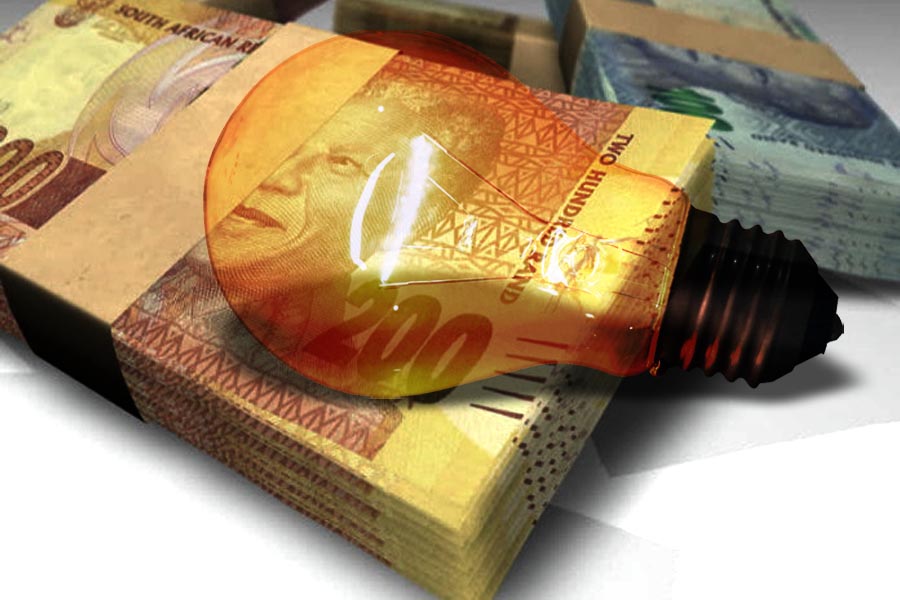
Experts warn that unsustainable tariff hikes, which have risen 600% in recent years, are pushing millions towards energy poverty and creating a volatile environment.
A crisis is brewing in South Africa, not of bombs and bullets, but of skyrocketing electricity costs that threaten to ignite widespread social unrest. With tariffs having surged by approximately 600% in recent years, experts and even government officials are sounding the alarm that the current trajectory is unsustainable, pushing millions of households to the brink.
The issue came to a head in recent weeks when protests erupted in Tembisa, Gauteng, forcing the local government to scrap a newly introduced fixed monthly electricity fee. According to University of Johannesburg sociologist, Professor Luke Sinwell, this is more than just an affordability issue; it is a complex problem rooted in historical inequality, race and a government shift towards profit-driven policies over people’s needs.
“We assume that when there’s no protests going on… there is a level of stability,” Professor Sinwell stated in an interview. “But an alternative perspective looks at what is bubbling beneath the surface as a result in part of the inequalities that are being reproduced in the post-apartheid context.”
This bubbling discontent is fuelled by what many see as the government’s move away from the state-driven Reconstruction and Development Programme (RDP) promised in 1994. Instead, policies have shifted towards “economic, profit-driven, market-oriented cost recovery and privatisation,” which, according to Sinwell, fails to account for the deep-seated economic disparities inherited from apartheid.
The impact on daily life is severe. Minister of Electricity, Dr Kgosientsho Ramokgopa, recently admitted the country is facing “new dimensions of energy poverty.” He noted, “Poor households are being forced to make choices between a loaf of bread and buying prepaid electricity units.”
__________________________________________________________________________

https://whatsapp.com/channel/0029VaAtNxX8fewmiFmN7N22
__________________________________________________________________________
The spectre of ‘energy racism’
Professor Sinwell introduces the term “energy racism” to describe a systemic issue where the burden of electricity unaffordability and punitive measures falls disproportionately on Black communities. He explains that this is not merely about economic exclusion.
“It is only, virtually only Black communities in townships, in formal settlements and in villages who are experiencing systematic exclusion on the basis of what Eskom calls load reduction,” Sinwell explained. He clarified that load reduction is different from load-shedding, as it specifically penalises areas like Alexandra, Soweto and Tembisa for non-payment — a direct consequence of historical and ongoing economic inequality.
“The fact that people can’t afford to pay obviously is rooted in apartheid and colonialism, but it takes on a racial kind of feature because it only affects Black people and hence we call it energy racism.”
The government’s market-oriented approach assumes a level playing field that does not exist. “If you assume that everyone is on equal grounds, then you will all pay the same amount,” Sinwell argued, pointing out that this forces low-income households to spend a significant portion of their earnings on electricity, while wealthier households spend a fraction. This approach, he contends, prevents any meaningful transformation or “decolonisation” of the economy.
As the nation grapples with these challenges, the recent protests in Tembisa are seen by many as a “warning shot.” Professor Sinwell suggests that when official channels fail, mass action becomes the only reliable way for communities to influence policy. With the ground already fertile with inequality and unemployment, the crisis of soaring electricity prices may just be the spark that ignites the fire of widespread social unrest.


__________________________________________________________________________
FOLLOW INDEPENDENT PRESS:
WhatsApp CHANNEL
https://whatsapp.com/channel/0029VaAtNxX8fewmiFmN7N22

TWITTER (CLICK HERE)
https://twitter.com/IpIndependent

FACEBOOK (CLICK HERE)
https://web.facebook.com/ipindependent

YOUTUBE (CLICK HERE)
https://www.youtube.com/@ipindependent

Think your friends would be interested? Share this story!