Mon 29 June 2026:
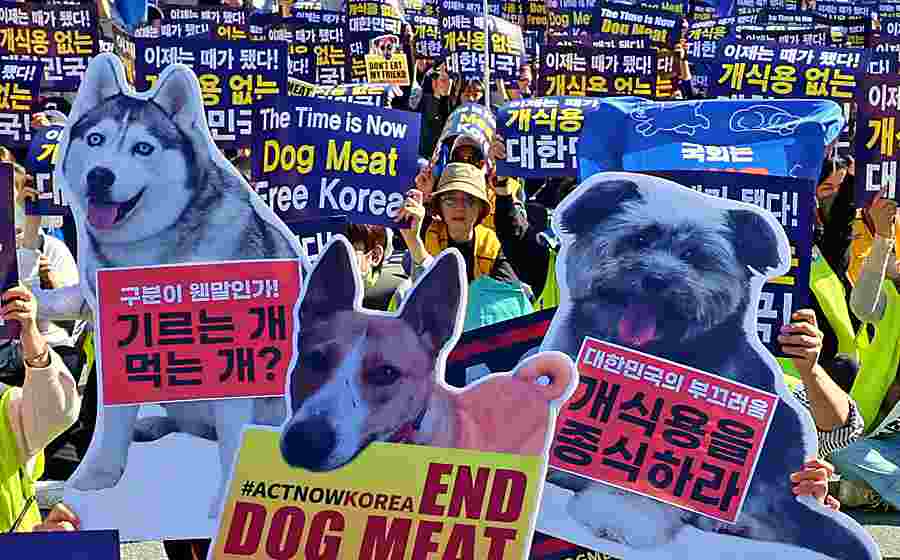
Now, the agriculture ministry says only about 20,000 are still on farms, a much faster drop than expected.
The government gave farmers up to 600,000 won (about $390) per dog to help them transition but did not keep track of what happened to the animals.
“Our job is to check that there are no more dogs at farms or slaughterhouses before we give compensation,” a ministry inspector told AFP, asking not to be named. “We are not involved in what was done with the dogs.”
__________________________________________________________________________

https://whatsapp.com/channel/0029VaAtNxX8fewmiFmN7N22
__________________________________________________________________________
Most have ‘already been eaten’
According to data from a lawmaker, by February, only 623 dogs had been adopted, and fewer than 500 had been sent to shelters. Animal welfare groups and former farmers think that most of the dogs were killed.
“If many rescued dogs had joined adoption programs, groups like ours would know,” said Kim Young-hwan from the animal rights group CARE. “We haven’t seen any adoption campaigns for dogs rescued from dog farms.”
CARE says it has rescued and found new homes for about 2,500 farmed dogs over the past 20 years, with most sent abroad.
Only about two dozen were adopted in South Korea, partly because people there prefer smaller dogs for apartment living.
Dogs raised for meat were usually large breeds like Nureongi, or Korean Yellow Spitz.
Ju Yeong-bong, who used to farm dogs, said that the thousands of missing dogs had probably “already been eaten.” Kim said this idea was “infuriating” and added that animal welfare groups do not have enough resources to save more dogs.
Legal contradiction
The agriculture ministry says that by May, 1,265 dog farms, or about 82% of all farms, had applied to close.
Activists say the ban does more than just end an industry. Park Joo-yeon, a lawyer and head of the animal rights group PNR, called it a “long-standing loophole” in South Korean law.
Unlike cattle or pigs, dogs were never officially considered livestock, so the industry ran for years without rules for humane treatment or slaughter.
Animal rights activists say dogs were often killed by electrocution, hanging, or beating. At an abandoned slaughterhouse in Pyeongtaek, south of Seoul, AFP journalists saw tools that were reportedly used to electrocute animals.
“They often stayed conscious while their organs burned,” said Shin Joo-woon, a campaigner for the animal rights group KARA. “Other dogs would see what was happening.”
Last month, KARA rescued 29 dogs from the Pyeongtaek farm and filed a complaint against the owner for animal cruelty, which is already illegal under current law.
Former dog farmers say the change has been difficult. Ju, who is also a Christian pastor and began his dog farm in 1994, called the ban “a betrayal” that was put in place “without meaningful dialogue or enough support to protect our livelihoods.”
Many former dog farmers are trying to move to other livestock businesses, but slow government licensing has made the change harder.
Dog meat was once seen as a food for stamina in the summer, especially among older people and in rural areas. But as more young South Koreans keep dogs as pets and public views change, eating dog meat has become less popular.
The ban was passed in January 2024, and anyone who breaks the law could face up to three years in prison once it takes effect.
SOURCE: INDEPENDENT PRESS AND NEWS AGENCIES
__________________________________________________________________________
FOLLOW INDEPENDENT PRESS:
WhatsApp CHANNEL
https://whatsapp.com/channel/0029VaAtNxX8fewmiFmN7N22

TWITTER (CLICK HERE)
https://twitter.com/IpIndependent

FACEBOOK (CLICK HERE)
https://web.facebook.com/ipindependent

YOUTUBE (CLICK HERE)
https://www.youtube.com/@ipindependent

Think your friends would be interested? Share this story!