Thu 06 August 2026:
The measure allows Euro-2, Euro-3 and Euro-4 gasoline to be produced, imported and sold in Russia until July 1, 2027.
The resolution was signed by Prime Minister Mikhail Mishustin on Aug. 5 and published on Russia’s Official Legal Information Portal. It has entered into force.
The Energy Ministry said the measure is temporary and is intended to ensure stable fuel supplies and prevent possible shortages.
__________________________________________________________________________

https://whatsapp.com/channel/0029VaAtNxX8fewmiFmN7N22
__________________________________________________________________________
The ministry said the decision does not represent a change in Russia’s long-term environmental policy on motor fuels.
Fuel stations will be required to clearly display the environmental classification of the gasoline they sell.
Euro-2, Euro-3 and Euro-4 gasoline can contain higher levels of sulfur and certain other pollutants than Euro-5 fuel, which has been the main standard in Russia.
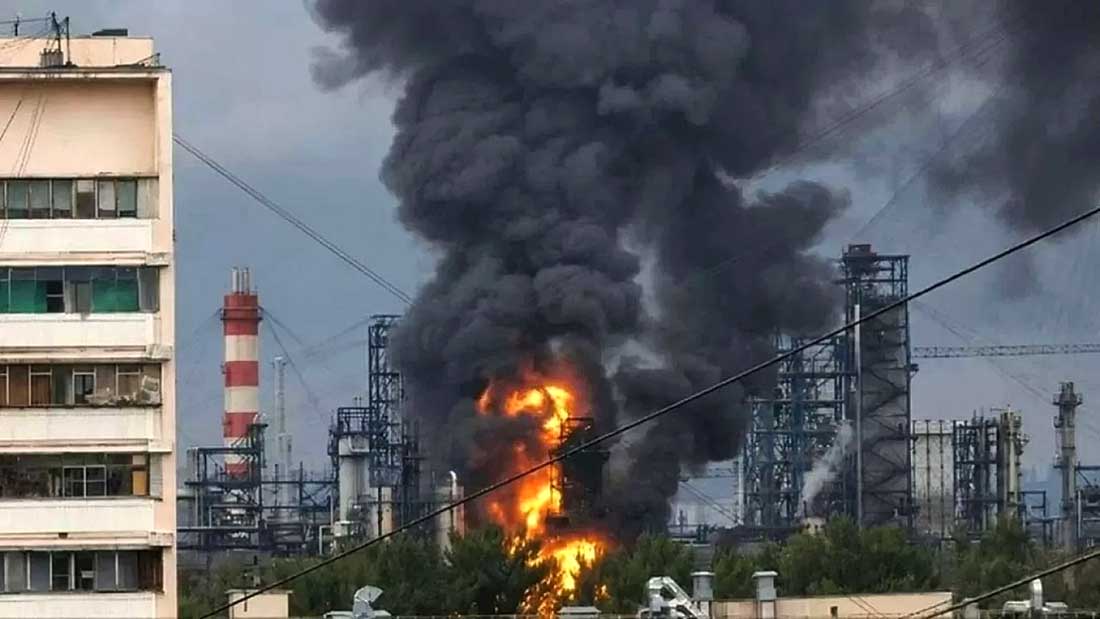
The decision comes as Ukrainian drone attacks on Russian oil refineries have forced several facilities to suspend operations or undergo repairs, putting pressure on fuel production and distribution in some regions.
Russian authorities have also introduced restrictions on fuel sales in parts of the country.
The Russian government previously banned exports of gasoline and diesel fuel as part of efforts to protect domestic supplies and stabilize the market.
Russian Oil Refining Falls to 24-Year Low
Russian oil refining fell in July to its lowest level in more than two decades as Ukrainian drone attacks intensified against refineries, tankers and other energy infrastructure, Bloomberg reported Monday.
Refineries processed an estimated 3.6 million barrels of crude per day last month, the lowest level since May 2002, according to EA Analytics data cited by Bloomberg. That was roughly one-third below the seasonal norm.
Russian refineries processed an average of between 5.3 million and 5.6 million barrels per day during the same period of the year between 2020 and 2025.
The decline highlights the growing impact of Ukraine’s long-range drone campaign on Russia’s oil industry, a crucial source of export revenue for Moscow as the war enters its fifth year. While Russia can redirect some crude to alternative ports, analysts said limited pipeline, storage and tanker capacity could constrain its ability to compensate for disruptions.
Eighteen Russian refineries were targeted in July, including the Omsk refinery, the country’s largest and located more than 2,500 kilometers (1,550 miles) from the Ukrainian border, according to a Bloomberg tally based on statements by Russian and Ukrainian officials.
The previous monthly record of 17 refinery attacks was set in May.
SOURCE: INDEPENDENT PRESS AND NEWS AGENCIES
__________________________________________________________________________
FOLLOW INDEPENDENT PRESS:
WhatsApp CHANNEL
https://whatsapp.com/channel/0029VaAtNxX8fewmiFmN7N22

TWITTER (CLICK HERE)
https://twitter.com/IpIndependent

FACEBOOK (CLICK HERE)
https://web.facebook.com/ipindependent

YOUTUBE (CLICK HERE)
https://www.youtube.com/@ipindependent

Think your friends would be interested? Share this story!