Sat 20 June 2026:
The United Nations has warned that the world’s oceans are facing a rapidly worsening crisis, with marine ecosystems under “severe and intensifying” stress from human activities, while the rate of global sea-level rise has doubled over the past decade.
Released to coincide with World Oceans Day, the UN’s third World Ocean Assessment (WOA) , a massive 1,352-page evaluation compiled by approximately 600 scientists from 86 countries’ details the staggering toll that climate change, large-scale industrial fishing, and rampant pollution are taking on the marine environment.
Reviewing data collected primarily between 2018 and 2023, the report demonstrates that the scale of damage has escalated dramatically in just the past few years, pushing vital ecosystems and habitats toward critical tipping points that threaten the very foundation of life on Earth.
The most alarming finding in the assessment reveals that the rate of global sea level rise has doubled over the past decade. Driven by the melting of glaciers and ice caps alongside the thermal expansion of warming waters, sea levels were rising at a rate of 1.9 to 2.0 mm per year before 2015, but that figure surged to 4.3 mm per year by 2023.
This rapid acceleration is directly linked to the fact that the oceans absorb more than 90 percent of the excess heat and 30 percent of the carbon dioxide released into the atmosphere by the burning of fossil fuel.
__________________________________________________________________________

https://whatsapp.com/channel/0029VaAtNxX8fewmiFmN7N22
__________________________________________________________________________
Alarmingly, 16 percent of the total increase in global ocean heat recorded since 1955 occurred after 2018, with the greatest relative warming observed in the Atlantic Ocean and the southern regions of the Indian and Pacific Oceans. This severe thermal stress has caused Arctic temperatures to rise four times faster than the global average, leading marine ecologist Ian Butler to warn that an ice-free Arctic Ocean could become a reality within the next 20 years.
Furthermore, the physical and chemical transformation of the ocean is causing widespread biodiversity loss across nearly every marine habitat. As temperatures climb, marine species, ranging from microscopic plankton to large marine mammals, are actively shifting their habitats toward the North and South Poles, while non-indigenous species are spreading rapidly under altered environmental conditions.
Simultaneously, the depletion of oxygen has created hypoxic “dead zones” where marine life cannot survive, areas that now span a collective 4.5 million square kilometers. Coral reefs are bearing the brunt of this climate breakdown, evidenced by an 80 percent decline in Caribbean coral reefs since the 1970s.
The report starkly warns that 90 percent of global coral reefs may disappear entirely if global warming exceeds 1.5°C above pre-industrial levels, while critical coastal protections like mangroves and seagrass beds continue to shrink.
🪸 Coral reefs are under threat
The 3rd World Ocean Assessment shows how warming oceans & cumulative pressures are driving reef loss worldwide with far‑reaching impacts for marine life & coastal communities
🔗Learn more: https://t.co/B4rFu4axm4 #CoralReefs #WOAIII #OceanScience pic.twitter.com/GaK2eHddlg
— United Nations Information Service in Nairobi (@UNISNairobi) June 8, 2026
Compounding these climate-driven impacts are the catastrophic levels of human pollution and destructive overfishing destabilizing ocean food systems, which currently provide 20 percent of animal protein consumed by humans globally.
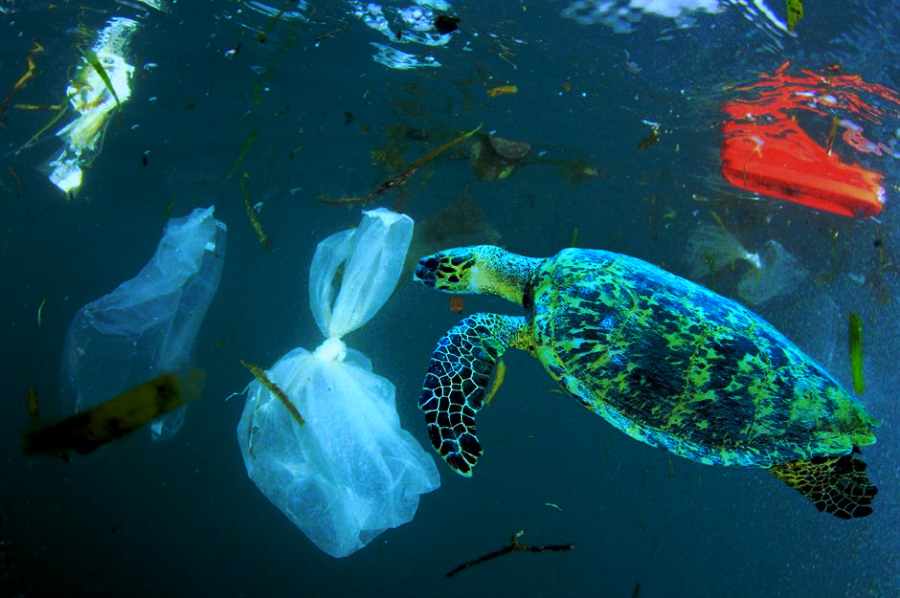
The assessment calculates that a staggering 52.1 million tonnes of plastic waste enter the ocean annually, contributing to an estimated 24.4 trillion microplastic particles currently impacting more than 4,000 marine species.
Chemical contamination is also rising rapidly, with over 4,000 pharmaceutical and personal care compounds detected in marine waters, though some legacy pollutants like mercury have shown regional declines.
Human population growth with 37 percent of the global population of 8.2 billion living within 100 kilometers of a coastline has concentrated destructive economic activities in vulnerable zones, driving habitat degradation and unsustainable resource extraction. This pressure extends further out to sea via expanding offshore wind farms, deepwater oil infrastructure, and seabed pipelines.
Coastal regions support 41–45% of global economic activity. Marine & coastal systems are facing accelerating amplified strain.
Learn from the 3rd World Ocean Assessment at https://t.co/B4rFu4axm4 about how marine ecosystem protection aides economic stability #ShareTheKnowledge pic.twitter.com/VYVP6lQ3Su
— United Nations Information Service in Nairobi (@UNISNairobi) June 8, 2026
In response to this deepening ecological emergency, United Nations Secretary-General António Guterres called for immediate, coordinated global collaboration, stating that humanity “cannot keep treating the ocean as limitless.”
Guterres urged the international community to build a new relationship with the ocean grounded in science, framed by international law, and built on shared responsibility across nations, sectors, and generations.
The ocean reminds us we are bound together. It shapes our climate, sustains ecosystems & economies, and feeds billions.
On World Ocean Day, let’s act with ambition & resolve to build a new relationship with the ocean – grounded in science & build on shared responsibility. pic.twitter.com/yUoej4YSK9
— António Guterres (@antonioguterres) June 7, 2026
The WOA noted that while significant progress has been made through 57 global treaties, including the landmark High Seas Treaty regulating the two-thirds of the ocean outside national jurisdictions, ocean governance remains dangerously fragmented across sectors and regions.
Adding to the urgency, scientists and critics expressed profound concern over plans by President Donald Trump’s administration to dismantle and remove hundreds of deep-sea scientific monitoring instruments that have tracked climate change data for over a decade.
The administration is dismantling a $368 million deep-ocean observation system established a decade ago to monitor coastal environments, marine ecosystems and ocean currents that influence the global climate, with the National Science Foundation set to remove more than 900 deep-sea instruments from sites off the coasts of Oregon, Washington, Alaska, North Carolina, and the North Atlantic between Greenland and Iceland.
Experts warn that eliminating these systems will leave the global scientific community “flying blind,” disrupting crucial data on oceanic migration, changing ocean currents, and deep-sea ecosystems, of which only 27 percent of the seafloor had been mapped by 2025.

This article is republished from Maktoob Media. Read the original article.
__________________________________________________________________________
FOLLOW INDEPENDENT PRESS:
WhatsApp CHANNEL
https://whatsapp.com/channel/0029VaAtNxX8fewmiFmN7N22

TWITTER (CLICK HERE)
https://twitter.com/IpIndependent

FACEBOOK (CLICK HERE)
https://web.facebook.com/ipindependent

YOUTUBE (CLICK HERE)
https://www.youtube.com/@ipindependent

Think your friends would be interested? Share this story!