

Fri 23 October 2026:
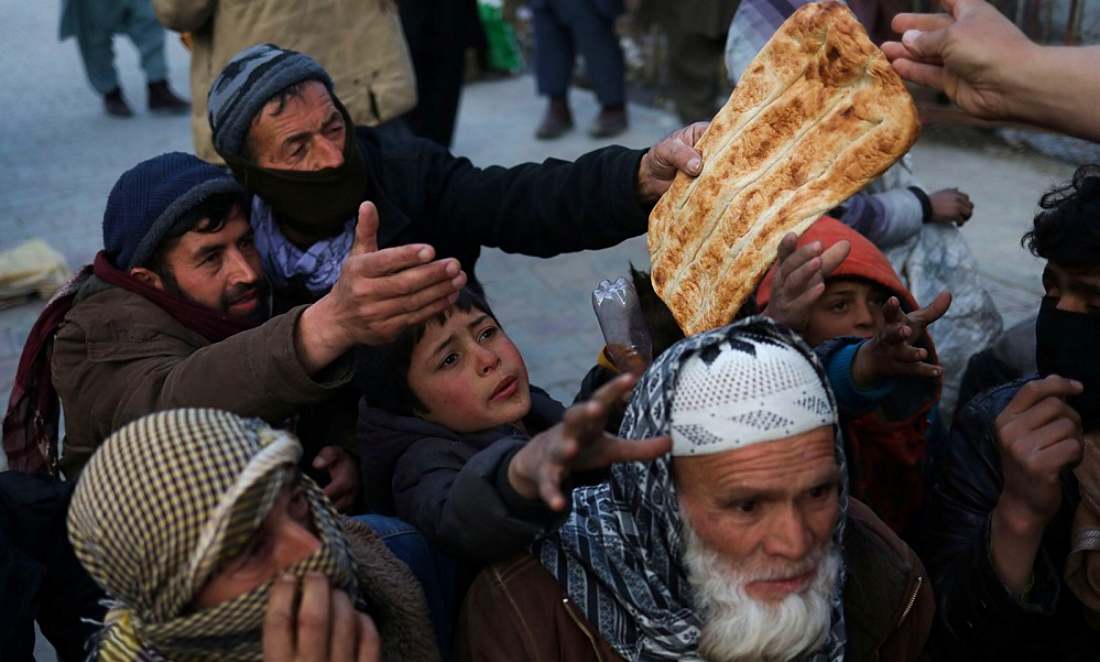
Nearly 19.2 million people in Afghanistan are projected to face acute food insecurity this winter due to funding shortages, the UN humanitarian affairs office warned Tuesday.
Between September and October, 15.9 million people, “nearly one in three Afghans,” are facing acute food insecurity at crisis level or worse, Olga Cherevko, spokesperson for the UN Office for the Coordination of Humanitarian Affairs (OCHA) in Afghanistan, told reporters in Geneva.
This winter, she said, 5 million people could face emergency levels of hunger.
More than 4 million children aged between 6 months and 5 years are projected to need treatment for acute malnutrition next year, including nearly 1.1 million for acute malnutrition, she said.
Approximately one-third of nutrition sites have closed or suspended services, partly due to funding cuts.
“Once these services disappear, the consequences can be irreversible, especially for children,” Cherevko warned.
__________________________________________________________________________

https://whatsapp.com/channel/0029VaAtNxX8fewmiFmN7N22
__________________________________________________________________________
Despite improved rainfall and agricultural production, she said millions remain unable to afford food, while years of conflict, drought and economic hardship have eroded families’ ability to cope.
“But one good harvest after several years of drought cannot undo the damage,” she said.
Cherevko also warned that restrictions on women and girls are worsening the crisis, citing UNICEF estimates that Afghanistan could lose up to 20,000 women teachers and 5,400 female health workers by 2030 if current restrictions continue.
She called for urgent humanitarian assistance ahead of winter, alongside sustained investment in agriculture, employment, healthcare and economic opportunities for women.
Meanwhile, John Aylieff, Afghanistan Country Director for the World Food Programme (WFP), said acute malnutrition among women and children had deteriorated significantly.
“About 1.3 million more women and children are acutely malnourished this year even than they were in 2022 just after the country was taken over,” Aylieff said, referring to the period following the IEA’s return to power.
He added that the international community’s withdrawal and the near-collapse of Afghanistan’s economy had contributed to the worsening crisis.
“So it is deepening. It is extremely serious and it is a crisis which is spinning out of control which we simply don’t have the resources to contain,” Aylieff warned.
Egeland called for an urgent increase in humanitarian assistance, particularly for women, children and Afghans recently returned from Iran and Pakistan.
SOURCE: INDEPENDENT PRESS AND NEWS AGENCIES
__________________________________________________________________________
FOLLOW INDEPENDENT PRESS:
WhatsApp CHANNEL
https://whatsapp.com/channel/0029VaAtNxX8fewmiFmN7N22

TWITTER (CLICK HERE)
https://twitter.com/IpIndependent

FACEBOOK (CLICK HERE)
https://web.facebook.com/ipindependent

YOUTUBE (CLICK HERE)
https://www.youtube.com/@ipindependent

Think your friends would be interested? Share this story!


