Tue 28 July 2026:
It has been an eventful week for me in the world of Facebook politics.
Firstly, two things crossed my screen within days of each other, and together they said something about the state of the African mind that deeply troubled me, and that I have not been able to shake.
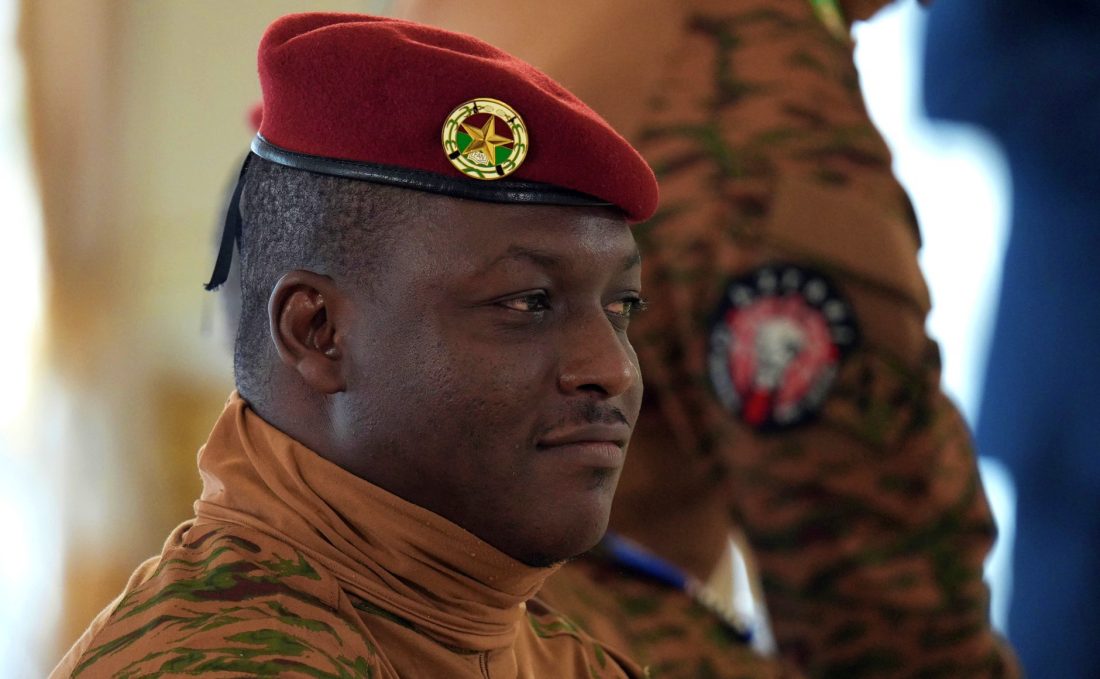
The first was a clip of a statement in a national broadcast by Captain Ibrahim Traoré, the military leader of Burkina Faso, a man who has become a folk hero across the continent and the diaspora and who deserves real admiration for his defiance of France and his insistence on African sovereignty. He turned his attention to young Burkinabè who travel to Saudi Arabia to study Islamic law. Instead of acquiring the technological knowledge and skills that could develop the country, he said, they had chosen to study Sharia; those who would not accept that the constitution stands above all religion could remain where they had studied, and he suggested those who refused to return might even lose their nationality and that they might have hidden aspirations to ‘apply Sharia’ in Burkina, which he guaranteed would never happen under his watch.
The second was a post from a Gambian social-media personality named Alhassan Alex Darboe, a man with a considerable audience, who took those remarks and turned them on his own country. The Gambia, he wrote, should be asking itself the same question. We are a secular country, he insisted, not a Sharia state, and yet year after year some of our sharpest Arabic-school graduates, “kids who could be doctors, engineers, scientists,” get shipped off to study Dawah, Hadith, and Sharia in the Gulf. “What does a degree in Sharia do for The Gambia’s hospitals? Our roads? Our economy? Nothing,” he wrote. “We come home with scholars, not builders.” If the Gulf wants to invest in our young people, he concluded, let it fund medicine and engineering and nursing, the fields that “actually build a nation.” Otherwise, keep the scholarships. Our brightest minds deserve better than being trained for a country we are not.
I hold a Gambian passport. So while the first statement concerned me as an African and a Muslim, the second landed somewhere more personal. And taken together, they are not two isolated outbursts. They are the visible edge of a rising current in West African discourse, a current that has come to look at its own oldest and deepest intellectual tradition and see mostly backwardness, waste, and threat. I wanted to take that current seriously, because parts of it are responding to something real. And then I wanted to explain, carefully and I hope fairly, why I believe it is mistaken.
So, in the heat of the moment, I wrote a long post on Facebook, a mini-essay really, which was the precursor to the essay you are reading now, same title and everything, arguing more or less what follows here.
And the reaction was, to put it mildly, mixed.
A great many people loved it. A great many people did not love it at all.
One response deserves particular respect, because it was serious, substantial, and written in good faith. Madina P. Ouedraogo, a Burkinabè writer holding a master’s degree in public administration, published a long and careful essay titled A response to Mustafa Briggs: Burkina Faso, Sovereignty, Religious Pluralism, and the Future of the Sahel. She was generous about my work — she wrote that she had long appreciated my scholarship on Islam, Africa and Blackness, and that it had helped challenge Arab supremacy and narratives that erase Africa’s intellectual traditions — and then unsparing about the essay. “For that reason,” she wrote, “I was particularly disappointed.” She judged it one of my weakest analytical pieces, and put her verdict in a single sentence: “The essay is strongest as dawah and as a defense of Islamic scholarship. It is weakest as an analysis of Burkina Faso.”
And then, at the other end of the register entirely, my cousin Momodou Taal was told by one of his friends exactly what he thought of it. “Your cousin is promoting an absolute trash take on Traore,” he wrote. And then, added a moment later, presumably for emphasis: “And abusing Walter Rodney in the process.”
I will come to both of them, because between them they raise nearly every serious objection to what I wrote, and one of them raises it very well indeed. But the mixed reception is precisely why I am writing this again, at greater length. What follows is not the Facebook post. It is what I should have written the first time.
What Traoré Said, and What He Did Not
Let me start with something I did not do carefully enough the first time, which is read the man properly.
The quote as I first encountered it was blunt and circulating without context. Burkinabè students were studying Sharia in Saudi Arabia instead of acquiring technological skills. They should stay where they were. They would not be allowed back. There would never be Sharia law in Burkina Faso.
I read that as an attack on Sharia as such, and I reacted in that lane. Fairly or not, it looked to me like Islamophobia in a beret, and I said so at length.
Then I did what I should have done first. I watched the full address, translated in its entirety rather than in fragments. And because I wanted to understand the country and not merely the speech, I also watched Sky News’s documentary President for Life: Inside Traoré’s Burkina Faso, filmed in Ouagadougou this year, which includes an interview with the President conducted under conditions his own communications department controlled.
And I understood the context considerably better.
He was not, in that address, attacking Islam per se. He was explicit that he is a Muslim, that every Burkinabè has the right to practise their own faith, and that the constitution stands above any religious code. He went out of his way, repeatedly, to commend the imams he described as courageous, dignified and patriotic, and to say that it is they who should be teaching the country’s young people. He announced that his government would fund religious education domestically — for Muslims, Catholics, Protestants and traditionalists alike — precisely so that foreign money would stop determining the curriculum.
His concern about the students, read in full, is a security concern rather than a theological one. He said his government had identified more than eight hundred Burkinabè studying in Arab countries whose presence there its own embassies knew nothing about. That is an intolerable situation for any head of state, and he is right to say so. And this was in the wider context of the religious terrorism and extremism that has been plaguing Burkina and the Sahel region in general. The argument is that people who go to study abroad bring back the ideologies that are behind these movements. In the address itself he put it bluntly: of the eight hundred-odd students on the list he had been shown, he said, not one held a profession — “not a single one” — and they were, in his words, “coming to enforce Sharia.” He went on to say that people had come to him wanting Burkina Faso to become an Islamic state, and that had he agreed, the terrorism would have ended, but the country would have become “a rear base, a cancer in the middle of West Africa” used to destabilise its neighbours.
The objection being raised is a genuine one, and it deserves to be stated at full strength. It is this: that it was only when Africans began travelling abroad to study Islam, in the Gulf and elsewhere, that we started to see harder, more literalist, more intolerant interpretations of the faith seeping back into West African society, interpretations alien to the tolerant Islam this region had practised for a thousand years. That these returning students brought home a rigidity that has frayed the social fabric, preaching intolerance and exclusion, and that at its furthest and bloodiest extreme this current has helped feed the rise of movements that did not exist here before: Boko Haram and its offshoot ISWAP around Lake Chad, Ansaru, the JNIM coalition tearing across the Sahel, and in Burkina Faso itself Ansarul Islam, the country’s first homegrown jihadist group. The argument is that the pipeline runs through foreign study, and that cutting or policing that pipeline is a matter of national survival.
I will not wave any of that away. It would be dishonest to pretend the threat is imagined. These groups are real, they have murdered teachers and worshippers and children, they have displaced millions, and a particular imported, politicised, literalist strain of religious ideology is genuinely part of what feeds them. A leader fighting an existential insurgency has every right, indeed every duty, to worry about the ideological currents flowing into his country. The concern about young men returning from abroad wanting to impose a rigid vision they acquired elsewhere is pointing at something that has, in specific and bloody cases, actually happened.
And the scale of it deserves to be stated properly, because it is worse than most people outside the region understand.
In the documentary it was noted that independent security analysts and open-source investigators estimate that jihadist groups maintain a strong presence across roughly sixty per cent of Burkina Faso’s territory. They have verified some 1,200 attacks during 2025 alone, killing more than 4,500 people — including three of the deadliest terrorist attacks anywhere in the world that year. By that reckoning, Burkina Faso was the second deadliest country on earth for terrorism in 2025.
I can fully accept where the President is coming from in this regard. But notice how quickly the legitimate worry, about violent extremism, about foreign-funded ideological hardening, slides into something else entirely: the claim that studying Sharia as such is a waste, that religious knowledge is economically useless, that the student of Islamic law is a drain on “the productive sector.” That is not a security argument. That is a civilisational self-repudiation. And it rests on a misunderstanding so deep that it mistakes the disease for the patient.
And let me be clear at the very outset about what I am not arguing, because these questions are easily and often deliberately confused. I am not fighting for Sharia to be the governing law of Burkina Faso, or The Gambia, or any of these states, nor for religious law to sit above a constitution. Whether a country adopts religious law is a separate debate, and not the one I am having. My argument is narrower, and I think far harder to disagree with: that the person who chooses to study this tradition should not, for that choice, be branded a waste, told he is useless, or threatened with exile from his own country.
Consider how the West treats its own foundational inheritance. Every year, thousands of students walk into the universities of Europe and America to study Classics, to read Aristotle and Cicero, to master ancient Greek and Latin, to steep themselves in the law and philosophy of Athens and Rome. Nobody imagines that they are training to reimpose Roman law on modern Britain, or to govern France by the constitution of the Athenian assembly. They are recognising and preserving the intellectual tradition that shaped their civilisation, because a people that loses hold of its own foundations loses hold of itself. Sharia is exactly that, for us. In much of West Africa, and certainly in the Muslim Sahel from which I come, Islamic scholarship is the deep civilisational bedrock that Greece and Rome are to the European. To study it is not to demand its imposition on anyone. It is to keep faith with the tradition that made us who we are.
__________________________________________________________________________

https://whatsapp.com/channel/0029VaAtNxX8fewmiFmN7N22
__________________________________________________________________________
Where I Stand, and Who Taught Me
I should say something about my own formation, because the charge that keeps returning is that I am importing a foreign loyalty into an African argument.
I like to consider myself a pan-Africanist, and I did not arrive at it through books.
I was raised by my maternal grandmother, who served as confidential secretary to President Dawda Jawara in the years immediately after Gambian independence, during the First Republic. After nearly two decades of service in that role, travelling the world with him and meeting figures such as Haile Selassie, Anwar Sadat and Colonel Gaddafi, she went with him when Jawara became the first head of state ever invited to the International Fund for Agricultural Development, a UN agency based in Rome, Italy. The institution saw her work and headhunted her on the spot; she went home, resigned her post in Banjul, and joined IFAD.
Which is how she came to spend three years posted by IFAD to Ouagadougou, during the presidency of Thomas Sankara.
The first time I ever heard the name Thomas Sankara, it was from my grandmother. She had met him. She loved him — his politics, his philosophy, the way he carried himself. She talked about how beautiful Burkina Faso was, and she talked about it for the rest of her life. And she told me about meeting the woman who was her idol at the time: a minister in Sankara’s government, and when she finally met her, my grandmother wept.
That minister was Joséphine Ouédraogo — Sankara’s Minister of Family Development and National Solidarity from 1984 until the day he was killed. A sociologist, raised in the Mossi tradition, who fought to end female genital mutilation, drafted a national family law, backed the women’s strike of 1984, and was instrumental in establishing the eighth of March as International Women’s Day in Burkina Faso. She went into exile after the coup and returned decades later as her country’s Minister of Justice.
My grandmother used to say she would never have left Burkina Faso. She left because she was there when Sankara was assassinated, and had to be pulled out and sent back to IFAD headquarters in Rome. So when I speak about Burkina, my regard for that country and its revolutionary tradition is not a rhetorical courtesy I am extending in order to soften a criticism. It came to me from the woman who raised me — a woman who lived there, who buried a president she admired, and who talked about that country my entire life.
What I Was Actually Responding To
Because with that context understood, I want to be clear that my post was never aimed at Captain Traoré himself.
What it was aimed at was what happened to his words. Within days they were circulating from Nigeria to The Gambia, no longer as a Burkinabè security policy but as licence for something far larger. Darboe gave them a slogan. Hundreds of others followed. And what actually made me write were people online — especially the non-Muslim Africans and diaspora pan-Africanists in comment sections — declaring that they had been right all along: that Islam was the problem, that Islam was foreign, that Islam had held Africa back. And even Traoré, a Muslim, knows it, the argument ran, which is why he is stopping Sharia in his own country.
That was my target. Not the President. The reception.
The neo-Orientalism of the Afrocentric turn
I want to name that current carefully, because it is not pan-Africanism. I consider myself a pan-Africanist. The tradition I am describing is something narrower that has grown up inside pan-Africanism and does not share its intellectual generosity: a strand of Afrocentrism that treats Islam as an alien contaminant on the African record, and every African Muslim as a collaborator in his own erasure.
And here is what strikes me most about it. It has inherited the Islamophobia of Orientalism wholesale, and does not appear to know it.
Look at who wrote the foundational texts of that strand and where they were educated. The great majority of Afrocentric writers who have written substantially about Islam in Africa never studied Arabic and never studied the Islamic sciences, traditionally or otherwise. Most were educated in the West, many at a time when the Western academic study of Islam was overwhelmingly Orientalist in its assumptions and its personnel. What they knew of Islam, they knew from Orientalists — and they applied that inherited frame to Africa, where it did very specific work.
Because the Orientalist project had an interest in Africa that is not always noticed. It was extremely useful, to a European enterprise justifying itself, to establish that the Arabs had done worse in Africa and done it first. If the trans-Saharan and Indian Ocean trades were older, longer and crueller than the Atlantic, then the Atlantic becomes a regrettable episode in an ancient pattern rather than the singular catastrophe it was. Establishing Arab priority in African suffering was not an act of solidarity with Africans. It was an alibi.
Let us take the single most repeated claim in that literature as a primary example: that Islam entered West Africa with the Almoravid invasion, that it arrived on the back of the sacking of the Empire of Ghana, and that it came for gold. Islam came by conquest. Islam came late. Islam came to take.
Now look at the record. Al-Bakrī — an Andalusian scholar who lived in modern-day Spain — completed his book Kitāb al-Masālik wa’l-Mamālik in 1068. In it he describes the capital of Ghana: a king who was not a Muslim, who practised the traditional African religion of his people, and who maintained a Muslim quarter in his capital containing twelve mosques, with salaried imams, muezzins and jurists paid out of his own treasury — and Muslim ministers serving in his administration, as well as a mosque in his own palace.
The Almoravid involvement in Ghana is conventionally dated to 1076 or 1077, fewer than ten years later. But anyone who reaches for that eight-year gap has missed what the description actually contains. You do not build twelve mosques, staff them with salaried scholars and appoint Muslim ministers to a royal court in less than a decade. That is not a beachhead. It is an institution, and institutions of that kind take generations. Al-Bakrī is not describing the arrival of Islam in West Africa. He is describing a mature, funded, integrated Muslim presence that had already been there long enough for a non-Muslim African king to treat its upkeep as a normal charge on the state.
I wrote about this at length in Beyond Bilal, and will not rehearse the whole argument here. But the essential point stands: Islam was present in West Africa, peacefully, coexisting with practitioners of traditional West African religion, for generations before any Almoravid came near the Sahel. It arrived along trade routes, in the persons of merchants and clerics, and it spread by residence and marriage and example. It is worth adding that serious scholarship now questions whether the Almoravids “sacked” Ghana at all; that narrative rests on later sources and is genuinely contested in the literature.
Thank God we now have scholars like Fallou Ngom, Professor of Anthropology at Boston University and former Director of its African Studies Center, whose African Ajami Library project is recovering the vast written record West Africans kept in their own languages using Arabic script; Ousmane Oumar Kane, the Prince Alwaleed Bin Talal Professor of Contemporary Islamic Religion and Society at Harvard Divinity School, whose Beyond Timbuktu: An Intellectual History of Muslim West Africa is exactly the corrective this argument needs — and who is, as it happens, a maternal grandson of Shaykh Ibrahim Niasse; and Rudolph Ware, whose The Walking Qur’an recovered the intellectual and bodily discipline of West African Qur’anic education from a century of condescension. These and others who are rewriting the narrative from within, and allowing the Muslim African scholars to speak for themselves, because they have access to Arabic and to the tradition as well as to the academy. But most importantly, we need to realise that the Orientalists writing over a hundred years ago, without access to the Arabic texts written by Muslim scholars in Europe or to the African Muslim scholars themselves, did not have this information — and that this misinformation is what is being passed down to their intellectual descendants.
And here the alibi was received with open arms
Nothing illustrates the point better than what happened when the President turned, in that same address, to the history of slavery. He told his audience that the Arab Muslim conquest came first; that Africa endured more than a thousand years of slavery at Arab hands; that this was the part of our history nobody teaches and most Africans are ignorant of; that the men were castrated so they could not have children; and that the last slave market took place in Medina in 1962. Only after all of that did he arrive at the Europeans, who, he said, came for four hundred years.
And a certain section of the internet was overjoyed. I watched that passage circulate on its own, clipped out of the speech, shared with delight by people who had been waiting years for an African head of state to say it. Finally. Here at last was a Muslim African leader confirming what they had always maintained: that the Arabs did it first, that they did it longer, and that Islam came to this continent as a slaving enterprise with a prayer attached.
I am not going to write about Islam and slavery here. It is an enormous subject, it deserves a book rather than a passage, the honest treatment of it involves conceding a great deal, and I have written about it elsewhere and will write about it again. The grievance underneath it is not fabricated, and I would never tell an African that it is.
But I will make one observation, because it goes directly to the argument of this essay.
The move being made is a conflation: Arabs, Islam, and Sharia are folded into a single thing, and that thing is identified as what enabled the enslavement of Africans. And that conflation cannot survive five minutes of contact with the actual record — because some of the most consequential opponents of slavery in African history fought it from inside the framework of the Sharia too, using its own tools.
The Malian Islamic scholar Aḥmad Bābā of Timbuktu (1556–1627), for example, in his treatise Miʿrāj al-Ṣuʿūd, argued against race-based slavery and against the enslavement of free Africans in raids and through illegitimate “jihads.” This was not anti-Sharia. This was a work of Mālikī jurisprudence, by a Black African jurist in a Black African city. He argued in Sharia.
And then consider Almaami Abdul Qadir Kane, the Torodbe cleric who led the revolution of 1776 and founded the Imamate of Futa Toro on the Senegal River, in what is now northern Senegal and southern Mauritania — an Islamic state based on Sharia, and my own part of the world. Kane forbade the slave trade on explicitly Islamic jurisprudential grounds. He prohibited the enslavement of Muslims. He banned slave caravans from crossing his territory. He refused slave ships the use of Futa’s ports. In 1785 he extracted an agreement from the French that they would stop trading in Muslim slaves at all.
Now hold the dates side by side. In 1787, the Society for the Abolition of the Slave Trade held its first meeting in London to discuss how the trade might gradually be ended. By that year, Abdul Qadir Kane had already abolished it in Senegambia. Britain would not abolish the trade for another twenty years. And the British abolitionists knew it: Thomas Clarkson, one of the founders of the movement, described Kane as “the wise and virtuous Almaamy” who offered an “illustrious example in extirpating the commerce in the human race.”
Read that again. The English abolitionists were citing a West African Muslim ruler as their model — a man governing under Sharia, who had reached abolition through Islamic law two decades before Parliament reached it through Parliament.
And let me be honest about the limits, because a serious reader will find them anyway: the historians note that Futa Toro’s record was not consistent, that Kane’s prohibition centred on the enslavement of Muslims and the traffic through his lands, and that the state tolerated forms of servitude internally. I am not offering him as a saint, or the imamate as a utopia.
But I am illustrating that Sharia and Islam have not always been a tool used to enslave Africans, as these people argue; historically, they have also been the opposite. And all of this is Sharia. If the Sharia were simply the machinery of African enslavement, then Aḥmad Bābā could not have written his treatise and Abdul Qadir Kane could not have banned the trade — because both of them did it from inside the tradition, reasoning from its own sources. You cannot indict a legal tradition for a crime while its own jurists are the ones prosecuting it.
That is what the conflation costs. It does not merely slander a body of law. It erases the Africans who used that body of law to fight for their own people — and it hands their achievement, retrospectively, to Europe.
So when I say this current is neo-Orientalist, I am making a claim about intellectual genealogy, not calling names. The story that Islam came to West Africa on a horse with a sword is not African oral history, nor what Africans themselves have been telling us across a millennium of their own intellectual tradition. It is a nineteenth and twentieth century European construction; it entered Afrocentric thought through Orientalist scholarship; and it is still being repeated by people who believe they are decolonising their minds.
A Thousand Years They Have Forgotten
Here is what the people making these statements about Sharia in West Africa do not know, because — and this is the heart of it — almost none of them have ever actually studied the thing they are dismissing.
Sharia is not a fringe subject that a few misguided young men wandered off to memorise, or a foreign system alien to African life and only recently imported from the Gulf. It was, for the better part of a thousand years, the preeminent legal and intellectual system of a huge portion of humanity. From Córdoba to Baghdad, from Seville to Samarkand, and from Cairo to Kano, entire civilisations — at the very peak of their scientific, philosophical, medical, and artistic achievement — were built and governed by people trained in it. The jurists who mapped the principles of Islamic law were the same intellectual class that produced algebra, optics, and the hospital. To sneer at Sharia as the enemy of development is to have skipped the several centuries during which it was the operating framework of the most developed societies on earth.
And this was not something that happened far away, in Arabia, and was merely imported to Africa as a foreign disruption. West Africa was one of its great centres. Long before Islam arrived, the peoples of the region already possessed their own sophisticated systems of governance, customary law, spirituality, and moral philosophy, and those indigenous traditions endure alongside Islam to this day; I have no wish to erase them, for they are ours too. But the great written scholarly tradition of the region, the one that was recognised, corresponded with, and honoured across the wider world, grew up hand in hand with Islam. The empires of Mali and Songhai rose to their height as centres of Islamic learning. Timbuktu, whose name the West now uses as a byword for the middle of nowhere, was a university city whose libraries held manuscripts worth more than gold — tens of thousands of them, on law and astronomy and medicine, the accumulated learning of a continent. The literacy, the administration, the diplomacy, the very international prestige of these African empires flowed through Arabic and Islamic scholarship.
Consider Askia Muhammad Touré, the great ruler of the Songhai Empire at the turn of the sixteenth century. When he made his pilgrimage to Mecca, he stopped in Cairo, then one of the intellectual capitals of the world, and there he sat with Jalal al-Din al-Suyuti, one of the most prolific and celebrated scholars in the entire history of Islam, who counselled him on how to govern justly and adapt Islamic law to the realities of the Sahel. He was invested with the title of Caliph of the lands of the Blacks. This is what African statecraft looked like: an African emperor taking counsel from the foremost jurist of the age, weaving Islamic law into the governance of a West African empire, and returning home to found schools and libraries. That is not a man who studied something useless.
Or consider the empire of Kanem-Bornu, around Lake Chad, at its height under Mai Idris Alooma in the late sixteenth century. Bornu conducted formal, sophisticated diplomacy with the Ottoman Empire, the superpower of the age. It sent an embassy across the Sahara to Istanbul, negotiated with the Sultan, and secured firearms and military expertise; a reciprocal Ottoman delegation travelled south to the Bornu capital. Alooma maintained standing relations with Tripoli and Egypt, and fielded a corps of musketeers trained by Turkish military advisers, one of the earliest gunpowder armies in sub-Saharan Africa. This was a Muslim African state operating as a confident equal in the international politics of the Islamic world, its rulers and envoys moving through that world precisely because they were formed by its language, its law, and its learning. The Arabic and the Sharia were not a retreat from power. They were the very instruments of it.
Let me give you my favourite illustration of what that education actually meant. In the 1820s, the British explorer Hugh Clapperton visited Sultan Muhammad Bello, the ruler of the Sokoto Caliphate, in what is now northern Nigeria. On his second expedition, Clapperton presented the Sultan with a copy of Euclid’s Elements, the foundational text of Greek geometry, no doubt expecting to impress the African monarch with the fruits of European civilisation. Bello thanked him, and then explained that he already had a copy, one that had been in his possession until it was lost in a fire. He already knew Euclid, because the Arabic-Islamic scholarly tradition he had been raised in had carried the entire inheritance of Greek mathematics for a thousand years. The African Muslim did not need the Englishman to bring him Euclid. He had been reading Euclid, in Arabic, the whole time.
And notice what all of this means. For centuries, long before any European arrived to instruct us, the African trained in Sharia and Arabic was very often also fluent in mathematics, astronomy, medicine, logic, history, and geography. At Sankore in Timbuktu, students who mastered Islamic jurisprudence studied the movement of the stars and the properties of numbers in the same breath; the surviving manuscripts — mathematical, astronomical, medical — are still there to prove it. Sacred knowledge and the sciences were never enemies in our tradition; they were two branches of the same tree, and Arabic was the language in which both were taught. This is the deepest reason the modern dismissal is so short-sighted. Western-style schooling is not the only form of education that has ever produced a scientist, a diplomat, or an administrator; our own tradition did it for a thousand years. And if a young person has been given the gift of a rigorous education in Arabic, then nothing on earth stops them from studying medicine, or engineering, or any of the disciplines we are told will “develop the country,” in Arabic, now, just as their ancestors studied astronomy in it then. The language and the discipline are a foundation to build upon, not a wall to be trapped behind. To look at such a person and see only waste is not to see clearly at all. It is to have accepted, without noticing, that knowledge only counts when it wears a European coat.
And it is a shared inheritance, whatever anyone says
Which brings me to the most serious objection I received.
One of Madina Ouedraogo’s central historical arguments is this: that West Africa has never possessed a single unified Islamic tradition; that Mali, Songhai, Sokoto, Kanem-Bornu, Senegal, The Gambia and Niger developed distinct political cultures; and that Burkina Faso cannot simply be absorbed into that legacy. She points in particular to the Mossi, the largest ethnic group in Burkina Faso, who for centuries maintained their own indigenous political and religious institutions, resisted incorporation by neighbouring Muslim empires, and were among the later major West African peoples to embrace Islam on a broad scale. “Burkina Faso cannot simply be understood as an extension of medieval Mali, Songhai, Sokoto, Kanem-Bornu.”
To respond to this, firstly I would like to highlight that my essay was not strictly an analysis of Burkina Faso, and that where it says our, it speaks of a region — and for a great deal of that region the lineage is direct rather than borrowed. The majority ethnic group in The Gambia, where I hold citizenship, is the Mandinka. We also have substantial Soninke and Jahanke populations. Those are precisely the peoples who built Mali and Songhai.
And it goes considerably further than just Senegambia.
The Kano Chronicle records that during the reign of Yaji, king of Kano from 1349 to 1385, the Wangarawa came from Melle bringing the Mohammedan religion. The Wangarawa were Mande Muslim merchants and clerics out of the Mali Empire — the same Mande world that produced the Mandinka, the Soninke, the Jahanke and the Jula. Islam did not reach Hausaland from Arabia. It reached Hausaland from Mali, carried by West Africans.
And the process intensified a century later. Under Muhammad Rumfa (1463–99), a body of Wangara scholars said to number as many as a hundred and sixty, who had left Mali in 835 AH — 1433 of the common era — settled in Kano at the king’s own invitation, under the leadership of Shaykh ʿAbd al-Raḥmān Zaghaite. He built a mosque. He instituted the formal recitation of the Qur’an and the devotional practices that went with it. Scholars of his company carried the same work into Katsina. There is even a separate seventeenth-century Wangara chronicle, the Aṣl al-Wangariyīn, which independently records the migration and traces the genealogy of Zaghaite’s descendants, many of whom have become among the most prominent families in northern Nigeria today.
Now look at the name. Zaghaite, rendered Zaite in the older literature, is now identified by scholars as Jakhite — which is to say Jakhate, Jaiteh, Jahateh. Any Gambian reading this sentence has just recognised it, because it is a Jahanke clerical surname still borne by families in The Gambia and Senegal today. You can meet people with that name in Basse this afternoon.
So the scholar who built the mosque at Kano and taught the Qur’an to Hausaland carried a Senegambian clerical name. That is not an inference about shared heritage. That is not a rhetorical claim of solidarity. It is a name, in a chronicle, doing the argument for me. And a great many northern Nigerian scholarly families know this perfectly well and trace their own lineages back to Mali and to Senegal without embarrassment.
(And here is a detail I cannot resist, given where this argument began. One reason the Wangara moved east out of Mali in that period was pressure from Mossi incursions. The Mossi are not outside this story. They are in its causal chain — part of why Jahanke Islam ended up in Kano at all.)
The scholarly geography of West Africa is not a set of sealed national compartments. It is one long conversation conducted by moving families over a thousand years, and their surnames are still in our phone books.
Second, the pan-African point, offered as an invitation rather than a trap. If we are all claiming pan-Africanism — and she claims it, and Captain Traoré claims it, and I claim it — then we are claiming West Africa as a shared inheritance. That is what the word means. You cannot invoke a collective African heritage as the moral ground of your politics and then, when the inheritance turns out to be substantially Islamic, declare it external to you. Her own essay closes with Defend the AES, beneath the flags of Burkina Faso, Mali and Niger. Mali is Timbuktu. Mali is Djenné and Gao and the Sankoré. Mali is Askia Muhammad and Aḥmad Bābā and the largest surviving corpus of manuscripts on the continent. You cannot fly the Malian flag in a confederation banner and argue in the same essay that the Timbuktu inheritance is foreign to the confederation. The alliance she defends is the precise geography of the tradition I defend.
Third — and this is the part that decides it. Yes, the Mossi held out. They resisted conversion and incorporation for centuries, kept their kingship and their institutions, and came to Islam later than their neighbours. All true.
And then, eventually, they became Muslim anyway. So the question is simply: from whom?
Not from Arabia. From the Mande. From the same Wangara traders and clerics, the same Jula and Jahanke and Soninke networks, the same Mālikī tradition out of Mali that carried Islam to Kano and Katsina. Burkinabè Islam did not arrive down some separate channel of its own. It arrived along the same road, from the same people, in the same madhhab.
Which turns the objection inside out. She is right that the Mossi resisted longer. But if millions of Mossi are Muslim today — and they are — then whatever Islam they hold reached them through precisely the tradition she says is foreign to them. You cannot be a Muslim Mossi and stand outside the West African Islamic inheritance. You are one of its outcomes. The very fact that there is a Muslim majority in Burkina Faso at all is the evidence that this history is theirs.
And the manner of it matters as much as the source. It came peacefully — through trading communities, through resident clerics, through Muslim scholars holding office and offering counsel at Mossi courts, in an arrangement recognisably identical to the one al-Bakrī described at Ghana five centuries earlier.
She asks a sharper question still. I described Islamic scholarship as our oldest and deepest intellectual tradition. “But whose ‘our’ is being invoked?” And she warns that in criticising Africans who measure their civilisation by European standards, I risk reproducing a different hierarchy — “an Arab-Islamic one rather than a European-Christian one.”
I take the warning seriously, and I have already said above that the indigenous traditions of this region are ours too and that I have no wish to erase them. But she has misidentified what I am defending. The tradition I am defending is not Arab. It is Timbuktu and Djenné and Gao. It is Kano and Sokoto. It is Pir and Touba and Kaolack and Boutilimit. Aḥmad Bābā was a Black African writing legal treatises in a Black African city. ʿUthmān dan Fodio wrote his political theology in Hausaland. Shaykh Ibrāhīm Niasse acquired his entire education in Senegal and was acclaimed for it from Cairo to Kano. These men were not applying an Arab yardstick to Africa. They were producing scholarship in Africa that the Arab world came to learn from.
That one of Africa’s great intellectual traditions happens to be conducted in Arabic does not make it Arab, any more than Newton is Italian for having written in Latin. Treating it as foreign on the strength of its language is not decolonisation. It is the colonial reflex operating on a longer delay.
That is what is being called a waste to the productive sector.
What Sharia Actually Is
Before I come to where the contempt came from, let me say something about where I am standing when I describe what the Sharia contains, because I am about to make a series of claims about it and the reader is entitled to ask on what basis.
I have been studying this tradition, formally and informally, for the better part of a decade. And earlier this month, on the fourth of July, I sat on a panel at the Bradford Literature Festival in England, in the Studio at the Alhambra Theatre, for a session titled Society, Shariah and the Common Good. I was there alongside Shaykh Abdalhaqq Bewley, the Chair of the British Board of Scholars and Imams, and Dr Sohail Hanif, the Chief Executive of the National Zakat Foundation, a specialist in Islamic legal theory who holds a doctorate from Oxford.
And I want to quote the festival’s own description of why that panel existed, because it says the thing I am about to spend several thousand words saying, and it was written by a literary festival rather than by me. The conversation was convened to explore what the concept of Shariah really means “beyond headlines and political rhetoric, examining its ethical foundations in welfare, responsibility, justice and mutual care” — and to consider whether faith-based moral frameworks still have something to offer societies struggling with inequality, isolation and the erosion of communal life.
Note what that is. In a northern English city, with a Muslim minority population, in front of a general audience, the question on the table was not should Sharia be feared but what does a millennial ethical and legal tradition have to teach a fractured society about welfare and mutual care. Bradford managed to hold that conversation. I would like us to be able to hold it in Banjul and Ouagadougou too.
So where did the contempt come from? It came, partially, as so much of our self-contempt came, with colonialism and the secularisation it installed. The colonial project needed Africans to believe that everything predating and outside the European framework was primitive, and religious knowledge was the first thing marked for the bin. Independence did not undo this; it inherited it. And so in the postcolonial imagination, “real” knowledge became Western knowledge, “development” became the imitation of Europe, and the vast inheritance of Islamic learning was recategorised as, at best, private devotion and, at worst, an obstacle.
And when this modern mind pictures Sharia, what does it see? It sees a hand being cut off. It sees the hudud, the small set of fixed corporal punishments, and it sees nothing else, because that is the only part that makes the news. But the hudud are a tiny fraction, well under three percent, of what Islamic law actually is. The overwhelming body of the Sharia is a sophisticated system of contract, trade, inheritance, marriage, property, ethics, governance, taxation, water rights, the treatment of animals, the conduct of war, the resolution of disputes. It is a thousand years of jurisprudence on how human beings should live together justly. To reduce it to hand-chopping and then discard the entire tradition is like judging the whole of English common law by the history of the gallows and concluding that law itself is barbarism.
And I find it revealing that this three percent is held up as proof that Sharia is incompatible with a civilised modern order, by people who are remarkably relaxed about the moral record of the order they are comparing it to. The modern international legal system, the enlightened Western framework we are told to aspire to, is presiding, right now, in real time, over famine, occupation, and the mass killing of civilians, with its grand courts and conventions proving conveniently powerless whenever power finds them inconvenient. I am not interested in a competition of atrocities. I am simply noting that those who dismiss an entire millennial legal civilisation on the basis of its harshest three percent, while treating the daily failures of the Western order as unfortunate exceptions, are not making a moral argument. They are making a prejudiced one.
The primary division, and what it means
And let me be precise about the structure, because the three percent figure invites a challenge and the accurate account is stronger than the estimate.
The primary division of the Sharia is twofold. There is ʿibādāt — worship — and there is muʿāmalāt, which in the broad classical sense means everything else: every dealing between human beings. This includes family law, transactions proper, and offences. The fundamental split is between how you stand before God and how you deal with people.
Now look at what that means. The half called ʿibādāt — prayer, purification, fasting, zakāt, pilgrimage — is being practised right now by most Muslims on earth, in every country, with no state involvement whatsoever. A Muslim in Ouagadougou performing ẓuhr is applying the Sharia. A Muslim in Paris calculating her zakāt is applying the Sharia. There are two billion people applying Sharia this afternoon, and not one government among them had to authorise it.
And within the Sharia, the ḥudūd that dominate the entire public imagination are only a small portion of the actual law. From all the crimes punishable though corpral punishment, only four have explicit Qur’anic penalties — for unlawful intercourse at 24:2, for false accusation of it at 24:4, for theft at 5:38, for brigandage at 5:33. The fixed lash count for intoxication is the product of juristic reasoning, not Qur’anic text. Apostasy and rebellion as fixed ḥudūd are contested. And stoning — the single punishment the word Sharia most reliably conjures alongside chopping off the hand, — does not even appear in the Qur’an at all.
And they were never applied mechanically
Here is something else that never survives translation. Even where the ḥudūd were the law, they were not applied automatically, and the tradition built in the mechanisms for suspending them.
The best-known case is ʿUmar ibn al-Khaṭṭāb, the famous companion and second Caliph of Islam. During the famine year — the ʿām al-ramāda, the Year of Ashes — he suspended the ḥadd penalty for theft altogether. The reasoning was that of a jurist rather than an enforcer: a man stealing bread because there is no bread is not the person the penalty was written for. Necessity vitiates the offence. The second caliph of Islam looked at a fixed Qur’anic penalty and declined to apply it, on grounds internal to the law.
Additionally, When al-Mughīra ibn Shuʿba, ʿUmar’s own governor of Basra, was accused of zinā, four witnesses came forward and ʿUmar heard the case himself in Medina. Bear in mind what four witnesses already means. The Qur’an requires four adults who saw the act of penetration itself, with the unambiguity that the classical formulation describes as seeing the kohl stick enter the kohl pot. That standard is close to unmeetable, and it is meant to be.
Three of them testified that they had seen it. And then ʿUmar came to the fourth, Ziyād, and Ziyād would not say it. He described a compromising scene. He described what he called a disgusting affair. But he would not affirm that he had witnessed the act itself.
And so the case collapsed. Not on a technicality grudgingly conceded, but because the law requires four and had three. And then ʿUmar turned round and had the accusers flogged — applying the penalty for qadhf, false accusation, which the Qur’an lays down in the very same passage as the four-witness rule, and for precisely this reason.
Read what that tells you about the system this word is supposed to conjure. The bar for the punishment everybody fears is four witnesses to the act itself, and the penalty for bringing an accusation you cannot carry to that standard falls on the accuser. The high threshold and the punishment for failing it are not two rules. They are one mechanism, and its purpose is to make accusing a person of zinā nearly as dangerous as committing it.
And here is the fact that ought to end the conversation. In the Prophet’s own lifetime, not a single conviction for zinā rested on witness testimony at all. Every case that reached him came by voluntary confession — and the reports show him turning confessors away, looking past them, giving them opening after opening to retract.
That is not a legal order designed to catch people. It is one designed almost not to. and Umar’s concessions were not an exception that embarrasses the tradition. It is the tradition — which surrounded these penalties with evidentiary thresholds so demanding that jurists across the schools openly acknowledged they were designed to be nearly impossible to satisfy, and treated their deterrent symbolism as their primary function.
And it is worth seeing what such a threshold meant in practice, because it sounds abstract until you watch it operate.
And in most of West Africa, Sharia is already applied
Which brings me to what puzzles me most about how this argument is conducted. In much of West Africa, Sharia is already part of the legal order, and has been for a very long time.
Nigeria has a functioning Sharia court system, with a Sharia Court of Appeal provided for in its constitution. I have friends who sit as judges in it. Since Zamfara’s Sharia Establishment Law came into force on 27 January 2000, twelve northern states have adopted Sharia penal codes — Zamfara, Kano, Sokoto, Katsina, Kebbi, Yobe, Bauchi, Borno, Gombe, Niger, Kaduna and Jigawa — and Sharia courts across the north handle marriage, divorce, custody, maintenance and inheritance as a matter of daily routine.
And now three facts about that experiment which nobody in this argument seems to know.
The codes apply exclusively to Muslims. Non-Muslims fall under the federal Penal Code. In the one West African jurisdiction where Sharia criminal law has actually been implemented at scale, it was never applied to anybody who did not adhere to it.
The codes themselves encode the ʿUmar principle. They require proof beyond reasonable doubt on stringent evidentiary standards, and they explicitly exempt necessity and coercion. The famine reasoning of the second caliph is written into contemporary Nigerian statute.
And in twenty-six years, across twelve states and tens of millions of people, not a single execution has been carried out under those penal codes. That is not my claim. It is reported by the United States Department of State, which has no interest whatsoever in flattering anyone. The punishment that dominates the entire global imagination of Sharia has, in the largest place it has ever been legislated in Africa, produced no executions at all.
So when someone says Sharia can never be applied here — if a Gambian or a Nigerian Muslim can have her marriage contracted, her inheritance divided and her divorce adjudicated under Islamic law in a court her own state recognises, and she can, across most of this region, through cadi courts and personal status codes, then Sharia is being applied. It has been for generations, and the sky has not fallen, and her non-Muslim neighbour’s rights have not been touched by any of it, and the pluralistic society has not been tainted.
What people mean, when they say it, is hudud imposed on everyone by a state. That is a real question and a serious one. But it is a question about one subsection of one half of a vast body of law, and it should be argued as such rather than smuggled in under a word that means a hundred other things.
On the charge of conflation
Which brings me to Madina’s sharpest criticism, and I want to answer it rather than evade it. She writes that my essay moves between Sharia as a field of study, as personal religious guidance, as a basis for Islamic finance, and as a system of governing law, “as though these concepts were interchangeable. They are not.”
She is right that I move between them. Here is why: because the word does, and because almost nobody using it knows what it contains.
When the President says there will never be Sharia in Burkina Faso, he means penal law imposed by a state. When she writes of religious law as the basis of state authority, she means the same. When the commenters cheer, they are picturing a hand coming off. Nobody in the entire conversation is picturing the law of contract, or the implementation of waqf as a social welfare system, or the redistribution of zakāt to alleviate poverty, or the Islamic alternative to the exploitative banking systems that engineer that poverty. The conflation is not a flaw peculiar to my essay. It is the condition of the whole debate, and until it is cleared up no serious policy discussion is possible at all. That is precisely why I have spent this many words on definitions before arriving at any recommendation.
And let me answer her specific fear directly, because it deserves that. She worries, as does Traoré, that students may return committed to placing a particular interpretation of religious law above the constitutional order. A legitimate worry, and I am not dismissing it. But if what a graduate has actually spent seven years learning is worship, transactions and family law, then the overwhelming majority of them return with the capacity to lead a prayer, arbitrate a family dispute, draft a will, advise on a contract and teach a class. In much of the rural Sahel that is not a threat to a constitution. It is the only functioning civil arbitration anybody has.
It is a road, not a code
And there is a further thing, and it is the most important of all. The Sharia is not a code. It is a road with jurists walking on it. The word itself means a wide path to water. What exists in the world is not the Sharia but fiqh — the human, fallible, argued, revisable understanding of it — and the tradition always knew the difference. It produced four surviving Sunni schools and many that did not survive, all mutually recognised as legitimate. It generated an entire science of disagreement, ikhtilāf, and a literature of the objectives behind the rulings — the maqāṣid al-sharīʿa, the preservation of life, religion, intellect, lineage and property — against which particular rulings could be tested and, where they failed the objective, revised.
So the question is never will they apply the Sharia. It is whose fiqh, reasoning from which objectives, in what circumstances. And once you see that, the architecture of the fear collapses, because the tradition contains its own answers.
When Aḥmad Bābā of Timbuktu wrote against the enslavement of Muslim Africans, he did it from inside the Sharia. His Miʿrāj al-Ṣuʿūd is not a humanitarian pamphlet; it is a legal treatise working from Mālikī sources, restricting who may lawfully be enslaved — written by a Black African jurist in Africa, using Islamic law as the instrument against a practice Islamic law now stands accused of enabling. If Sharia scholarship were the crude thing its critics imagine, that book could not exist.
And when the Suwarian tradition argued for coexistence, it did it from inside the Sharia too. Al-Ḥājj Sālim Suwarī, the Soninke scholar whose teaching shaped Muslim life across the Western Sudan for five centuries, held that Muslims living as a minority among non-Muslims were under no obligation of jihad; that unbelief was a condition God would end in His own time; that the scholar’s duty was learning, teaching and exemplary conduct rather than confrontation; and that a Muslim could licitly live under, trade with and serve a non-Muslim ruler. That is not liberalism borrowed from Europe. It is a juristic position argued from Islamic sources by African scholars for African conditions — and it is why Islam spread across this region for a thousand years by residence and trade rather than by conquest. It is also, note, an Islamic legal framework built precisely to make room for the indigenous traditions Madina rightly defends. Her point and mine turn out to be the same point, arrived at from opposite directions.
To my non-Muslim compatriots
There is a passage I did not write the first time and should have, because the people it addresses are the people the President was speaking to when he said elsewhere in the same broadcast, as widely reported: “I am a Muslim, but everyone in Burkina Faso has the right to practise their own religion; there will never be Sharia law in this country.”
And I want to stop on that last sentence, because it is the whole misunderstanding in miniature, and nobody ever pauses on it.
Read it again. Everyone has the right to practise their own religion; there will never be Sharia law here. Those two clauses are joined by a semicolon that is doing enormous, unexamined work. The sentence only makes sense if you already believe that Sharia is the thing which would take that right away — that religious law arriving means everybody else’s worship ending, churches closing, shrines emptying, and hudud punishments falling on Christians and traditionalists alike. That premise is never stated, never argued, and never questioned. It is simply assumed, by the President, by his supporters, and by almost everyone cheering him. Madina for example, argues that constitutional secularism, in a country where Muslim, Christian and traditionalist identities overlap inside single families, is not a colonial assault on Islam but the framework that protects everyone from domination by any single tradition.
But true Sharia is in line with this and not against it.
The longest-running multi-religious societies the premodern world produced were, overwhelmingly, societies governed under Sharia law. Not despite it. Through it. Andalusia, where Jewish and Christian philosophy flourished as it did nowhere in Christian Europe. Ottoman Istanbul, where Greek Orthodox, Armenian and Jewish communities ran their own courts, their own schools and their own communal law under the protection of the state for centuries. Fatimid and Mamluk Egypt, administered in significant part by its Coptic bureaucracy. Mughal India. And here at home, the Suwarian settlement, under which Muslims lived among practitioners of African traditional religion for five hundred years without a single campaign to convert them.
The Jewish case is the one that ought to end the argument. When Ferdinand and Isabella expelled the Jews from Spain in 1492, it was the Ottoman Sultan who took them in — and Salonica, under Muslim rule, became one of the great Jewish cities of the world for four centuries afterwards. Under Islamic law in Andalusia, Jewish and Christian theology and philosophy did not merely survive; they flourished to a degree they had not managed anywhere in Christian Europe. Maimonides, the towering mind of medieval Judaism, wrote his masterworks in Arabic and served as a court physician in Muslim Egypt. The entire golden age of Jewish philosophy, law and poetry happened under Muslim governance, in the Muslim language, in Muslim cities.
Muslim jurists extended the protected status of ahl al-dhimma — legally recognised, taxed, defended communities — to Zoroastrians in Persia, and in Sind to Hindus and Buddhists, well beyond the categories the Qur’an itself names. When the tradition met peoples its texts had not anticipated, its jurists found ways to protect them. And nearest to home, the Suwarian tradition made room in the law of Islam for the ancestral religions of West Africa, and did so for five hundred years, in your countries, among your ancestors.
So the sentence should be examined rather than nodded at. It presents Sharia and religious freedom as opposites. For most of recorded history they were, in practice, found in the same places. I will return to this properly further on, and address it to the people who most deserve an answer — my non-Muslim countrymen — but it needs flagging here, because everything that follows in the public argument is built on a premise that the historical record does not support.
But I want to add something, because the fear runs deeper than the policy. If the word Sharia frightens you, I will not tell you your fear is irrational. It has been given plenty of material. But consider that the readings which frighten you are not the only readings, and that the tradition’s own record is largely the opposite.
When ʿUmar ibn al-Khaṭṭāb took Jerusalem in 638 and the Patriarch Sophronius invited him to pray inside the Church of the Holy Sepulchre, he refused — specifically so that nobody after him could claim the site had become a mosque by his prayer. That is the second caliph of Islam declining a courtesy in order to protect a church in perpetuity. Salahuddin, five centuries later, took the same city and protected its Christian sites and its pilgrimage. All the churches and synagogues in Jerusalem were protected by him and still exist today — a testament to that pluralism.
Every one of those is a position developed inside the Sharia by jurists reasoning from its own sources. The Sharia is not the enemy of your church or your shrine or your family. A particular contemporary reading of it might be — and the way to defeat that reading is with the tradition’s own resources, not by exiling the only people who know how to use them.
The Skills They Pretend Not to See
Now let me meet the argument on its own ground, the ground of usefulness, of skills, of the productive sector, because even there it collapses.
And note whose ground it is. When I was able to watch the entire address, which is well over an hour, I was amused to see that Captain Traoré opened it with Dubai — stating that it was a city which thirty years ago had one or two buildings and now has towers, and noting the Burkinabè businessmen who fly there and film themselves in front of them, and then asking why we cannot be as developed as them, and work to develop Africa to a point where we no longer need to go there. That is the standard he set. And this was the argument echoed by Alex Darboe: that the Sharia students are not learning anything useful to the development of the country and are coming back and not building anything. So let us take them at their word.
The claim is that studying Sharia produces nothing transferable, that it fits a person for nothing but standing in a mosque. Scholars, not builders. This is simply false. Consider how the West treats its own equivalents. Nobody stands up in Britain and says that the study of law is a waste. Nobody tells the Oxford graduate in Philosophy, Politics and Economics that he has drained the productive sector. Nobody sneers at the student of classics or liberal arts. On the contrary, we understand perfectly well that a rigorous training in law, in argument, in textual analysis, in ethics and logic and language, builds a mind that can be applied anywhere, and we watch PPE graduates walk straight into government, finance, journalism, and law. The entire Western elite is built on the premise that a demanding humanistic or legal education produces transferable excellence.
The study of Sharia is exactly this. It is the study of law, of a vast textual tradition, of Arabic, of logic and disputation and moral reasoning, conducted at a high level of rigour. Why would that alone, of all the legal educations on earth, produce nothing useful?
It does not. Let me give you living proofs, in people I know personally.
The first is one of my own teachers, Shaykh Muhammad al-Amin Niasse, also known as Baba Lamine, a son of the great Shaykh Ibrahim Niasse of Senegal. He studied Sharia wa’l-Qanun, Islamic law and jurisprudence, at al-Azhar. And when he came home, that training did not confine him to a prayer niche. He served for years as the Consul-General of Senegal in Jeddah. His mastery of Islamic law, of Arabic, of the culture and diplomacy of the Muslim world, made him precisely the man to represent his nation in the diplomatic arena. That is the “unproductive” Sharia graduate: a national diplomat.
The second is Muhammadu Sanusi II, the Emir of Kano and former Governor of the Central Bank of Nigeria. Sanusi first studied economics, earning his bachelor’s degree at Ahmadu Bello University in 1981 and a master’s in the same subject in 1983, before entering the banking world in the mid-1980s. And then, at the height of a promising banking career, he left it. In 1991 he travelled to Sudan and spent the best part of a decade at the International University of Africa in Khartoum, studying Arabic, Sharia, and Islamic jurisprudence, returning in 1997. He then re-entered banking, rose through the ranks, and was ultimately appointed Governor of the Central Bank of Nigeria after serving as Group Managing Director and Chief Executive of First Bank of Nigeria, the oldest and one of the largest banks in the country. And he told me himself that it was precisely because he had studied the Sharia, because he understood Islamic jurisprudence from the inside, that he was able, as Governor, to grant the licence that established Jaiz Bank, Nigeria’s first Islamic bank, and to open the door to the entire Islamic finance sector in the country. Note the shape of that career: economics, then Sharia, then the two fused together to build something neither could have built alone.
And look at what that one licence grew into. Jaiz Bank did not remain a symbolic gesture. Within little more than a decade it had swelled into a major financial institution, its total assets crossing one trillion naira, roughly three-quarters of a billion US dollars, and then climbing toward the equivalent of a billion, its annual profits doubling year on year, its balance sheet expanding faster than much of the conventional banking sector, powered in large part by sukuk, the Islamic bonds that Malaysia had already shown could finance the building of a nation. And look at who stands behind it. Its founding chairman was Umaru Abdul Mutallab, one of the most decorated figures in Nigerian finance, a former federal minister and former chairman of First Bank, the oldest and largest conventional bank in the country, who chose to pour that lifetime of expertise into building the Islamic one. Its major shareholders read like a roll call of the most serious industrial wealth in West Africa: the oil magnate Muhammadu Indimi; the Dantata dynasty, the oldest and one of the richest merchant families on the continent, whose founder Alhassan Dantata was the wealthiest man in colonial West Africa; and Dangote Industries itself, the empire of Aliko Dangote, the single richest man in all of Africa and, as it happens, a great-grandson of that same Dantata line. Even the Jeddah-based Islamic Development Bank holds a stake. When the richest man on the continent parks his capital in an Islamic bank, that is not charity or piety for its own sake; it is a sober judgement that this is real, serious, profitable finance.
And it is worth pausing on Dangote himself, because his own story detonates the entire premise. Aliko Dangote, the richest man in Africa, did not take his degree at Harvard or the LSE. He studied at that same al-Azhar in Cairo, the thousand-year-old fountainhead of Islamic learning, which began in and is still based around a mosque — the very kind of institution its critics imagine produces nothing but idle scholars. His degree there was in business rather than Sharia, but still: al-Azhar, the great Islamic and Arab university, formed the man who went home and built the largest industrial empire on the continent, the biggest cement producer in Africa, vast concerns in sugar, salt, and flour, operations in nearly twenty African countries, and a refinery outside Lagos worth some twenty billion US dollars, one of the largest in the world, built to end West Africa’s humiliating dependence on imported fuel. If you are looking for the single most consequential builder the modern continent has produced, he is arguably it, and he was formed in an Islamic university, not in spite of it.
Then, to bring it closer to home for me and Alex Darboe, let us look at the single most successful Gambian businessman of the modern era.
Muhammed Jah is the founder of the Q-Group: QuantumNet, the first private internet service provider The Gambia ever had, and QCell, the mobile network that brought 4G to the country before anyone else did. He has been named Gambian Business Person of the Year three times, more than any other Gambian. His companies have been valued at something in the region of a hundred and fifty million US dollars. If you were asked to name a builder, an actual builder of national infrastructure, a man who laid the digital pipes through which the modern Gambian economy now runs, he would be at or near the top of the list.
And where did he study? He finished school in The Gambia and won a scholarship to Saudi Arabia, where he studied Arabic and Islamic studies. Precisely the scholarship the critics want cancelled. Precisely the pipeline they describe as shipping our brightest minds off to be trained for a country we are not. Jah has said that the stipend in Saudi Arabia was generous, and that he lived frugally and saved as much of it as he could, even the money he had been given for his holiday flights home. And when he had finished, he used those savings to put himself through a degree in Electronics and Communications Engineering at Fourah Bay College, the University of Sierra Leone. Then he went home, noticed that foreign consultants were being flown into Banjul to teach Gambians how to type a letter on a computer, borrowed sixteen thousand dollars from an uncle, and started a training centre. That centre became the largest IT institute in the country. From it grew the internet provider, and then the mobile network.
Read that sequence again. The Islamic studies scholarship in Saudi Arabia did not compete with his engineering education. It paid for it. The money he saved in a religious institution abroad is the capital that put a Gambian boy through an engineering degree, and that degree built the telecommunications backbone of his country. Keep the scholarships, the argument goes, unless they fund medicine and engineering. But this one, which was purely for Sharia, did fund engineering. It funded it by way of Arabic and Islamic studies, and it produced not a scholar idling in a mosque but the man who wired the nation.
And these paths point to something I want to concede clearly, because the reasonable core of this worry deserves to be met head-on. It is true that these countries, and the Gulf states funding the scholarships, should be doing far more to open other doors for Africans, to fund places in medicine, engineering, nursing, the sciences, the disciplines a developing nation urgently needs. On that, I agree completely. Dangote is living proof of what becomes possible when a young African goes to an Arab country or an Islamic university and studies something that can be turned directly to building a nation. We should want a thousand more like him, and we should press Riyadh, Cairo, Doha, and Kuala Lumpur to make that possible.
But agreeing that the menu should be wider is a world away from declaring the existing dish poison. The answer is not to sneer at the young man who studied Sharia and turn him away at the airport. The answer is both more generous and more intelligent than that. Acknowledge the training he already has, and then build the pathways that let him extend it. Encourage the returning Sharia graduate into postgraduate study that opens new sectors to him; his discipline and his command of Arabic and legal reasoning will carry him further than most. Place him in the foreign service, where his fluency in the language and culture of the Muslim world is a national asset, and then, precisely because he can speak to Riyadh and Cairo as an equal, task him with negotiating the very scholarships in medicine and engineering that the critics rightly want. The Sharia graduate is not the obstacle to the doctors and engineers we need. Deployed well, he is one of the people who can go and secure them. You do not have to choose between the scholar and the builder. The scholar can be sent to build the bridge that brings the builders home.
In fact, the scholars, with the right encouragement and training, could even become the builders themselves. Sanusi studied the Sharia and built a bank, and then a sector, and then licensed the institution into which the richest men in Africa now pour their capital. Jah studied Arabic and Islamic studies in Saudi Arabia and turned the stipend into an engineering degree and a national telecoms network. Those are builders by any definition, except that the blueprint was written in Arabic. This is not a fringe curiosity for the devout. It is real capital, real infrastructure, real national wealth, an entire ethical-finance sector woven into the Nigerian economy, and it exists in that form because a man who had taken years out to study Sharia understood something his critics have missed.
Diplomacy. Central banking. Foreign affairs. An entire new financial sector. These are the fruits of the education we are being told is a waste. The skills are transferable; the discipline of earning a difficult degree is transferable; and a legal training in a language other than your own opens doors, not closes them. The student of Sharia is not condemned to the mosque any more than the student of law is condemned to the courtroom.
Nobody Calls Malaysia Backwards
And if the living examples of individuals do not convince you, then look at an entire country that made this its national strategy.
Look at Malaysia. Nobody, anywhere, calls Malaysia backwards. It is one of the most developed and dynamic economies in the Muslim world, a place of gleaming cities, advanced manufacturing, and a highly educated population, precisely the model of “development” the critics claim to want. And Malaysia is also the global capital of Islamic finance. It holds something like half of the entire world’s market in sukuk, Islamic bonds; Islamic finance makes up more than a third of its domestic banking sector; and Kuala Lumpur hosts some of the most important Islamic financial institutions and universities on earth. This is a multi-hundred-billion-dollar industry, drawing investment and talent from across the globe.
And how did Malaysia build it? By doing the exact opposite of what the critics propose. It did not exile its Sharia scholars or brand them a waste. It integrated them, deliberately and at the highest level, into its financial and regulatory system. It put Islamic jurists onto the Shariah advisory boards of its central bank and its financial institutions, it built research academies to produce internationally accepted Islamic legal rulings, and it created world-class institutions to train the specialists this industry runs on. Malaysia looked at the very expertise being dismissed as economically useless, the mastery of Sharia, and it recognised it for what it was: the foundation of an entire high-value modern industry. It turned religious scholarship into national wealth. Citizens with Sharia expertise can be converted into world-leading economic capacity when a state decides to use them rather than discard them.
That is the choice on the table, laid bare. You can treat a thousand years of Islamic legal expertise as a liability to be exiled at the airport. Or you can treat it as an asset to be integrated and deployed, as Malaysia did on its way to becoming one of the most advanced economies in the Muslim world. One of these paths leads to a byword for development. It is not the one that turns its scholars away. Malaysia looked at the very people some would wave off at the airport and made them the architects of a national industry. Scholars, it turns out, were the builders.
Opportunity, and the Real Culprit
And there is something else here that the argument misses entirely, something about opportunity and class.
For a great many of these young people, the Islamic path was not a rejection of Western education. It was the only door that was open. Western schooling is expensive; across much of West Africa it is a luxury the poor cannot afford. Islamic schooling, by long and beautiful tradition, is generally free. And so the brilliant child of a poor family, shut out of the fee-paying Western track, finds in the Islamic school a ladder, and the very brightest of them earn scholarships to study further in the Arab world. Strip away the sneer and what you are often looking at is a poor, gifted student who took the one opportunity available and excelled at it. To then tell that student he is a waste, that he should not come home, is to punish him for his poverty and reward the accident of who could afford the other school.
Now, I have already granted, and grant again gladly, that there should be far more provision made for graduates of Islamic schools to go on into STEM, into medicine, into engineering, into the fields we are told will “develop the country.” But the point is that studying Sharia does not disqualify you from any of that. You can graduate in Islamic law and go on to postgraduate study in another field, carrying the discipline and rigour you learned with you, exactly as the West’s own liberal-arts graduates retrain into a hundred professions. The answer to a young population hungry for both faith and development is to build the bridges between them, not to stand at the border telling the returning scholar he is unwelcome in his own country.
Because here is the part of the complaint that troubles me most. Scroll the comments under these viral clips and you will find the same refrain, carrying a note of self-doubt I find genuinely sad to read: China is developing, India is racing ahead, and here we are, Africans, wasting ourselves on religion. As though the reason Africa is not China is that too many Gambians studied Hadith.
This is a lie, and a convenient one. Africa is not underdeveloped because its young people study Sharia. Africa is underdeveloped for the reasons Walter Rodney laid out with such devastating clarity half a century ago in How Europe Underdeveloped Africa: centuries of slave-trading that drained the continent of its people, colonial extraction that hollowed out its economies, and a global order engineered so that, in his words, Africa helped to develop Western Europe in the same proportion as Western Europe underdeveloped Africa. And it continues today, through the structural adjustment programmes that gutted African public institutions, through trade agreements written to keep the continent exporting raw materials and importing finished goods, through debt, through sanctions, through the simple, daily humiliation of an African passport that cannot cross the borders a European one waves through.
This was a point made in my original Facebook essay. So now, if we look at the distasteful message sent to my cousin saying that I was abusing Walter Rodney — and, as Madina put it more carefully, that I invoke Rodney’s structural critique of colonialism and then celebrate Islamic finance and wealthy African capitalists, and that from Rodney’s own perspective the existence of rich Africans demonstrates nothing about liberation — I want to point out that I invoked Rodney only to highlight that our problem is not Africans failing to study STEM and win scholarships to become engineers. It is a deeper structural issue, such as the ones he highlights in his work.
And let us note in passing the irony that many of the people invoking Walter Rodney against me are cheering a speech whose organising image of development is Dubai. If I mention the African industrialists, it is not really in conversation with Rodney, but with Traoré and Darboe, who argue that Dubai — one of the meccas of modern capitalism — is the benchmark for what development looks like, and that we need builders to build the nation in its image, and that Sharia students are not helping us get there (which I think we now realise is not true). I wonder why I was criticised for misrepresenting Rodney, while Traoré, who I am sure Madina and Momodou’s friend would say is a man who would have made Rodney proud, is not flagged for his Dubai comment. But anyway.
I hold no brief for the billionaire as a model of African liberation. Walter Rodney would have a great deal to say about the African capitalist, and I am not offering Dangote or Jaiz Bank as proof that we have escaped the structures of dependency. I am meeting the critics on their own ground. They are the ones who define development in strictly material terms, as GDP, industry, factories, and finance, and who tell us that Islamic education produces nothing of that kind. Very well: on their own chosen measure, here are people formed in the Islamic educational world building exactly the industries and institutions they claim to want. The point is not that capitalism has freed us. The point is that even by the narrow yardstick of the critics themselves, the “waste” is building the nation.
Another thing is that if we take Rodney seriously in his anti-capitalism and want to be real radicals, one of the viable solutions to the capitalism problem is in fact this boogeyman you are so frightened of: the Sharia. The prohibition of ribā removes the interest mechanism, which is the specific instrument through which sovereign debt dependency is manufactured — the machinery Rodney and every dependency theorist after him identified. The waqf is an inalienable endowment: property permanently removed from the market, incapable of being sold, floated or asset-stripped, its yield locked into public benefit in perpetuity. The zakāt is a compulsory annual levy on accumulated wealth with legally specified recipients, not voluntary charity. Whether contemporary Islamic finance has honoured any of that is a fair question, and the honest answer is frequently no — much of it is conventional banking with a fatwā stapled on, and its critics inside the tradition say so more harshly than its critics outside. But that indicts the practitioners, not the architecture. In the Qur’an, 59:7, it says: “As for gains granted by Allah to His Messenger from the people of ˹other˺ lands, they are for Allah and the Messenger, his close relatives, orphans, the poor, and ˹needy˺ travellers, so that wealth may not merely circulate among your rich.” A civilisation that built its universities, its hospitals and its libraries on inalienable endowments rather than shareholder returns was not running the same economy in different clothes.
But the system we currently have is creating and engineering the poverty and the economic and social imbalance that is pushing people towards these Arab scholarships in the first place. Those are the chains. Not the madrasa. It is so much easier to blame the boy studying Arabic than to confront the machinery of the world. Pointing at the Sharia student is displacement: the underdeveloped mind scapegoating its own heritage for a poverty that was manufactured elsewhere.
Back to the Security Question
I want to bring the conversation back to the original premise of Traoré’s argument: that the Sharia students can be a threat to security. And I want to buttress my response by pointing out that if we analyse the numbers, vastly more students go abroad, study, and come home to live entirely ordinary lives — as imams, teachers, traders, civil servants, arbitrators, fathers — than ever go anywhere near an armed group. That is not a hopeful assumption; it is simply what the population looks like. Thousands upon thousands of West Africans have taken this path over decades. The number who took up arms is a rounding error against it, and treating the whole cohort as a security category on that basis is like treating every engineering graduate as a bomb-maker.
And look at who actually fills the ranks of these movements. Not seminarians. The recruitment pool for armed groups across the Sahel is overwhelmingly young, poor, unemployed and uneducated — men pulled in by destitution, by cattle disputes, by ethnic grievance, by land conflict, by abuses committed against their own villages by state forces and militias. The ideologues at the top may have training. The mass base does not.
Which means the policy is aimed at precisely the wrong population. It expels the educated minority who are not joining, while doing nothing whatsoever about the uneducated majority who are — and who are being recruited, in large part, because nobody ever built them a school.
That is the tragedy of it in one sentence. The state proposes to remove the only people in the country trained to argue against the recruiters, in order to protect a population that is being recruited precisely because it has no education at all.
And this is the point that the hardliners of secular nationalism and the hardliners of religious extremism both miss, though it is written into our own wisdom. There is an African proverb that ought to hang over every ministry weighing these questions: the child who is not embraced by the village will burn it down to feel its warmth. Reject these young scholars, brand them useless, turn them away at the airport, and you do not neutralise them. You take a young man who left home poor and gifted and proud of what he learned, and you tell him his own country has no place for him. You hand him, ready-made, the exact grievance the recruiters are looking for: see, they were right, this state despises your faith and despises you. The surest way to push a returning scholar toward the very radicalism you fear is to make him feel the village has locked its doors against him. Embrace him, give him a role, a livelihood, a stake, and you gain an ally. Exile him, and you may manufacture the enemy you were afraid of.
And I am not alone in this thought. Let us look at Sheikh Dr Ahmad Abubakar Gumi, the Imam of the Sultan Bello Central Mosque in Kaduna, and a man who has spent years, and become famous, doing what almost nobody else will: walking into the forests and camps of northwestern Nigeria to negotiate face to face with radical armed militia groups like Boko Haram. He has spent more hours in the physical presence of the men doing the killing than any commentator, including me. He is also the son of Sheikh Abubakar Mahmud Gumi, the first Grand Khadi of the old Northern Region, whose teaching directly inspired Izala, the reformist movement of northern Nigeria. He looked at this policy and said of Traoré’s statements that if it is implemented against the Sharia students, it “has given the extremists the weapon they need to conscript more foot soldiers against his secular regime.” And he has more direct experience of Sahelian recruitment than anyone in this argument.
A side note: I also find it ironic that when you look into his life, he is precisely the person this policy describes. He began his education studying medicine in Nigeria and became a doctor, then joined the army and became an officer, before leaving it all to study Sharia at Umm al-Qura University in Mecca, Saudi Arabia — a West African who went to the Gulf to study Sharia. And there is an arithmetic here that I will leave the reader to enjoy: a Captain who left the army to study Sharia in Saudi Arabia, and came back to help his country combat radicals, is talking to a Captain who says that men who go to Saudi Arabia to study Sharia are of no use to their country.
The Answer Is Infrastructure, Not Exile
Integrate; do not alienate.
The best thing we can do in this case is not to alienate the Sharia students, but rather to look at ways we can integrate them into the system and create opportunities to put their skills to good use. And let me be concrete about what integration actually looks like, because I am not naive about the danger, and I do not think the answer is to fling the doors open and let anyone at all preach whatever they picked up abroad. There is a genuine problem to solve here: the return of a harder, more intolerant reading of Islam that runs against the easy, generous, deeply rooted tradition of tolerance and coexistence that has always defined West African Muslim life. That intolerance is real, and it is a distortion of our tradition, not an expression of it. But the solution is infrastructural, and the models already exist all over the Muslim world.
Consider how other Muslim societies regulate who may preach. I am currently based in Egypt, where you cannot lead prayers as an imam or deliver a religious lecture unless you are licensed through the Ministry of Awqaf and al-Azhar. When I was invtied to speak in Malaysia, I could not simply take the microphone; I needed the official accreditation they call a tauliah, and when I arrived my tauliah had not yet been issued. The day after I arrived, but a week before my scheduled event, I was invited to attend an event at a Mosque, and sat next to other preachers, but before the mic was handed to me they asked if I had my had my tauliah, and when I confirmed that I did not, quite rightly, I was not handed the mic to speak due to this. Singapore is the sharpest example of all: Muslims are a minority there and the government is not Muslim, and precisely to protect social cohesion, anyone teaching Islam must be certified under what they call the Asatizah Recognition Scheme. Before I was permitted to speak there, they reviewed my qualifications, asked who my teachers were, and watched my lectures online. Alhamdulillah, I passed their vetting, and have since spoken and taught classes in Singapore twice. None of these systems reject Islamic scholarship. They regulate its practice, screening out precisely the intolerance and extremism that a responsible state should worry about.
And there are models that go further, that actively re-root a scholar’s knowledge rather than merely vetting it. Morocco established the Mohammed VI Foundation for African Oulema, and alongside it an institute that brings imams from across West Africa — from Mali, Guinea, Côte d’Ivoire, and beyond — through a structured programme designed to ground their training in the tolerant Maliki tradition that has always characterised our region, explicitly as a bulwark against extremism. Here in the UK, Cambridge Muslim College runs a one-year diploma that takes people already trained in the Islamic sciences and teaches them to apply that knowledge wisely within their own society. Imagine if The Gambia, or a bloc of West African states together, built something similar, as Traoré suggested: if not an African Islamic university, then at least a bridging programme that every returning scholar passed through, one that took their hard-won knowledge and re-rooted it in our own heritage of tolerance and coexistence before they ever stepped onto a minbar.
There is no better illustration of this than the former Nigerian minister and Islamic scholar Isa Ali Pantami. His story begins exactly where these commentators would least expect a future technology minister to begin: in the traditional Tsangaya system, the old Qur’anic schools of northern Nigeria, where as a boy he spent years memorising the Qur’an by heart. From that root he went on to become a serious Islamic scholar and imam, and later taught at the Islamic University of Madinah, one of the great citadels of the very Gulf religious education now being cast as a national threat. And as a young preacher, it should be said plainly, Pantami held views that leaned toward the harder, more militant end of the spectrum, and old statements to that effect would trail him for years.
But he was also a man of formidable and unusual gifts, because alongside the Qur’an and the Islamic sciences he had pursued the other branch of learning too: a bachelor’s and master’s in computer science, then a doctorate in computing from a British university, and a professorship in cybersecurity. And here is the crucial thing. Nigeria did not exile that man or brand him a waste. It recognised his talents and drew him into the system. It made him Director-General of its information technology development agency, and then its Minister of Communications and Digital Economy, handing him the job of building the country’s entire digital future. And the man who emerged on the other side of that embrace was not a firebrand but a nation-builder, architecting Nigeria’s national digital economy strategy, chairing global technology forums, and using his religious authority to argue against extremism rather than for it. The village embraced him, gave him a place and a purpose, and in return he helped build it up rather than burn it down. That is not a coincidence. That is the entire lesson, in a single life.
There is a reason the scholar specifically, rather than the patriot generally, is the person you need for this fight. The antidote to bad fiqh is good fiqh. It is not the absence of fiqh.
The argument being made to a nineteen-year-old outside Djibo or Maiduguri is not an economic argument or a political one. It is theological, made in the vocabulary of Qur’an, hadith, uṣūl and qiyās. You cannot answer it with a diploma in civil engineering. A vocational graduate, however patriotic, cannot argue a jihadi out of his position, because he does not speak the language in which the position was constructed. Madina, in her essay, argues that many practising Muslims already resist extremist interpretations without being ʿulamā. True, and insufficient. They can answer the sociology. They cannot answer the uṣūl. A pious agronomist cannot refute an argument from analogical reasoning any more than a devout accountant can refute a claim about tensor calculus.
Take the mosques — and then use them
There is another thing we need to discuss as well, which a lot of the Afrocentrists and anti-Sharia people were celebrating. Captain Traoré reportedly declined a Saudi offer to build two hundred mosques, asking instead for schools, hospitals and industry. And I can understand the sentiment: a country fighting an insurgency with millions displaced does not need two hundred more buildings used only for ritual prayers and standing empty twenty-three hours a day.
But the premise that a mosque and a school are competing uses of a building is historically illiterate.
Al-Azhar was a mosque before it was a university. Al-Qarawiyyin in Fez — the oldest continuously operating degree-granting institution on earth — was a mosque. Every great institution of Islamic learning began as a place of prayer with people sitting on the floor in it. And this is not antiquarian nostalgia. I studied the Riwāq programme at al-Azhar inside the mosque itself. I read the Risāla of Ibn Abī Zayd al-Qayrawānī — the legal text that has been the backbone of Islamic practice in North and West Africa for centuries — with my teacher in the Qarawiyyin mosque, sitting on the carpet, in the way it has been read for hundreds of years.
And so if we look at the suggestion of Emir Muhammadu Sanusi II, whom I mentioned earlier, Traoré did not need to reject these mosques. He could have taken them and repurposed them. Speaking at the sixth convocation of Nile University of Nigeria in Abuja, Sanusi called on northern governors to convert mosques into educational centres. His formulation was blunt: instead of building twenty new schools, twenty mosques could be turned into schools — there is enough time between the prayer hours to accommodate several classes. He framed it as reviving the mosque as not merely a place of worship but a place of education, knowledge and training, and argued that it would cut costs and make schooling affordable. In the same address he urged that petroleum subsidy money be redirected to education, and called on wealthy Nigerians to fund it directly.
So: take the two hundred mosques. And make them two hundred schools that happen to face Mecca. Classes between prayers. Adult literacy in the evenings. Clinics in the courtyard — something communities across this region already do without asking anybody’s permission. Vocational training in the space that stands empty all afternoon. The Emir of Kano and a historian of West African Islam, arriving independently at the same policy: that the most underused public infrastructure in the Muslim world should be put to work.
And build it at home, so that nobody has to leave
Here I want to praise the best idea in the President’s address, which has been almost entirely lost in the noise. He said his government would fund religious education domestically — for every faith in the country — precisely so that foreign money would stop determining what is taught.
I could not agree more. And this is where Madina’s strongest geopolitical point becomes my argument rather than an objection to it. She writes that Saudi Arabia also pursues strategic, political and ideological interests in Africa, and that rejecting French neocolonialism while uncritically embracing imported Gulf religious frameworks would not constitute decolonisation; it would merely replace one external centre of influence with another.
She is completely right. And the conclusion is not that West Africans should stop studying their religion. It is that they should not have to leave West Africa in order to do it.
Because — and this is the part I most want my own community to hear — they never did.
My own teachers illustrate it. When Shaykh Ibrāhīm Niasse sent his sons to al-Azhar in the first wave of Senegalese students to Cairo, Shaykh Makki Niasse, his son, who was part of that delegation, told me what his father said to him before he went. It was not go and get what you cannot get here. It was, in substance: if this were only about knowledge of the religion, everything you need you could learn here with me. I am sending you to see the world, to understand it, to have the experience of travel. The knowledge was already at home. The journey was for the world, not for the deen.
And his sons bore it out. Shaykh Hassan Cissé, his grandson, used to describe coming home to Senegal from Egypt on vacation and sitting with his grandfather Shaykh Ibrāhīm, who would teach them books like the Maqāmāt of al-Ḥarīrī, which were further ahead than the ones they were studying at al-Azhar. His younger brother Shaykh Tijani Cissé told me a similar story about studying the Lāmiyyat al-ʿArab with Shaykh Ibrāhīm in the village as a child, before he had even left Senegal to study.
And Shaykh Ibrāhīm himself, who acquired his entire education in West Africa in his father’s house and never studied in the East at all, was received in Cairo and across the Arab world as a scholar of the first rank. The knowledge was here. It has always been here.
So the programme is obvious. Fund our own institutions — properly: endowed, staffed, accredited, articulated with the university system so that a daara graduate can walk into a bachelor’s degree rather than a dead end. Senegal has begun something in this direction with the university established at Touba, and it deserves study and imitation rather than suspicion. When a gifted boy in Ouahigouya or Basse can get a world-class Islamic education fifty miles from his mother, the question of foreign funding solves itself. Nobody is bought by a scholarship he does not need.
That is the difference between the wiser response and the easier one. The wiser state builds the infrastructure to welcome the scholarship and filter the poison. The easier one stands at the airport and tells its own brightest children not to come home. And here I want to be fair: I agree with the underlying worry. The state does have a real duty to recognise the danger of extremism and act before it takes root. Where I part ways is only on the instrument. You regulate the message. You do not disown the knowledge, and you do not exile the knower.
Reclaim It
So let me say plainly what I believe.
This anti-Sharia current, for all that it sometimes dresses itself in the language of security and development, gives ammunition to a lot of people whose mentality rests, at bottom, on something we should name honestly: an inherited, post-colonial reflex that has taught us to distrust the very knowledge and system that once made Africa a beacon. And it is not only unjust. It is strategically self-defeating. As Africans we look to the West, and to the developing nations that have followed in their footsteps by reproducing their STEM-led industrialisation and infrastructural advancement, and we see religion and culture as a hindrance to it. And that is the undertone of this whole argument, whether we like it or not.
There is also the very poignant reality that religious extremism and radicalisation are doing terrible things on the continent. But if we consider the fact that Burkina Faso and The Gambia are majority-Muslim countries, whose people hold Islam in deep esteem, then if the genuine aim is to guide those populations away from violent extremism, the worst thing you can possibly do is alienate, exile, and humiliate the very scholars those populations actually trust. A people take their faith seriously; they will listen to a credentialed scholar of their religion long before they listen to a social-media personality or a secular official who has never opened the books.
Bring those Sharia students home, integrate them, train them, and filter what they have studied so that it can be applied in context, and they can be an asset to the nation. Drive those scholars out, brand them useless, threaten their citizenship, and you do not weaken extremism, you strengthen it. You create exactly the grievance, the alienation, the sense of a home that has rejected you, in which the real radicalisers do their finest recruiting. Demonisation produces the friction it claims to prevent.
In the current system, the returning graduate is treated, at best, as a neutral cost to be managed, and at worst as a security variable to be monitored. I am arguing that he is an asset — and specifically the only kind of asset that can fight the particular war the Sahel, and West Africa in general, is currently losing.
The intelligent path, the path of a leader who actually wants both development and stability, is to reclaim this heritage and integrate it. To honour the scholar and put him to work, in the foreign ministry, in the courts, in finance, in education, in the hard work of building a moderate, confident, rooted religious mainstream that can answer the extremists in their own language and beat them. To build the bridges from the madrasa into the university, so that the poor gifted child who learned discipline over the Qur’an can carry it into medicine or engineering. To treat a thousand years of African Islamic scholarship not as a foreign contaminant to be quarantined, but as what it actually is: ours. A pillar of who we have been, and a resource for who we might yet become.
So when these students are told that if they study Sharia abroad they should not come home, or that they are a waste to the productive sector, this is not the path to a stronger Africa. It is a people talking itself into burning its own libraries and calling it progress. The student returning from Cairo or Madinah with a head full of Arabic and law is not the disease afflicting Africa. He is the descendant of the men who owned Euclid and Plato while Europe was still in the dark, who counselled emperors and treated with sultans and read the stars in the language they prayed in. It is long past time we remembered that, and welcomed him home. He is not the waste. He is not the scholar we must choose over the builder. He is, if we have the wit to see it, both at once — exactly as our ancestors were, and exactly as we will need him to be.
The statements, views and opinions expressed in this column are solely those of the author and do not necessarily represent those of Independent Press.
Author:
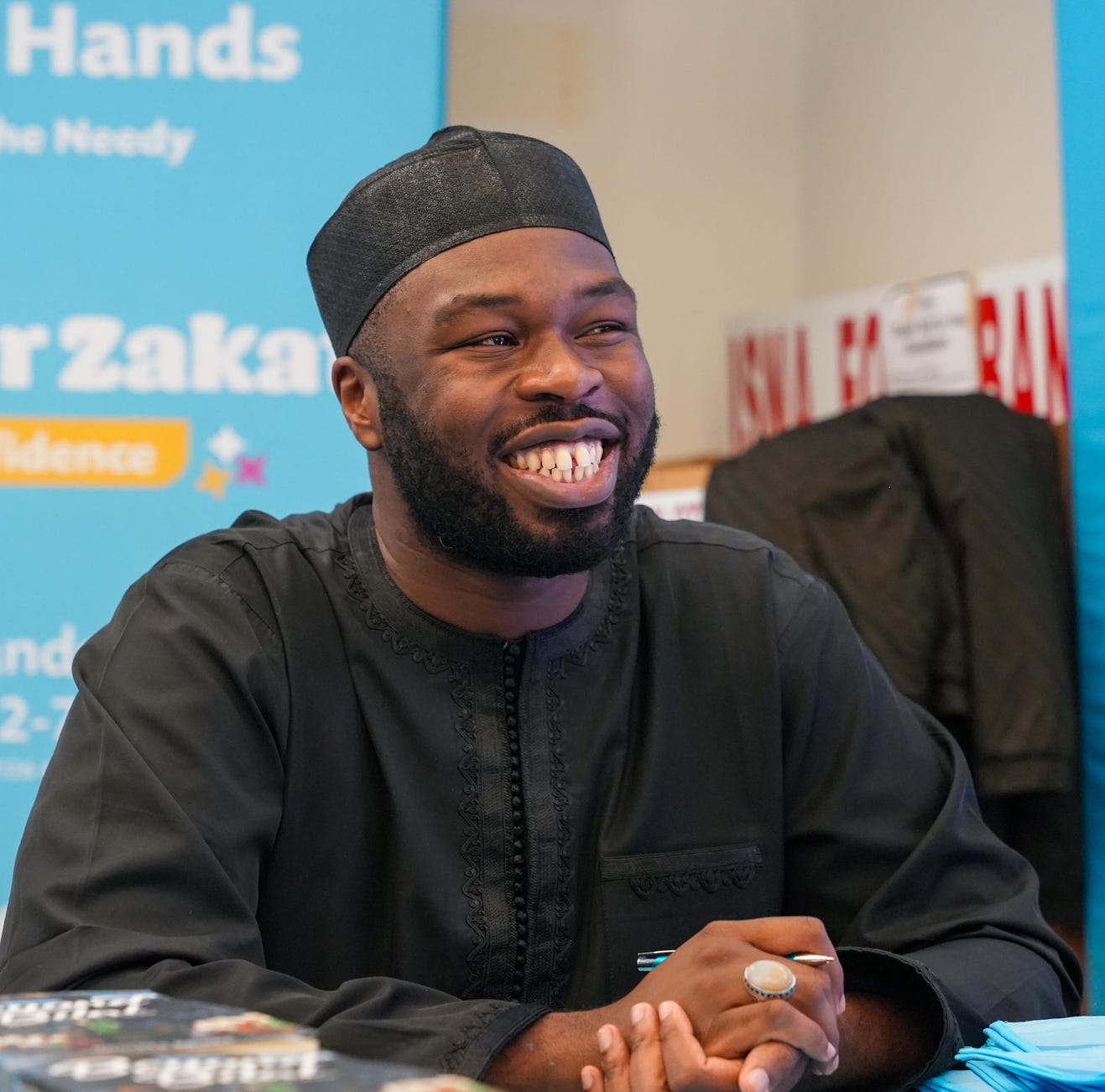
__________________________________________________________________________
FOLLOW INDEPENDENT PRESS:
WhatsApp CHANNEL
https://whatsapp.com/channel/0029VaAtNxX8fewmiFmN7N22

TWITTER (CLICK HERE)
https://twitter.com/IpIndependent

FACEBOOK (CLICK HERE)
https://web.facebook.com/ipindependent

YOUTUBE (CLICK HERE)
https://www.youtube.com/@ipindependent

Think your friends would be interested? Share this story!