Thu 17 September 2026:
According to research reported by The Guardian on Thursday, scientists have developed mice with half-human brains to gain deeper insight into disorders and to advance treatments for schizophrenia, epilepsy, cerebral palsy, intellectual disabilities, and rare forms of dementia.
The scientists transplanted lab-grown human brain cells into genetically engineered mice that were born without a cerebral cortex or hippocampus, leaving space for human tissue to grow. The technique allows researchers to take cells from patients, turn them into brain tissue in the laboratory and study how disorders affect human neurons—and how treatments might work.
__________________________________________________________________________

https://whatsapp.com/channel/0029VaAtNxX8fewmiFmN7N22
__________________________________________________________________________
“We’ve been trying really hard as a community to find therapeutic solutions for these conditions, but the reality is that in psychiatry and neurology we’ve been left behind,” said Sergiu Pasca, the Stanford University professor who led the research.
“The human brain is very complex, but it’s also because the human brain is inaccessible,” he added. “Our goal has been to make aspects of human brain development and function accessible for investigation.”
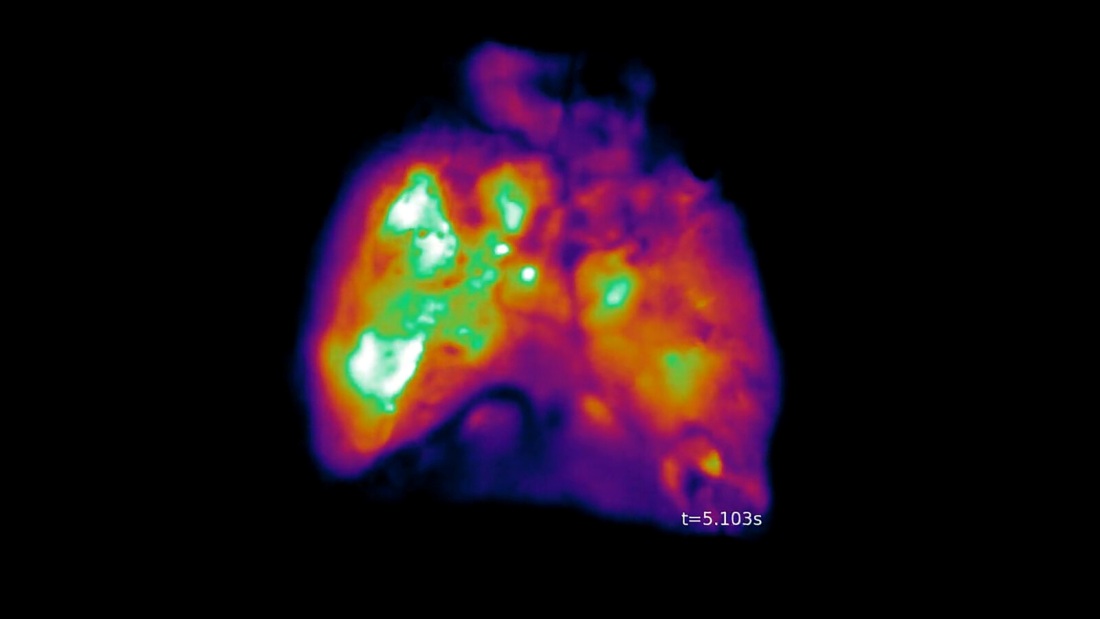
Electrical activity travelling through human brain tissue in a mouse.
The work builds on research into neural organoids: lab-grown human brain cells that form tiny structures that mimic some features of real brains. While potentially valuable for medicine, organoids raise ethical questions about consciousness, pain and animal welfare.
Pasca said the research had undergone extensive ethical oversight. Emily Jackson, a professor of law at the London School of Economics, said: “Animal welfare is a really important concern,” and the animals would need close monitoring.
Writing in Nature, Pasca reported that newborn mice received injections containing about 100,000 human brain cells each. The mice lacked around 14 million mouse brain cells and developed about 4 million human ones, which made up roughly half their brains by volume.
Paşca describes how the mice were injected with human brain organoids that were themselves created by reprogramming donated skin cells. The newborn mice received several injections, each containing about 100,000 human brain cells, into the space where their own brain tissue was missing. In total, the rodents lacked about 14m mouse brain cells and ended up with about 4m human ones – half the brain by volume.
Three months after surgery, the human tissue had hooked up to the mouse’s blood supply and almost entirely filled the cavity, taking up about half the size of the rodent’s brain. Some of the human neurons formed connections with mouse brain cells and spinal cord.
The human neurons were not structured or wired up in the same way as in people, and the brain tissue was immature, equivalent to that found halfway through human pregnancy. Tests on the “xenocortical” mice showed the animals were not enhanced by the transplants, but their shaky gait and cognitive problems did improve a little.
To demonstrate how the mice could shed light on human brain disorders, the researchers exposed some of the animals to five hours of low oxygen. This showed how vulnerable human nerve cells are to oxygen deprivation, which in pregnancy and birth can cause cerebral palsy.
The researchers found that human brain tissue in the mice contained rare cells known as von Economo neurons, which have only been seen in postmortem examinations. The cells are among the first to die in frontotemporal dementia, a rare form of the disease, which Paşca now hopes to study in xenocortical mice.
SOURCE: INDEPENDENT PRESS AND NEWS AGENCIES
__________________________________________________________________________
FOLLOW INDEPENDENT PRESS:
WhatsApp CHANNEL
https://whatsapp.com/channel/0029VaAtNxX8fewmiFmN7N22

TWITTER (CLICK HERE)
https://twitter.com/IpIndependent

FACEBOOK (CLICK HERE)
https://web.facebook.com/ipindependent

YOUTUBE (CLICK HERE)
https://www.youtube.com/@ipindependent

Think your friends would be interested? Share this story!