Mon 12 October 2026:
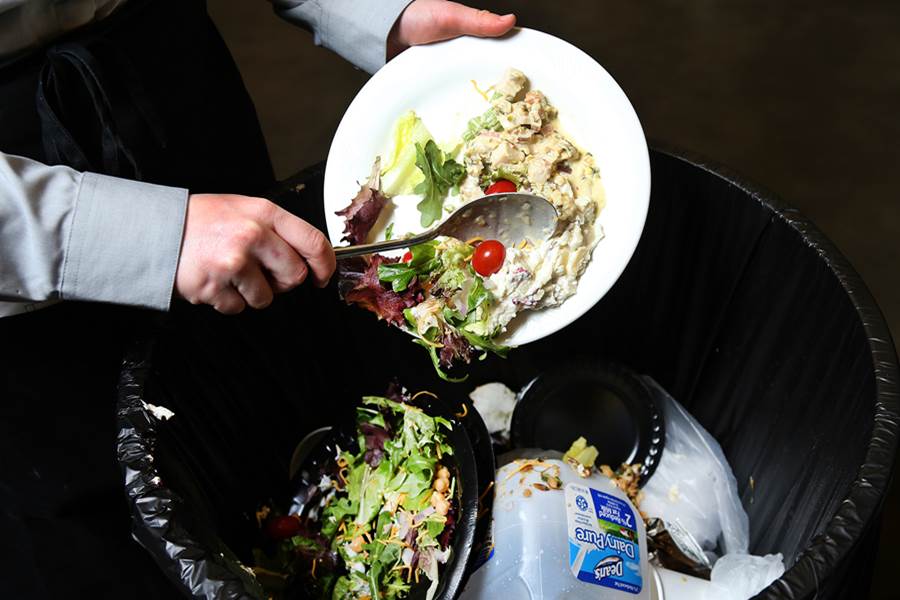
The EU generates around 129 kilograms of food waste per person, reaching a total of 57.9 million tonnes for the year of 2024.
The total food waste increased by 0.7% in 2024, compared to the previous year, Eurostat announced on Tuesday. Households accounted for more than half of all food waste at 53%, generating 69 kg per person.
Manufacture of food products and beverages produced 19% of the total waste, amounting to 25 kg per inhabitant. Restaurants and food services generated 12% of the waste, reaching 15 kg per inhabitant.
Primary production and retail distribution each contributed 8% to the total, standing at 10 kg per inhabitant each.
About one-third of all food produced worldwide is lost or wasted. Roughly 13 percent disappears between harvest and the shop, and another 19 percent is thrown away by retailers, restaurants, and households. That equals more than one billion uneaten meals every day, with households responsible for about 60 percent of the total.
__________________________________________________________________________

https://whatsapp.com/channel/0029VaAtNxX8fewmiFmN7N22
__________________________________________________________________________
The damage is large. Growing that uneaten food occupies about 1.4 billion hectares—roughly 28 percent of the world’s agricultural land—and consumes huge volumes of water and energy. When the food rots in landfills it releases methane, a greenhouse gas far more potent than carbon dioxide in the short term.
Overall, food loss and waste accounts for 8 to 10 percent of global greenhouse-gas emissions, several times the entire aviation sector. Economically the waste costs hundreds of billions of dollars a year, while hundreds of millions of people still face hunger.
Solutions exist at every stage. In lower-income regions, better storage, cold chains, and transport cut post-harvest losses before food ever reaches markets. Retailers and restaurants can improve inventory forecasting, sell imperfect produce, and donate surplus through food banks and apps.
Households—the biggest source—can plan meals, buy only what they need, store food properly, use leftovers, and ignore overly cautious date labels. Unavoidable scraps should be composted or digested for energy instead of landfilled. Governments can set binding reduction targets, as Japan and the UK have already done with measurable success, and companies can treat waste reduction as a cost-saving measure rather than only an environmental one.
Halving food waste by 2030 remains the international goal. The tools are already known; the missing piece is scaling them quickly across farms, businesses, and kitchens.
SOURCE: INDEPENDENT PRESS AND NEWS AGENCIES
__________________________________________________________________________
FOLLOW INDEPENDENT PRESS:
WhatsApp CHANNEL
https://whatsapp.com/channel/0029VaAtNxX8fewmiFmN7N22

TWITTER (CLICK HERE)
https://twitter.com/IpIndependent

FACEBOOK (CLICK HERE)
https://web.facebook.com/ipindependent

YOUTUBE (CLICK HERE)
https://www.youtube.com/@ipindependent

Think your friends would be interested? Share this story!