Wed 21 October 2026:
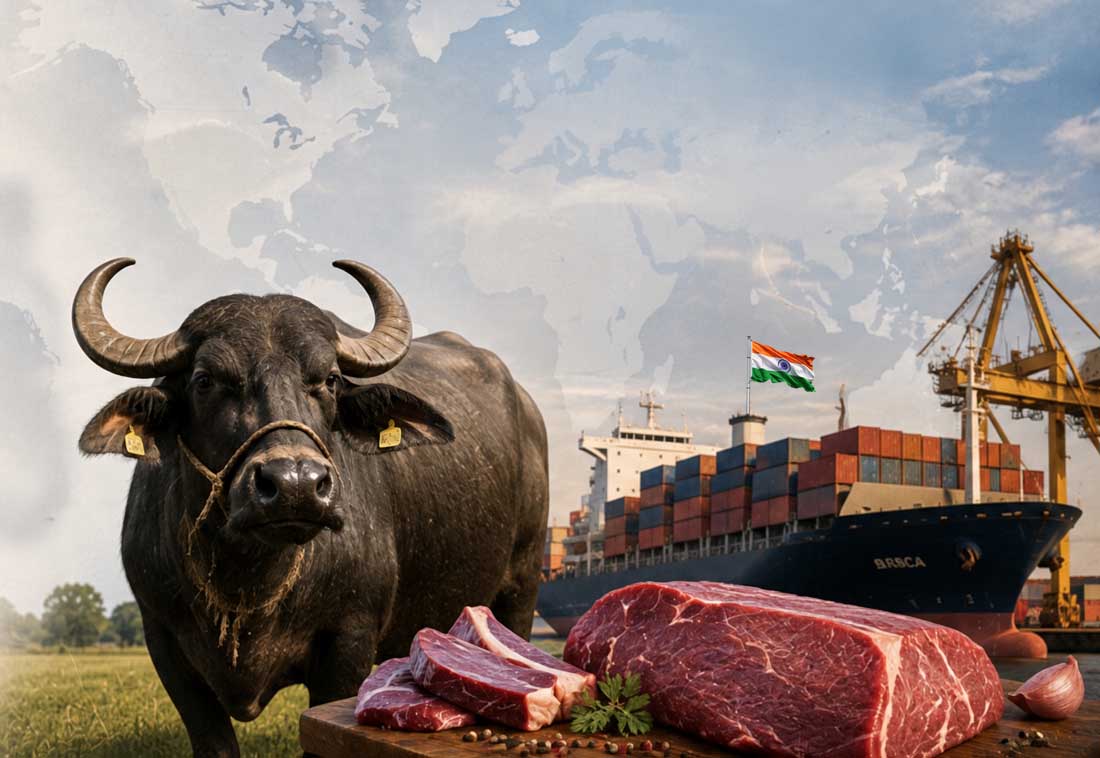
India’s buffalo meat exports have crossed the $5 billion mark for the first time, with shipments rising on the back of new overseas markets, higher prices and improved processing standards.
India exported buffalo meat products worth $4.06 billion, amounting to 1.255 million tonnes, in 2025-26. The growth has continued into the current financial year, with exports estimated at around $1.5 billion between April and June 2026.
Compared with exports worth $896.8 million during the same period last year, the latest figure represents a 66.6 per cent increase, according to the figures provided.
A Commerce Ministry official said India had crossed the $5 billion mark for the first time and added that exports could exceed $6 billion in 2026-27 if the current pace continues.
Buffalo meat, commonly known as “carabeef” in international markets, has also increased its share of India’s animal-product exports. According to APEDA data, buffalo meat now accounts for about 79.4 per cent of India’s total exports of animal products.
The figures provided also show a rise in the value of exports over the past three financial years. Buffalo meat was being exported at around $2,700 to $3,000 per tonne in 2023-24. The average price rose to $3,591 per tonne in 2025-26 and reached $4,392 per tonne between April and June 2026.
__________________________________________________________________________

https://whatsapp.com/channel/0029VaAtNxX8fewmiFmN7N22
__________________________________________________________________________
Exporters’ associations attributed the rise in prices to improvements in product quality, processing standards and access to overseas markets. They said the price gap between Indian buffalo meat and Brazilian beef had narrowed from around $2,000 per tonne to between $500 and $700.
India’s export destinations have also become more diversified. Vietnam accounted for 45 per cent of India’s buffalo meat exports in 2014-15, but its share has since declined as other markets have expanded.
Egypt, Malaysia, the United Arab Emirates, Saudi Arabia, Uzbekistan, Indonesia and Iraq are now among the major buyers. Russia, Jordan, Georgia, Oman and the Philippines have also emerged as newer markets for Indian buffalo meat.
The expansion comes under India’s restrictions on beef exports. Indian rules permit the export of boneless buffalo meat, while exports of meat from cows, bulls and calves remain prohibited.
The growth in buffalo meat exports is also linked to the dairy sector. Dairy farmers can sell older or low-yielding buffaloes and use the proceeds to purchase more productive animals.
The material provided estimates that a 400-kg buffalo may fetch between Rs 57,000 and Rs 60,800, giving farmers an additional source of income when replacing less productive animals.
The export growth therefore has implications beyond the meat trade, linking the expanding international market for Indian buffalo meat with the economics of the country’s dairy sector.
- The Sacred Cow vs. Buffalo Reality: Cows enjoy deep religious reverence and strict legal slaughter bans across most Indian states, leaving unproductive cows as a financial liability that often leads to a massive stray cattle crisis.
- Rise of Vigilantism: Since 2014, the rise of Hindu nationalist politics has fueled organized cow vigilantism. Mobs and self-appointed vigilantes frequently target cattle transporters, meat traders, and dairy workers.
- Indiscriminate Harassment: Vigilantes rarely distinguish between protected cows and legal buffalo trade, or between authorized transit and illegal activity.
- Targeting Minorities: Human rights and media reports show that Muslim and Dalit communities have borne the brunt of harassment, intimidation, and fatal mob attacks amidst an atmosphere of fear surrounding cattle movement.
The gentle cow – beloved in the Indian tradition for millenia – has today been weaponised by Bharatiya Janata Party governments and Hindutva mobs. Weaponised for hate and fear, for lynching, for incarceration, for erasure and for mass impoverishment.
Cow slaughter is now legal only in eight states, including Kerala, Goa, West Bengal, Arunachal Pradesh, Meghalaya, Nagaland, Mizoram and Tripura. Most other states under Bharatiya Janata Party governments have seen cow protection laws from the past made harsher, more stringent, and punishments comparable or higher than those for manslaughter.
Livelihood impact
The beef ban has severely impacted the livelihoods of farmers, traders, and workers involved in the cattle and meat industries. The tightening of laws preventing cow slaughter have crushed or erased the livelihoods of a long chain of workers who are connected with meat, leather and a range of other products derived from cows. These are mostly people of Muslim or Dalit identity, because the handling of human or animal carcasses is treated as ritually polluting by caste Hindus, and therefore this work has mostly been left to the outcaste Dalits or Muslims.
SOURCE: INDEPENDENT PRESS AND NEWS AGENCIES
__________________________________________________________________________
FOLLOW INDEPENDENT PRESS:
WhatsApp CHANNEL
https://whatsapp.com/channel/0029VaAtNxX8fewmiFmN7N22

TWITTER (CLICK HERE)
https://twitter.com/IpIndependent

FACEBOOK (CLICK HERE)
https://web.facebook.com/ipindependent

YOUTUBE (CLICK HERE)
https://www.youtube.com/@ipindependent

Think your friends would be interested? Share this story!