Tue 15 September 2026:
Boitemogelo Kwakwa explains what may be behind the recurring odour and why South Africa’s air-quality regulations may need to catch up.
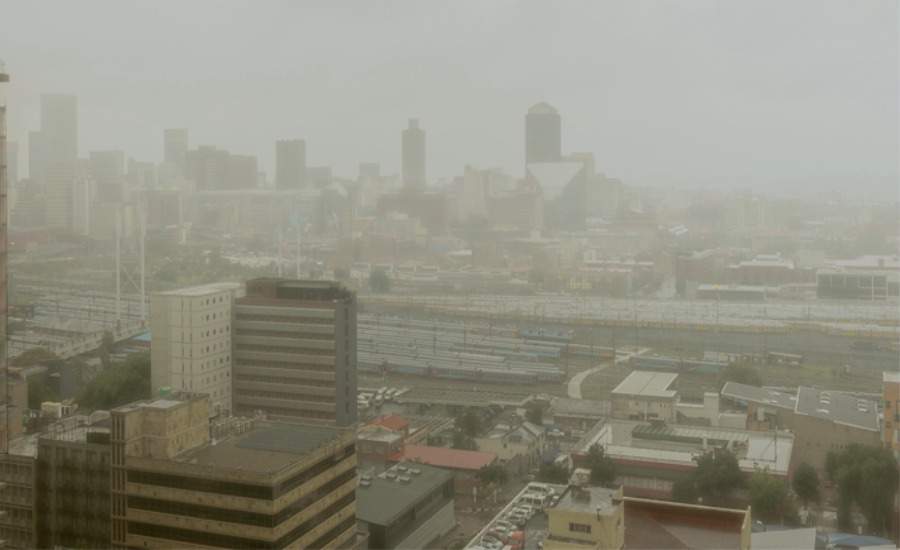
For residents across Johannesburg, the unmistakable smell of rotten eggs has become an unwelcome feature during periods when the odour settles over parts of the city.
The smell is commonly associated with hydrogen sulphide, a pungent gas that can be detected at very low concentrations.
Boitemogelo Kwakwa, Programme Manager for Air Quality and Environment at the University of Johannesburg, explains what may be behind these recurring episodes and why South Africa currently has a regulatory gap when it comes to hydrogen sulphide in ambient air.
__________________________________________________________________________

https://whatsapp.com/channel/0029VaAtNxX8fewmiFmN7N22
__________________________________________________________________________
A smell that can travel from many sources
The rotten egg odour is commonly attributed to hydrogen sulphide, but detecting the smell does not necessarily mean that the gas is present at a dangerous concentration.
“It’s a very pungent gas, which doesn’t necessarily mean that it is in excessive quantities,” Kwakwa explains. “Even a small amount can smell really bad.”
Hydrogen sulphide can be produced through a range of natural and industrial processes. Sources can include coal gasification, petroleum and petrochemical facilities, wastewater treatment and sewage systems, landfills and stagnant water, where bacterial decomposition can produce the gas.
This variety of sources can make the difficult to trace and manage. Weather conditions can also influence how pollutants move through an area, with factors such as wind direction and rainfall affecting where emissions are carried and how they are dispersed.
The presence of an odour, therefore, cannot by itself establish either the concentration of hydrogen sulphide in the air or its precise source. Air-quality monitoring is needed to determine actual levels.
When does the smell become a health concern?
Hydrogen sulphide can be detected by smell at very low concentrations, meaning the intensity of the odour is not necessarily an indication of the severity of exposure.
With prolonged exposure, however, the gas can have health effects similar to those associated with exposure to other gases, including irritation of the nose, throat and lungs.
Kwakwa notes that hydrogen sulphide is not currently classified as a criteria pollutant in South Africa. These pollutants are generally those that are considered significant for air-quality management because of their prevalence and potential health impacts.
The recurring nature of the rotten egg smell has nevertheless raised questions about how exposure should be monitored, particularly when episodes become more noticeable in certain areas.
The regulatory gap in South Africa
South Africa already regulates hydrogen sulphide exposure in certain occupational settings. Industries where workers may have direct exposure to the gas are subject to exposure limits, measured in parts per billion, over specified periods.
The situation is different when it comes to ambient air, where the general public may be exposed outside an industrial workplace.
According to Kwakwa, South Africa does not currently have a legislated ambient emission standard specifically covering hydrogen sulphide. Monitoring activities instead make use of World Health Organization limits and standards as a reference point when assessing air quality.
The Department of Forestry, Fisheries and the Environment has been working towards an ambient emission limit for hydrogen sulphide. The need for such a standard became particularly apparent following a major episode of the rotten egg odour in 2022.
In 2025, the department indicated that an ambient limit could potentially be established the following year. Such a standard would allow hydrogen sulphide to be incorporated into broader air-quality monitoring at general monitoring stations.
Why some pollutants receive greater regulatory attention
The absence of an ambient standard does not necessarily mean that hydrogen sulphide is considered harmless. Part of the explanation lies in the way different pollutants are prioritised for monitoring and regulation.
Pollutants such as nitrogen oxides, sulphur oxides and carbon monoxide are emitted in significant quantities from sources such as vehicles and are therefore a major focus of air-quality management.
Hydrogen sulphide has a different profile. Its sources are more varied, and its characteristic odour means that people can detect it at concentrations far below levels that would necessarily indicate an immediate health hazard.
That difference presents a challenge for regulation. A strong smell can prompt understandable concern among residents, while the smell itself cannot provide a reliable measurement of exposure.
What monitoring can tell us
Determining whether a particular episode poses a health concern requires more than identifying the odour. Actual measurements are needed to establish the concentration of hydrogen sulphide in the surrounding air.
For residents, the distinction matters. A noticeable smell may indicate that hydrogen sulphide is present, but it does not reveal how much of the gas is present or where it originated.
More comprehensive ambient monitoring could provide a clearer picture of recurring episodes and help determine whether concentrations reach levels that require intervention.
As Johannesburg continues to experience periods when the rotten egg smell becomes particularly noticeable, the issue extends beyond an unpleasant odour. It raises a broader question about whether the country’s air-quality framework is equipped to monitor pollutants that may not always fit neatly into existing regulatory categories.
To hear more on this, watch the video below:
written by Muskaan Ayesha
This article originally published in Salaamedia click here

__________________________________________________________________________
FOLLOW INDEPENDENT PRESS:
WhatsApp CHANNEL
https://whatsapp.com/channel/0029VaAtNxX8fewmiFmN7N22

TWITTER (CLICK HERE)
https://twitter.com/IpIndependent

FACEBOOK (CLICK HERE)
https://web.facebook.com/ipindependent

YOUTUBE (CLICK HERE)
https://www.youtube.com/@ipindependent

Think your friends would be interested? Share this story!