Wed 02 September 2026:
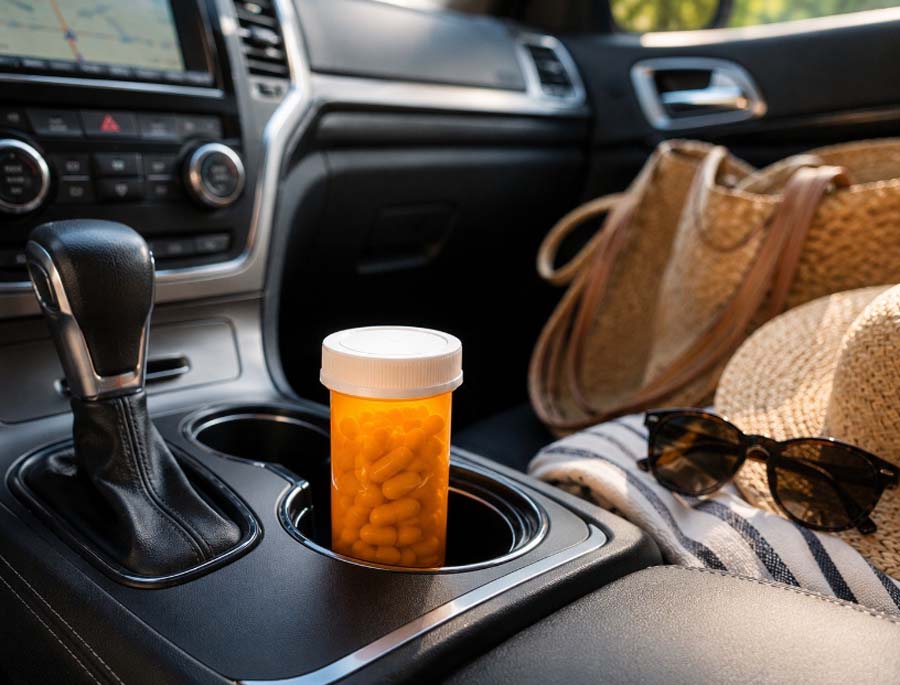
Leaving medicines in a parked car during hot summer weather can damage their chemical structure and reduce how well they work, said Prof. Dr. Ismail Tuncer Degim, dean of the Faculty of Pharmacy at Istanbul’s Biruni University.
Taking the right dose at the right time is not sufficient by itself, Degim noted. Correct storage is also essential to treatment, and every drug has its own storage conditions.
“Even if there is no visible change in a medication’s appearance, it may still have been affected by heat. Medications left in a hot car for an extended period should not be used without consulting a pharmacist,” Degim said.
Some medications must be kept at room temperature, he explained, while others require cold-chain conditions between 2 and 8 degrees Celsius (35.6 to 46.4 degrees Fahrenheit), as indicated on the packaging and instructions.
The interior temperature of a car parked in direct sunlight can rise rapidly, Degim noted, adding that the glove compartment and trunk are not suitable storage areas either, despite common assumptions that they are safer since they are not in direct sunlight.
__________________________________________________________________________

https://whatsapp.com/channel/0029VaAtNxX8fewmiFmN7N22
__________________________________________________________________________
“Every part of a vehicle is affected by high temperatures. Heat can alter a medication’s active ingredient or excipients, which may prevent the drug from working as intended and put the treatment process at risk,” Degim said.
The degree to which a medication is affected by heat depends on its content and pharmaceutical form, Degim said, noting that tablets, capsules, syrups, drops, creams, suppositories and injectable products all require appropriate storage conditions.
Creams and suppositories may melt, while syrups may change in consistency or color. However, a normal appearance does not necessarily mean a medication has not been affected by heat, he cautioned.
Insulin, vaccines and certain biological drugs are especially sensitive to temperature changes, Degim said, stressing that maintaining an uninterrupted cold chain is essential.
Medications requiring cold storage should be transported in insulated bags, without direct contact with ice, and should not be frozen, since freezing can damage a drug’s structure as well.
Degim advised that medications suspected of prolonged heat exposure should not be discarded or used without first consulting a pharmacist, who should be informed of how long and under what conditions the medication was exposed.
‘Plastics release more chemicals in heat’
He also noted that heat can cause plastic water bottles left in vehicles to release chemicals such as bisphenol A (BPA) and phthalates into the water, a risk that is more pronounced with prolonged sun exposure. Infants, children, pregnant women and people with chronic illnesses face greater risk from such exposure, he said.
Degim recommended keeping medications away from direct sunlight, storing them in their original packaging where possible, and planning for medication storage during travel and holidays.
SOURCE: INDEPENDENT PRESS AND NEWS AGENCIES
__________________________________________________________________________
FOLLOW INDEPENDENT PRESS:
WhatsApp CHANNEL
https://whatsapp.com/channel/0029VaAtNxX8fewmiFmN7N22

TWITTER (CLICK HERE)
https://twitter.com/IpIndependent

FACEBOOK (CLICK HERE)
https://web.facebook.com/ipindependent

YOUTUBE (CLICK HERE)
https://www.youtube.com/@ipindependent

Think your friends would be interested? Share this story!