

Mon 19 October 2026:
No one is taking seriously “absurd accusations” of Russia’s involvement in unrest in Europe, Kremlin spokesman Dmitry Peskov said Monday.
“Nobody anywhere takes such absurd accusations seriously anymore. Not even in Europe itself,” Peskov told Zvezda News media outlet.
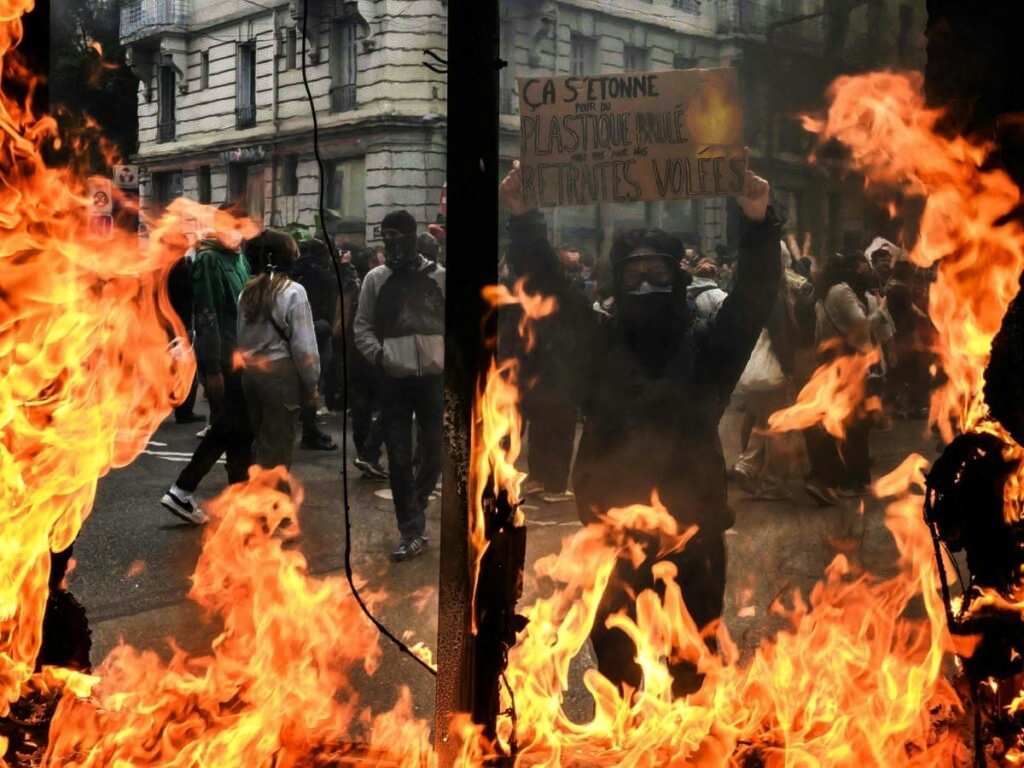
Mass protests took place in Paris and other French cities on Oct. 17, with peaceful demonstrations escalating into riots in some locations.
Protesters set fire to municipal buildings, looted shops and attacked police stations, according to reports.
Peskov also said that Russian President Vladimir Putin had backed proposals by Prime Minister Mikhail Mishustin for a reshuffle in the government.
Mishustin presented the proposals during a working meeting with Putin on Monday morning, he said.
He did not specify which government officials would be affected by the changes. Under the Constitution, Mishustin will submit the relevant nominations to the State Duma for approval.
Asked whether Indian Prime Minister Narendra Modi was expected to visit Russia by the end of this year or in 2027, Peskov said the visit would most likely take place next year.
Under the 2000 declaration on strategic partnership between Russia and India, the two countries’ leaders meet annually. Under the established rotation, Modi is due to make the next visit to Russia.
Peskov also announced that Russian President Vladimir Putin’s combined call-in show and annual news conference is traditionally scheduled for December.
__________________________________________________________________________

https://whatsapp.com/channel/0029VaAtNxX8fewmiFmN7N22
__________________________________________________________________________
Cost of living protests hit Belgium, Italy, Portugal and France
Hundreds of thousands of Europeans have taken to the streets in separate, uncoordinated demonstrations to protest against the rising cost of living in their countries.
Saturday’s wave of unrest in Belgium, France, Italy and Portugal has put pressure on governments across the European Union.
France experienced one of its most turbulent days of protests in decades, with more than 550,000 people joining demonstrations, according to the Ministry of Interior, and police facing off with protesters across the country.
The marches, which followed weeks of student protests, degenerated into clashes, looting and fires after violent fringe groups targeted public buildings, luxury boutiques and supermarkets, and attacked police vehicles and officers.
French Prime Minister Sebastien Lecornu said 1,200 people were arrested and 150 police officers were hurt. “It’s a miracle the toll wasn’t higher,” he said as he visited officers deployed in central Paris.
Dozens of shops were looted in Paris, Marseille, Nice, Nantes, Bordeaux, Limoges, Lille, Toulouse and Strasbourg, the French news agency AFP reported.
Whole streets in the capital “have been devastated”, Paris Mayor Emmanuel Gregoire said.
Italy
In Milan, rioters clashed with police, looted stores and set property on fire in the city centre, emptying Piazza del Duomo and a luxury arcade that would usually be full of shoppers.
A march against wars and rising living costs began peacefully, but masked protesters threw stones, paving blocks and other objects at riot police and set fire to barricades made from bar tables.
Police used water cannon and tear gas to disperse the crowds.
At least two police officers were injured, and about 50 demonstrators, many of them minors, were detained, the Italian LaPresse news agency reported.
Italy’s Prime Minister Giorgia Meloni condemned the violence.
“Demonstrating is a right. Setting our cities ablaze is not,” she wrote on X, blaming “hooligans who exploit demonstrations to sow chaos”.
Milan’s centre-left mayor, Giuseppe Sala, said “the reasons for the protests were understandable. The violence against law enforcement and serious damage to the city are not justifiable.”
French protests spill over
Although protests in the other countries did not reach the same scale as the rallies in France, they may be a sign of discontent spilling over, Alberto Alemanno, professor of EU law and policy at HEC Paris Business School, told Al Jazeera.
“France is the epicentre of this movement … and there are signs now that this is spreading beyond France,” Alemanno said.
He said Saturday’s protests may not be the last in many of these countries and new hotspots could emerge.
In Greece, Germany, and Austria, the “early stages” of a movement are emerging, with mobilisation expected “in the coming week”, he said.
They are not a single movement, he explained, but several protests happening at the same time, with some “shared grievances”: underfunded education, rising living costs and, for students, uncertain prospects after graduation.
The unrest comes at a crucial time for Europe, Alemanno said, as the continent prepares for an “unprecedented super-cycle of national elections” in the coming 12 months, with votes scheduled in Spain, France, Italy and Poland.
“Inevitably, all these protests, all these mobilisations, are going to be at the centre of the political conversation,” Alemanno said.
SOURCE: INDEPENDENT PRESS AND NEWS AGENCIES
__________________________________________________________________________
FOLLOW INDEPENDENT PRESS:
WhatsApp CHANNEL
https://whatsapp.com/channel/0029VaAtNxX8fewmiFmN7N22

TWITTER (CLICK HERE)
https://twitter.com/IpIndependent

FACEBOOK (CLICK HERE)
https://web.facebook.com/ipindependent

YOUTUBE (CLICK HERE)
https://www.youtube.com/@ipindependent

Think your friends would be interested? Share this story!


